
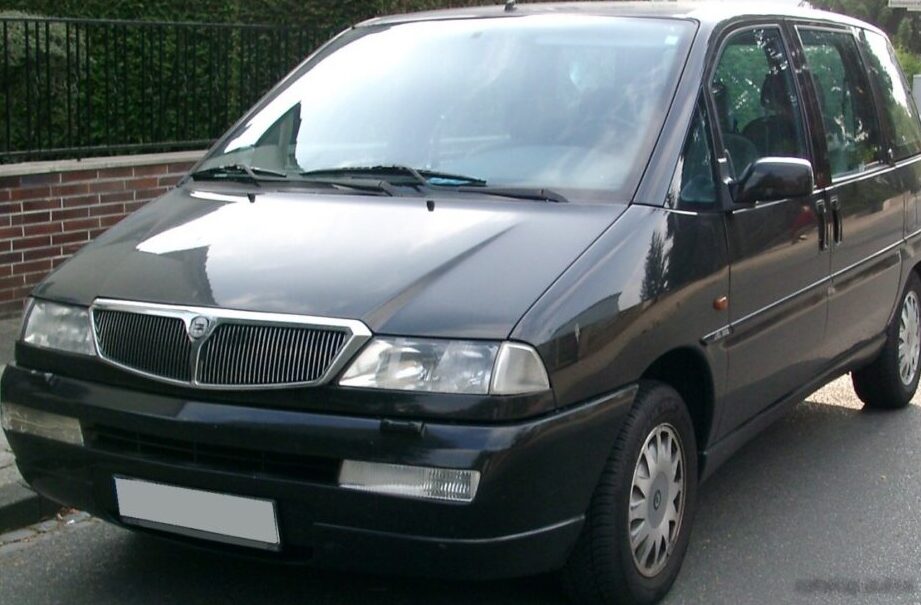
The Lancia Zeta 2.0 16V, produced between 1998 and 2000, represented a mid-range offering within the Zeta minivan lineup. Positioned above the base 1.8-liter models and below the more powerful 2.4-liter versions, the 2.0 16V aimed to strike a balance between performance and affordability for European families. The Zeta, overall, was Lancia’s entry into the increasingly popular people-carrier segment, designed to compete with vehicles like the Renault Espace and Citroën Evasion. It was built upon the shared platform with the Peugeot 806 and Fiat Ulysse, benefiting from economies of scale while retaining Lancia’s distinctive styling and focus on comfort.
Technical Specifications
| Brand | Lancia |
| Model | Zeta |
| Generation | Zeta |
| Type (Engine) | 2.0 16V (132 Hp) |
| Start of production | 1998 |
| End of production | 2000 |
| Powertrain Architecture | Internal Combustion engine |
| Body type | Minivan |
| Seats | 5 |
| Doors | 4 |
| Fuel consumption (urban) | 13.5 l/100 km (17.4 US mpg) |
| Fuel consumption (extra urban) | 8.5 l/100 km (27.7 US mpg) |
| Fuel Type | Petrol (Gasoline) |
| Acceleration 0 – 100 km/h | 13.4 sec |
| Acceleration 0 – 62 mph | 13.4 sec |
| Acceleration 0 – 60 mph | 12.7 sec |
| Maximum speed | 186 km/h (115.58 mph) |
| Weight-to-power ratio | 11.8 kg/Hp |
| Weight-to-torque ratio | 8.2 kg/Nm |
| Power | 132 Hp @ 6000 rpm |
| Power per litre | 66.1 Hp/l |
| Torque | 190 Nm @ 4100 rpm (140.14 lb.-ft. @ 4100 rpm) |
| Engine layout | Front, Transverse |
| Engine Model/Code | RFV XU10J4R |
| Engine displacement | 1997 cm3 (121.86 cu. in.) |
| Number of cylinders | 4 |
| Engine configuration | Inline |
| Cylinder Bore | 86 mm (3.39 in.) |
| Piston Stroke | 86 mm (3.39 in.) |
| Compression ratio | 10.4:1 |
| Number of valves per cylinder | 4 |
| Fuel injection system | Multi-port manifold injection |
| Engine aspiration | Naturally aspirated engine |
| Valvetrain | DOHC |
| Engine oil capacity | 4.7 l (4.97 US qt | 4.14 UK qt) |
| Coolant | 8.5 l (8.98 US qt | 7.48 UK qt) |
| Kerb Weight | 1560 kg (3439.21 lbs.) |
| Max. weight | 2320 kg (5114.72 lbs.) |
| Max load | 760 kg (1675.51 lbs.) |
| Trunk (boot) space – minimum | 1170 l (41.32 cu. ft.) |
| Trunk (boot) space – maximum | 2600 l (91.82 cu. ft.) |
| Fuel tank capacity | 80 l (21.13 US gal | 17.6 UK gal) |
| Length | 4470 mm (175.98 in.) |
| Width | 1834 mm (72.2 in.) |
| Height | 1714 mm (67.48 in.) |
| Wheelbase | 2825 mm (111.22 in.) |
| Front track | 1534 mm (60.39 in.) |
| Rear (Back) track | 1540 mm (60.63 in.) |
| Drivetrain Architecture | The Internal combustion engine (ICE) drives the front wheels of the vehicle. |
| Drive wheel | Front wheel drive |
| Number of gears and type of gearbox | 5 gears, manual transmission |
| Front suspension | Coil spring |
| Rear suspension | Coil spring |
| Front brakes | Ventilated discs |
| Rear brakes | Drum |
| Assisting systems | ABS (Anti-lock braking system) |
| Steering type | Steering rack and pinion |
| Power steering | Hydraulic Steering |
| Tires size | 205/65R15 |
Powertrain & Engine Architecture
The Lancia Zeta 2.0 16V was powered by the RFV XU10J4R engine, a 1.997-liter inline-four cylinder gasoline engine. This engine was part of the PSA XU series, a well-established and widely used powerplant in various European vehicles. The “16V” designation indicates the engine features four valves per cylinder, enhancing breathing and overall performance. It utilized a multi-port fuel injection system, delivering fuel directly into the intake ports, and a double overhead camshaft (DOHC) valvetrain for precise valve control. The engine produced 132 horsepower at 6000 rpm and 190 Nm (140 lb-ft) of torque at 4100 rpm. The engine’s design prioritized smooth operation and reasonable fuel efficiency over outright power. The five-speed manual transmission was the standard offering, providing a balance between driver control and ease of use.
Driving Characteristics
The 2.0 16V Zeta offered a noticeable step up in performance compared to the base 1.8-liter models. While not a particularly sporty vehicle, the 132 hp engine provided adequate power for highway cruising and overtaking maneuvers. Acceleration from 0 to 60 mph took around 12.7 seconds, and the top speed was approximately 115.58 mph. The five-speed manual transmission allowed drivers to keep the engine in its optimal power band. Compared to the higher-output 2.4-liter versions, the 2.0 16V felt less strained during acceleration, but lacked the extra punch for more spirited driving. The gear ratios were tuned for fuel economy and comfortable cruising, rather than aggressive acceleration. The front-wheel-drive configuration provided predictable handling, but didn’t offer the dynamic capabilities of some rear-wheel-drive competitors.
Equipment & Trim Levels
The Lancia Zeta 2.0 16V typically came equipped with a reasonable level of standard features, reflecting its position as a mid-range trim. These included power windows, central locking, power steering, and an anti-lock braking system (ABS). Interior upholstery was typically cloth, with options for upgraded materials. Air conditioning was often standard, but could be optional depending on the market. Optional extras included a sunroof, alloy wheels, and a more advanced audio system. The dashboard layout was functional and ergonomically designed, with a focus on ease of use. The Zeta prioritized passenger comfort, offering ample space and a relatively quiet cabin.
Chassis & Braking
The Zeta utilized a coil spring suspension system at both the front and rear, providing a comfortable ride quality. The front suspension featured independent coil springs, while the rear suspension employed a twist beam setup. The front brakes were ventilated discs, offering good stopping power, while the rear brakes were drums, a cost-saving measure common in this class of vehicle. The steering was rack and pinion with hydraulic power assistance, providing light and precise steering feel. The Zeta’s chassis was designed to prioritize ride comfort and stability over sporty handling. Tire size was typically 205/65R15.
Market Reception & Comparison
The Lancia Zeta 2.0 16V was generally well-received by critics as a practical and comfortable family vehicle. However, it faced stiff competition from established players in the minivan segment. Compared to the base 1.8-liter models, the 2.0 16V offered a noticeable improvement in performance, justifying the higher price tag for drivers who frequently carried passengers or traveled on highways. Fuel economy was reasonable for its class, averaging around 27.7 US mpg on the extra-urban cycle. Reliability was generally good, although some owners reported minor issues with the electrical system. The Zeta’s distinctive Italian styling and focus on comfort helped it stand out from its more utilitarian competitors.
Legacy
The Lancia Zeta, while not a massive sales success, remains a fondly remembered vehicle for those seeking a comfortable and spacious family minivan. The 2.0 16V powertrain proved to be relatively durable, and well-maintained examples can still be found on the used car market today. The PSA XU engine is known for its longevity and relatively straightforward maintenance. However, potential buyers should be aware of potential issues with the electrical system and the age-related wear and tear on suspension components. The Zeta represents a unique chapter in Lancia’s history, showcasing the brand’s commitment to style and comfort in a practical family vehicle.
