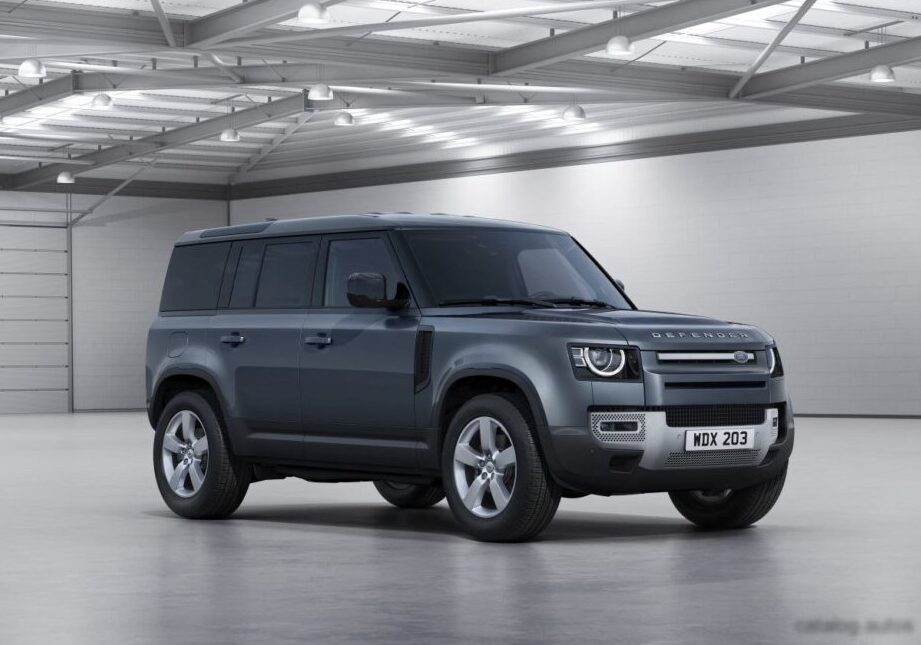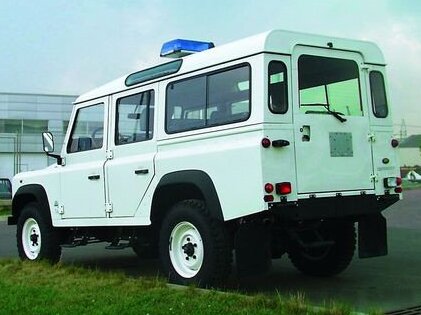
The Land Rover Defender 110 2.5 Diesel, producing 68 horsepower, represents a pivotal point in the long history of the iconic Defender lineage. Produced from 1985 to 1990, this variant occupied a crucial role as the workhorse of the range, particularly in markets where fuel economy and rugged durability were prioritized over outright speed. It was part of the Series III and early Defender transition period, bridging the gap between the older, more agricultural Land Rovers and the increasingly modernized versions that would follow. The 110 designation refers to the vehicle’s wheelbase length of 110 inches, making it the longer of the two initial Defender body styles offered. This model was primarily aimed at agricultural users, expedition travelers, and those needing a robust vehicle for challenging terrain.
Technical Specifications
| Brand | Land Rover |
| Model | Defender |
| Generation | Defender 110 |
| Type (Engine) | 2.5 D (68 Hp) |
| Start of production | 1985 |
| End of production | 1990 |
| Powertrain Architecture | Internal Combustion engine |
| Body type | Off-road vehicle |
| Seats | 5 |
| Doors | 4 |
| Fuel consumption (combined) | 12.3 l/100 km (19.1 US mpg, 23 UK mpg, 8.1 km/l) |
| Fuel Type | Diesel |
| Maximum speed | 100 km/h (62.14 mph) |
| Weight-to-power ratio | 26.9 kg/Hp, 37.2 Hp/tonne |
| Weight-to-torque ratio | 11.6 kg/Nm, 86.4 Nm/tonne |
| Power | 68 Hp @ 4000 rpm |
| Power per litre | 27.3 Hp/l |
| Torque | 158 Nm @ 1800 rpm (116.53 lb.-ft. @ 1800 rpm) |
| Engine layout | Front, Longitudinal |
| Engine displacement | 2495 cm3 (152.25 cu. in.) |
| Number of cylinders | 4 |
| Engine configuration | Inline |
| Cylinder Bore | 90.5 mm (3.56 in.) |
| Piston Stroke | 97 mm (3.82 in.) |
| Compression ratio | 21:1 |
| Number of valves per cylinder | 2 |
| Fuel injection system | Precombustion chamber injection |
| Engine aspiration | Naturally aspirated engine |
| Kerb Weight | 1828 kg (4030.05 lbs.) |
| Max. weight | 3050 kg (6724.1 lbs.) |
| Max load | 1222 kg (2694.05 lbs.) |
| Trunk (boot) space – maximum | 2300 l (81.22 cu. ft.) |
| Fuel tank capacity | 80 l (21.13 US gal | 17.6 UK gal) |
| Length | 4438 mm (174.72 in.) |
| Width | 1790 mm (70.47 in.) |
| Height | 2035 mm (80.12 in.) |
| Wheelbase | 2794 mm (110 in.) |
| Front track | 1486 mm (58.5 in.) |
| Rear (Back) track | 1486 mm (58.5 in.) |
| Drive wheel | All wheel drive (4×4) |
| Number of gears and type of gearbox | 5 gears, manual transmission |
| Front suspension | Rigid axle suspension |
| Rear suspension | Rigid axle suspension |
| Front brakes | Disc |
| Rear brakes | Drum |
| Assisting systems | ABS (Anti-lock braking system) |
Powertrain & Engine Architecture
The heart of the Defender 110 2.5 D is the 2.5-liter inline-four diesel engine. This engine, often referred to by its engine code 200TDI (though earlier versions existed), was a significant upgrade over the older 2.25-liter diesel it replaced. It utilized a precombustion chamber injection system, a common design for diesel engines of the era, which improved combustion efficiency and reduced engine noise compared to direct injection systems. The engine’s robust construction, featuring a cast iron block and head, was designed for longevity and reliability, even under harsh operating conditions. The 68 horsepower output was achieved at 4000 rpm, while the 158 Nm (116.53 lb.-ft.) of torque peaked at 1800 rpm. This torque curve provided ample low-end grunt, essential for off-road driving and hauling loads. The engine was paired with a five-speed manual transmission, chosen for its durability and simplicity. While an automatic transmission was offered on some Defender models, it was not typically paired with this specific engine due to the automatic’s inability to handle the torque effectively.
Driving Characteristics
The Defender 110 2.5 D was never intended to be a fast vehicle. Its focus was on capability and dependability. Acceleration was modest, and reaching its top speed of 100 km/h (62.14 mph) required patience. However, the engine’s strong low-end torque made it surprisingly capable in off-road situations. The five-speed manual transmission allowed drivers to select the appropriate gear for the terrain, maximizing traction and control. Compared to the later 200Tdi and 300Tdi engines, the 2.5 D felt comparatively underpowered, especially when fully loaded. The gear ratios were optimized for towing and climbing, rather than for highway cruising. The driving experience was characterized by a direct, mechanical feel, with minimal power steering and a relatively stiff suspension.
Equipment & Trim Levels
The Defender 110 2.5 D was typically offered in a fairly basic trim level, reflecting its utilitarian purpose. Standard features included a vinyl interior, basic instrumentation, and a heater. Options were limited but could include features like a radio, additional seating, and a roof rack. The interior was designed for practicality and ease of cleaning, with durable materials chosen to withstand the rigors of off-road use. The dashboard layout was simple and functional, with clearly labeled controls. The exterior typically featured steel wheels, a utilitarian front grille, and minimal brightwork.
Chassis & Braking
The Defender 110’s chassis was a traditional ladder frame construction, renowned for its strength and durability. The suspension consisted of leaf springs at both the front and rear, providing a robust and reliable ride, albeit one that was not particularly comfortable. Front brakes were discs, while the rear brakes were drums. This configuration was typical for vehicles of this era and weight class. An anti-lock braking system (ABS) was available as an option, improving braking performance on slippery surfaces. The vehicle’s high ground clearance and short overhangs contributed to its exceptional off-road capability.
Market Reception & Comparison
The Defender 110 2.5 D was well-received in markets where a rugged, reliable, and affordable 4×4 vehicle was needed. Critics praised its off-road capability, durability, and fuel economy (relative to its peers). However, it was also criticized for its lack of refinement, slow acceleration, and basic interior. Compared to the higher-powered Defender variants, such as those equipped with the 200Tdi or 300Tdi engines, the 2.5 D offered significantly less performance. However, it was also more affordable to purchase and maintain. Compared to other diesel-powered 4x4s of the time, such as the Toyota Land Cruiser, the Defender 110 2.5 D offered a more utilitarian and rugged experience.
Legacy
The Land Rover Defender 110 2.5 D has become a highly sought-after vehicle among enthusiasts and collectors. Its simplicity, durability, and iconic design have made it a favorite among those who appreciate classic 4x4s. While the engine itself is relatively simple and reliable, regular maintenance is essential to ensure its longevity. Parts availability is generally good, although some components can be difficult to find. Today, these Defenders are often used for off-road adventures, overland travel, and as a stylish and capable alternative to modern SUVs. The 2.5 D engine, while not the most powerful, is considered a robust and dependable unit, capable of providing years of service with proper care. Its enduring appeal is a testament to the Defender’s timeless design and legendary capability.