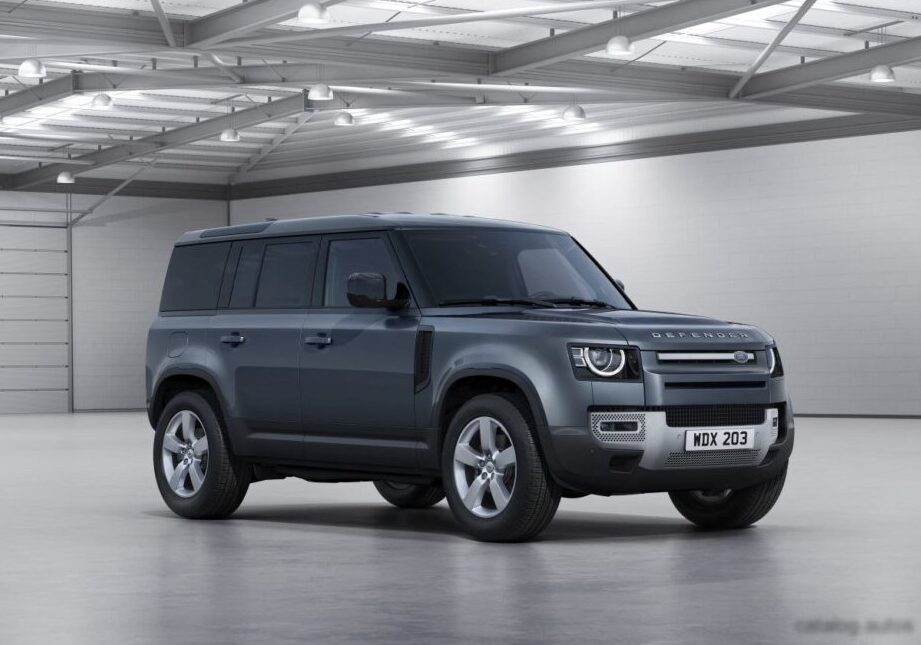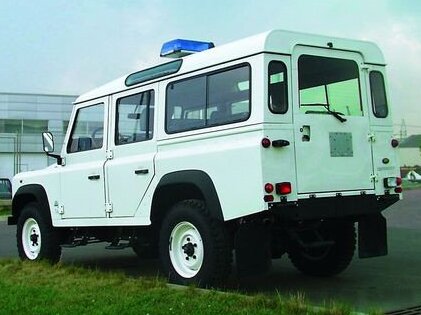
The Land Rover Defender 110 2.5 TDi, producing 107 horsepower, represents a pivotal point in the evolution of the iconic Defender lineage. Produced between 1990 and 1996, this variant occupied a crucial space in the Defender 110 range, offering a balance between capability, affordability, and fuel efficiency. It was part of the ongoing transition from the original Series Land Rover designs towards a more modern, though still relentlessly utilitarian, 4×4. This model was primarily aimed at the agricultural, commercial, and expedition markets, where outright speed was less important than durability and off-road prowess. The 2.5 TDi engine, while not the most powerful available in the Defender lineup, proved to be a robust and reliable workhorse.
Technical Specifications
| Brand | Land Rover |
| Model | Defender |
| Generation | Defender 110 |
| Type (Engine) | 2.5 TDi (107 Hp) |
| Start of production | 1990 |
| End of production | 1996 |
| Powertrain Architecture | Internal Combustion engine |
| Body type | Off-road vehicle |
| Seats | 5 |
| Doors | 4 |
| Fuel consumption (combined) | 11.4 l/100 km (20.6 US mpg, 24.8 UK mpg, 8.8 km/l) |
| Fuel Type | Diesel |
| Maximum speed | 130 km/h (80.78 mph) |
| Weight-to-power ratio | 17.5 kg/Hp, 57.2 Hp/tonne |
| Weight-to-torque ratio | 7.3 kg/Nm, 136.2 Nm/tonne |
| Power | 107 Hp @ 3800 rpm |
| Power per litre | 42.9 Hp/l |
| Torque | 255 Nm @ 1800 rpm (188.08 lb.-ft. @ 1800 rpm) |
| Engine layout | Front, Longitudinal |
| Engine displacement | 2495 cm3 (152.25 cu. in.) |
| Number of cylinders | 4 |
| Engine configuration | Inline |
| Cylinder Bore | 90.5 mm (3.56 in.) |
| Piston Stroke | 97 mm (3.82 in.) |
| Compression ratio | 19.5:1 |
| Number of valves per cylinder | 2 |
| Fuel injection system | Diesel Commonrail |
| Engine aspiration | Turbocharger |
| Engine oil capacity | 6.65 l (7.03 US qt | 5.85 UK qt) |
| Coolant | 11.5 l (12.15 US qt | 10.12 UK qt) |
| Kerb Weight | 1872 kg (4127.05 lbs.) |
| Max. weight | 3050 kg (6724.1 lbs.) |
| Max load | 1178 kg (2597.05 lbs.) |
| Trunk (boot) space – maximum | 2300 l (81.22 cu. ft.) |
| Fuel tank capacity | 80 l (21.13 US gal | 17.6 UK gal) |
| Length | 4438 mm (174.72 in.) |
| Width | 1790 mm (70.47 in.) |
| Height | 2035 mm (80.12 in.) |
| Wheelbase | 2794 mm (110 in.) |
| Front track | 1486 mm (58.5 in.) |
| Rear (Back) track | 1486 mm (58.5 in.) |
| Drive wheel | All wheel drive (4×4) |
| Number of gears and type of gearbox | 5 gears, manual transmission |
| Front suspension | Rigid axle suspension |
| Rear suspension | Rigid axle suspension |
| Front brakes | Disc |
| Rear brakes | Drum |
| Assisting systems | ABS (Anti-lock braking system) |
Powertrain & Engine Architecture
The heart of the Defender 110 2.5 TDi is the 2.5-liter four-cylinder diesel engine, typically identified by engine codes like 200TDi or 300TDi depending on the specific year and market. This engine represented a significant upgrade over the older naturally aspirated diesel engines previously used in the Series Land Rovers and early Defenders. The 2.5 TDi featured a turbocharger, significantly boosting power and torque output. The engine utilized a direct injection system, crucial for efficient combustion in a diesel engine. The 200TDi, introduced in 1990, was a Bosch-based system, while the later 300TDi (introduced in 1994) featured Lucas-based components. Both systems aimed to deliver precise fuel metering for optimal performance and reduced emissions. The engine’s valvetrain employed two valves per cylinder, a relatively simple but robust design. The five-speed manual transmission was the standard offering, chosen for its durability and suitability for off-road conditions. The gearbox was designed to handle the engine’s torque and provide a range of ratios for both on-road cruising and low-speed crawling.
Driving Characteristics
The Defender 110 2.5 TDi, with its 107 horsepower and 255 Nm (188 lb-ft) of torque, offered a driving experience focused on capability rather than outright speed. Acceleration was modest, but the engine’s torque delivery provided ample pulling power, especially at lower RPMs. This made it well-suited for towing, hauling loads, and navigating challenging terrain. The five-speed manual transmission allowed drivers to select the appropriate gear for the conditions, maximizing efficiency or torque as needed. Compared to the later 300TDi versions, the 200TDi felt slightly less refined, with a bit more engine noise and vibration. However, both versions shared the Defender’s characteristic ruggedness and direct steering feel. The high gearing, combined with the engine’s torque, meant that the Defender could maintain a reasonable cruising speed on highways, although it wasn’t particularly fuel-efficient at those speeds.
Equipment & Trim Levels
The Defender 110 2.5 TDi was typically offered in a fairly basic trim level, reflecting its utilitarian purpose. Standard equipment included vinyl upholstery, rubber floor mats, and a simple dashboard layout. Power steering was often an optional extra, as were features like central locking and electric windows. The interior was designed for practicality and ease of cleaning, rather than luxury. The Defender 110 was available in various body styles, including station wagon, pickup, and hardtop configurations. The station wagon was the most common, offering seating for up to seven passengers. Optional extras included a rear bench seat, a roof rack, and a winch. The overall focus was on providing a durable and functional vehicle that could withstand harsh conditions.
Chassis & Braking
The Defender 110’s chassis was a traditional ladder-frame construction, renowned for its strength and rigidity. This provided a solid foundation for both on-road and off-road driving. The suspension system consisted of leaf springs at the front and rear, offering a comfortable ride over rough terrain. The front brakes were disc brakes, providing adequate stopping power, while the rear brakes were drum brakes, a cost-saving measure. Anti-lock braking system (ABS) was available as an option, enhancing safety on paved roads. The Defender 110’s track width was relatively narrow, contributing to its maneuverability in tight spaces. The vehicle’s high ground clearance and short overhangs further enhanced its off-road capability.
Market Reception & Comparison
The Defender 110 2.5 TDi was generally well-received by critics and buyers alike. It was praised for its ruggedness, reliability, and off-road capability. However, some critics noted its lack of refinement and relatively slow acceleration. Compared to the higher-powered Defender 90 and 130 models, the 110 2.5 TDi offered a more affordable entry point into the Defender range. It also provided better fuel economy than the V8-powered Defenders. In terms of reliability, the 2.5 TDi engine proved to be exceptionally durable, with many examples still running today. However, like all older vehicles, it required regular maintenance to prevent issues.
Legacy
The Land Rover Defender 110 2.5 TDi holds a significant place in automotive history. It represents a bridge between the classic Series Land Rovers and the more modern Defenders that followed. The 2.5 TDi engine became a popular choice for Land Rover enthusiasts, known for its reliability and ease of maintenance. Today, the Defender 110 2.5 TDi is a sought-after vehicle among collectors and off-road enthusiasts. Well-maintained examples command a premium price, reflecting their enduring appeal and iconic status. The vehicle’s simple design and robust construction make it a relatively easy vehicle to repair and maintain, ensuring that it will continue to be enjoyed for many years to come. It remains a testament to Land Rover’s commitment to building durable and capable vehicles.