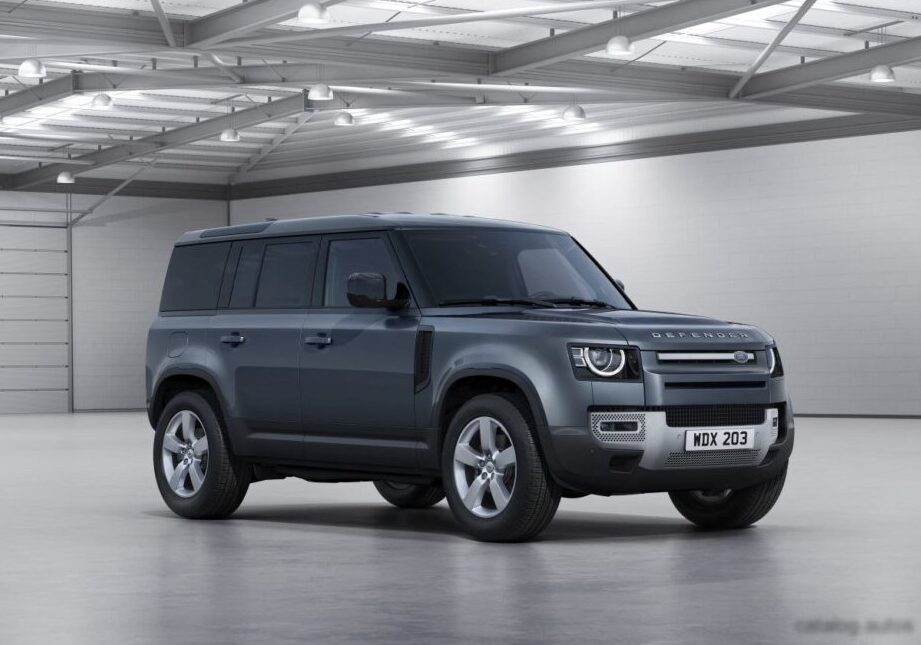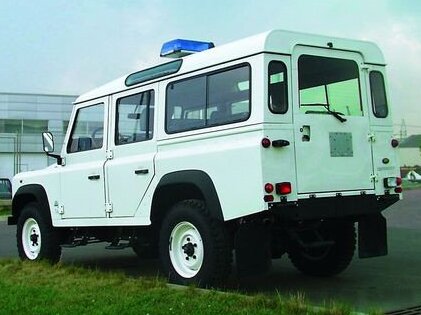
The Land Rover Defender 110 3.5 V8, produced between 1985 and 1990, represents a pivotal point in the lineage of the iconic Defender model. This variant, falling within the Series III stage of the Defender’s evolution (though often referred to as the “One Ten” due to its approximate 110-inch wheelbase), offered a blend of rugged capability and, for the time, relatively refined power. It served as a premium offering within the Defender 110 range, positioned above the four-cylinder diesel and petrol options, and below the later, more powerful 3.9-liter V8 versions. The 110’s longer wheelbase provided increased passenger and cargo space compared to the shorter 90 model, making it a popular choice for families, farmers, and expedition vehicles.
Technical Specifications
| Brand | Land Rover |
| Model | Defender |
| Generation | Defender 110 |
| Type (Engine) | 3.5 V8 (134 Hp) |
| Start of production | 1985 |
| End of production | 1990 |
| Powertrain Architecture | Internal Combustion engine |
| Body type | Off-road vehicle |
| Seats | 5 |
| Doors | 4 |
| Fuel consumption (combined) | 18.1 l/100 km (13 US mpg, 15.6 UK mpg, 5.5 km/l) |
| Fuel Type | Petrol (Gasoline) |
| Maximum speed | 130 km/h (80.78 mph) |
| Weight-to-power ratio | 13.5 kg/Hp, 74.2 Hp/tonne |
| Weight-to-torque ratio | 7.1 kg/Nm, 140.1 Nm/tonne |
| Power | 134 Hp @ 5000 rpm |
| Power per litre | 38 Hp/l |
| Torque | 253 Nm @ 2500 rpm (186.6 lb.-ft. @ 2500 rpm) |
| Engine layout | Front, Longitudinal |
| Engine displacement | 3528 cm3 (215.29 cu. in.) |
| Number of cylinders | 8 |
| Engine configuration | V-engine |
| Cylinder Bore | 88.9 mm (3.5 in.) |
| Piston Stroke | 71.1 mm (2.8 in.) |
| Compression ratio | 8.1:1 |
| Number of valves per cylinder | 2 |
| Fuel injection system | Carburettor |
| Engine aspiration | Naturally aspirated engine |
| Kerb Weight | 1806 kg (3981.55 lbs.) |
| Max. weight | 3050 kg (6724.1 lbs.) |
| Max load | 1244 kg (2742.55 lbs.) |
| Trunk (boot) space – maximum | 2300 l (81.22 cu. ft.) |
| Fuel tank capacity | 80 l (21.13 US gal | 17.6 UK gal) |
| Length | 4438 mm (174.72 in.) |
| Width | 1790 mm (70.47 in.) |
| Height | 2035 mm (80.12 in.) |
| Wheelbase | 2794 mm (110 in.) |
| Front track | 1486 mm (58.5 in.) |
| Rear (Back) track | 1486 mm (58.5 in.) |
| Drive wheel | All wheel drive (4×4) |
| Number of gears and type of gearbox | 5 gears, manual transmission |
| Front suspension | Rigid axle suspension |
| Rear suspension | Rigid axle suspension |
| Front brakes | Disc |
| Rear brakes | Drum |
| Assisting systems | ABS (Anti-lock braking system) |
Powertrain & Engine Architecture
The heart of the Defender 110 3.5 V8 is the Rover V8 engine, specifically the 3.5-liter variant. This engine, originating from Buick in the 1960s, was acquired by Rover and heavily modified over the years. The 1985-1990 version produced 134 horsepower at 5000 rpm and 253 Nm (186.6 lb-ft) of torque at 2500 rpm. It utilized a carbureted fuel system – typically a Zenith-Stromberg – which, while simpler than fuel injection, was considered reliable for off-road use. The engine featured a two-valve per cylinder configuration and a relatively low 8.1:1 compression ratio. The engine was mounted longitudinally in the chassis. The five-speed manual transmission, a key component, provided a reasonable spread of gears for both on-road cruising and low-speed off-road maneuvering. While an automatic transmission was available on other Defender models, the 3.5 V8 was primarily paired with the manual gearbox.
Driving Characteristics
The Defender 110 3.5 V8 offered a noticeable step up in performance compared to the four-cylinder models. While not a sports car by any means, the V8 provided ample torque for tackling challenging terrain and towing. The manual transmission allowed for precise control, essential for off-road driving. However, the carbureted engine meant that throttle response wasn’t as crisp as more modern fuel-injected engines. The gear ratios were well-suited to the vehicle’s intended purpose, providing low-range gearing for serious off-roading and reasonable cruising speeds on paved roads. Compared to later 3.9-liter V8 Defenders, the 3.5-liter felt less powerful, particularly at higher speeds, but offered a more manageable and arguably more robust driving experience.
Equipment & Trim Levels
The Defender 110 3.5 V8 wasn’t a luxury vehicle, but it did offer a degree of comfort and practicality. Standard equipment typically included basic instrumentation, vinyl upholstery, and a heater. Optional extras included features like a radio, upgraded seating materials (cloth or leather), and additional soundproofing. The interior was utilitarian and designed for durability rather than aesthetics. Trim levels were relatively basic, with the V8 model generally representing a step up in terms of features compared to the base models. Roof racks and winches were popular aftermarket additions, reflecting the Defender’s intended use.
Chassis & Braking
The Defender 110 utilized a traditional body-on-frame construction, renowned for its strength and durability. The chassis was a robust ladder frame, capable of withstanding significant stresses. Suspension consisted of leaf springs front and rear, providing a comfortable ride on and off-road. Braking was accomplished via disc brakes on the front wheels and drum brakes on the rear. While adequate for the vehicle’s weight and intended use, the braking system wasn’t particularly powerful by modern standards. An anti-lock braking system (ABS) was available as an option, improving braking performance on slippery surfaces.
Market Reception & Comparison
The Defender 110 3.5 V8 was well-received by those seeking a capable and reliable off-road vehicle. Critics praised its ruggedness, practicality, and the added performance of the V8 engine. However, the carbureted engine and relatively basic interior were points of criticism. Compared to the four-cylinder diesel models, the V8 offered significantly more power and refinement, but at the cost of fuel economy. Compared to the later 3.9-liter V8 Defenders, the 3.5-liter offered a more balanced driving experience, with less power but potentially greater long-term reliability. Fuel economy was predictably poor, averaging around 13 US mpg.
Legacy
The Land Rover Defender 110 3.5 V8 holds a special place in the hearts of many Land Rover enthusiasts. The Rover V8 engine, while eventually replaced by more modern units, proved to be remarkably durable and is still highly regarded today. These Defenders are now sought-after classic vehicles, prized for their rugged charm and off-road capability. While maintenance can be demanding due to the vehicle’s age and complexity, parts availability is generally good. The 3.5 V8 variant, in particular, is appreciated for its simplicity and relative reliability compared to some of the later, more complex Defenders. A well-maintained example represents a significant piece of automotive history and a testament to Land Rover’s enduring legacy of building capable and iconic vehicles.