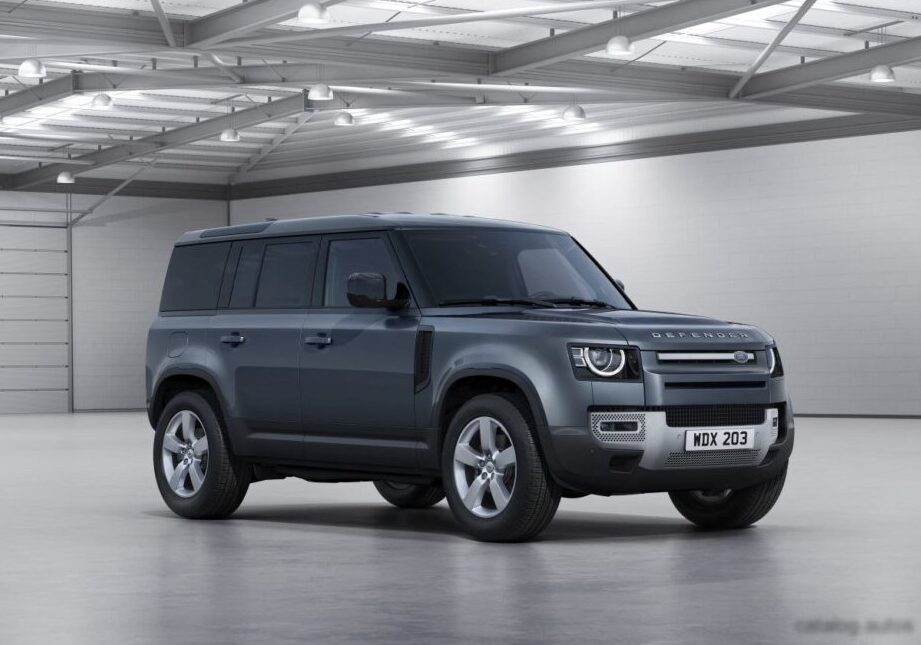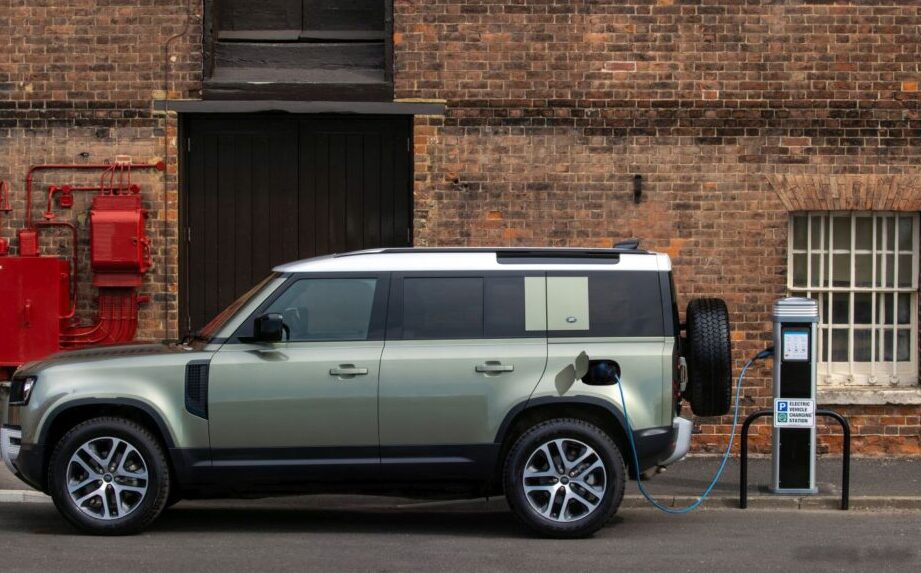
The Land Rover Defender 110 (L663) 2.0 P400e, produced from September 2020 to May 2024, represents a significant step in the evolution of the iconic Defender lineage. This variant combines a 2.0-liter turbocharged inline-four gasoline engine with an electric motor, creating a plug-in hybrid (PHEV) powertrain. It was positioned as a mid-range offering within the broader Defender 110 lineup, appealing to buyers seeking a blend of off-road capability, improved fuel efficiency, and the ability to operate in all-electric mode for shorter journeys. The introduction of a PHEV option broadened the Defender’s appeal, attracting a more environmentally conscious customer base while maintaining the vehicle’s core strengths.
Technical Specifications
| Brand | Land Rover |
| Model | Defender |
| Generation | Defender 110 (L663) |
| Type (Engine) | 2.0 P400e (404 Hp) Plug-in Hybrid AWD Automatic |
| Start of production | September, 2020 |
| End of production | May, 2024 |
| Powertrain Architecture | PHEV (Plug-in Hybrid Electric Vehicle) |
| Body type | Off-road vehicle |
| Seats | 5 |
| Doors | 5 |
| Combined fuel consumption (WLTP) | 3.3-3.9 l/100 km (71.3 – 60.3 US mpg, 85.6 – 72.4 UK mpg, 30.3 – 25.6 km/l) |
| CO2 emissions (WLTP) | 74-88 g/km |
| Fuel consumption (economy) – combined (NEDC, WLTP equivalent) | 2.8 l/100 km (84 US mpg, 100.9 UK mpg, 35.7 km/l) |
| CO2 emissions (NEDC, WLTP equivalent) | 64 g/km |
| Fuel Type | Petrol / electricity |
| Acceleration 0 – 100 km/h | 5.6 sec |
| Acceleration 0 – 62 mph | 5.6 sec |
| Acceleration 0 – 60 mph | 5.4 sec |
| Maximum speed | 191 km/h (118.68 mph) |
| Emission standard | Euro 6d-F |
| Weight-to-power ratio | 6.3 kg/Hp, 160 Hp/tonne |
| Weight-to-torque ratio | 3.9 kg/Nm, 253.5 Nm/tonne |
| Gross battery capacity | 19.2 kWh |
| Net (usable) battery capacity | 15.4 kWh |
| Battery technology | Lithium-ion (Li-Ion) |
| Battery location | Under the trunk |
| All-electric range (WLTP) | 40-43 km (24.85 – 26.72 mi) |
| All-electric range (NEDC, WLTP equivalent) | 53 km (32.93 mi) |
| Average Energy consumption (NEDC, WLTP equivalent) | 23.8-24.5 kWh/100 km (38.3 – 39.43 kWh/100 mi, 88 – 85 MPGe, 4.2 – 4.1 km/kWh, 2.6 – 2.5 mi/kWh) |
| Max speed (electric) | 140 km/h (86.99 mph) |
| Electric motor power | 143 Hp |
| Electric motor location | Between the combustion engine and the transmission |
| Electric motor type | Synchronous |
| System power | 404 Hp @ 5500 rpm |
| System torque | 640 Nm @ 1500-4400 rpm (472.04 lb.-ft. @ 1500-4400 rpm) |
| Power | 300 Hp @ 5500 rpm |
| Power per litre | 150.2 Hp/l |
| Torque | 400 Nm (295.02 lb.-ft.) |
| Engine layout | Front, Longitudinal |
| Engine Model/Code | Ingenium / PT204 |
| Engine displacement | 1997 cm3 (121.86 cu. in.) |
| Number of cylinders | 4 |
| Engine configuration | Inline |
| Cylinder Bore | 83.01 mm (3.27 in.) |
| Piston Stroke | 92.28 mm (3.63 in.) |
| Compression ratio | 9.5:1 |
| Number of valves per cylinder | 4 |
| Fuel injection system | Direct injection |
| Engine aspiration | Twin-scroll turbo, Intercooler |
| Valvetrain | DOHC |
| Engine oil capacity | 7 l (7.4 US qt | 6.16 UK qt) |
| Coolant | 16.8 l (17.75 US qt | 14.78 UK qt) |
| Kerb Weight | 2525 kg (5566.67 lbs.) |
| Max. weight | 3300 kg (7275.25 lbs.) |
| Max load | 775 kg (1708.58 lbs.) |
| Trunk (boot) space – minimum | 853 l (30.12 cu. ft.) |
| Trunk (boot) space – maximum | 2127 l (75.11 cu. ft.) |
| Fuel tank capacity | 90 l (23.78 US gal | 19.8 UK gal) |
| Max. roof load | 100 kg (220.46 lbs.) |
| Permitted trailer load with brakes (12%) | 3000 kg (6613.87 lbs.) |
| Permitted trailer load without brakes | 750 kg (1653.47 lbs.) |
| Permitted towbar download | 150 kg (330.69 lbs.) |
| Length | 5018 mm (197.56 in.) |
| Width | 1996 mm (78.58 in.) |
| Width with mirrors folded | 2008 mm (79.06 in.) |
| Width including mirrors | 2105 mm (82.87 in.) |
| Height | 1967 mm (77.44 in.) |
| Wheelbase | 3022 mm (118.98 in.) |
| Front track | 1706 mm (67.17 in.) |
| Rear (Back) track | 1702 mm (67.01 in.) |
| Front overhang | 845 mm (33.27 in.) |
| Rear overhang | 1151 mm (45.31 in.) |
| Ride height (ground clearance) | 218-291 mm (8.58 – 11.46 in.) |
| Drag coefficient (Cd) | 0.39 |
| Minimum turning circle (turning diameter) | 13.1 m (42.98 ft.) |
| Approach angle | 30.1-37.5° |
| Departure angle | 37.7-40.0° |
| Ramp-over (brakeover) angle | 22-27.8° |
| Climb angle | 45° |
| Wading depth | 900 mm (35.43 in.) |
| Drivetrain Architecture | The Internal combustion engine (ICE) and the electric motor permanently drive the four wheels of the car with the ability to work in full electric or mixed mode. |
| Drive wheel | All wheel drive (4×4) |
| Number of gears and type of gearbox | 8 gears, automatic transmission |
| Front suspension | Double wishbone, Air suspension |
| Rear suspension | Independent multi-link suspension, Air suspension |
| Front brakes | Ventilated discs, 380 mm |
| Rear brakes | Ventilated discs, 365 mm |
| Assisting systems | ABS (Anti-lock braking system) |
| Steering type | Steering rack and pinion |
| Power steering | Electric Steering |
| Tires size | 255/60 R20 |
| Wheel rims size | 8.5J x 20 |
A New Era for the Defender
The L663 Defender marked a radical departure from its predecessors, moving away from the traditional body-on-frame construction to a more modern monocoque chassis. This change, while initially controversial among purists, allowed for significant improvements in refinement, on-road handling, and safety. The 2.0 P400e variant further enhanced these qualities by adding the benefits of electrification. The integration of a plug-in hybrid system allowed Land Rover to address growing concerns about emissions and fuel economy without sacrificing the Defender’s legendary off-road prowess.
Powertrain and Performance
At the heart of the 2.0 P400e lies Land Rover’s Ingenium four-cylinder gasoline engine, producing 300 horsepower. This engine is paired with a 143 horsepower electric motor, integrated between the engine and the eight-speed automatic transmission. The combined system output of 404 horsepower and 640 Nm (472 lb-ft) of torque delivers brisk acceleration, with a 0-60 mph time of around 5.4 seconds. The 19.2 kWh battery pack, located under the trunk floor, provides an all-electric range of between 40 and 43 kilometers (24.85 – 26.72 miles) under WLTP testing. This allows for zero-emission driving on shorter commutes and urban journeys.
Positioning and Alternatives
Within the Defender 110 range, the P400e occupied a middle ground. It offered a more affordable entry point into the Defender experience compared to the higher-powered six-cylinder and V8 models, while still providing a substantial level of performance and luxury. Buyers considering the P400e might also have looked at the diesel-powered Defender 110 D200 or D240, which offered comparable torque but lacked the electric driving capability. The P400e appealed to those prioritizing fuel efficiency and the ability to drive in electric mode, while the diesel models were favored by those who frequently tow or cover long distances.
Technology and Features
The Defender 110 P400e was equipped with a comprehensive suite of technology features, including Land Rover’s Terrain Response system, which allows drivers to optimize the vehicle’s settings for various off-road conditions. Air suspension provided adjustable ride height and improved comfort, while a sophisticated infotainment system with a touchscreen display offered navigation, connectivity, and entertainment options. Safety features included a suite of driver-assistance systems, such as autonomous emergency braking, lane-keeping assist, and adaptive cruise control.
Maintenance and Reliability
As a relatively complex powertrain, the P400e requires a higher level of maintenance than simpler gasoline or diesel models. Regular servicing of both the internal combustion engine and the electric components is essential to ensure optimal performance and reliability. Potential issues could include battery degradation over time, as with all electric vehicles, and the possibility of problems with the hybrid system’s control software. However, Land Rover’s extensive dealer network and readily available parts supply generally mitigate these concerns.
Legacy
The Land Rover Defender 110 2.0 P400e represents a pivotal moment in the Defender’s history. It demonstrated Land Rover’s commitment to embracing new technologies and adapting to changing market demands. While production of this specific variant ended in May 2024, it paved the way for further electrification of the Defender lineup, solidifying its position as a modern and versatile off-road vehicle.