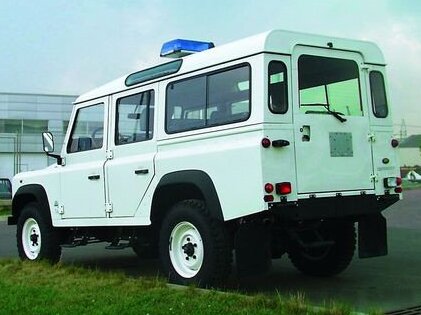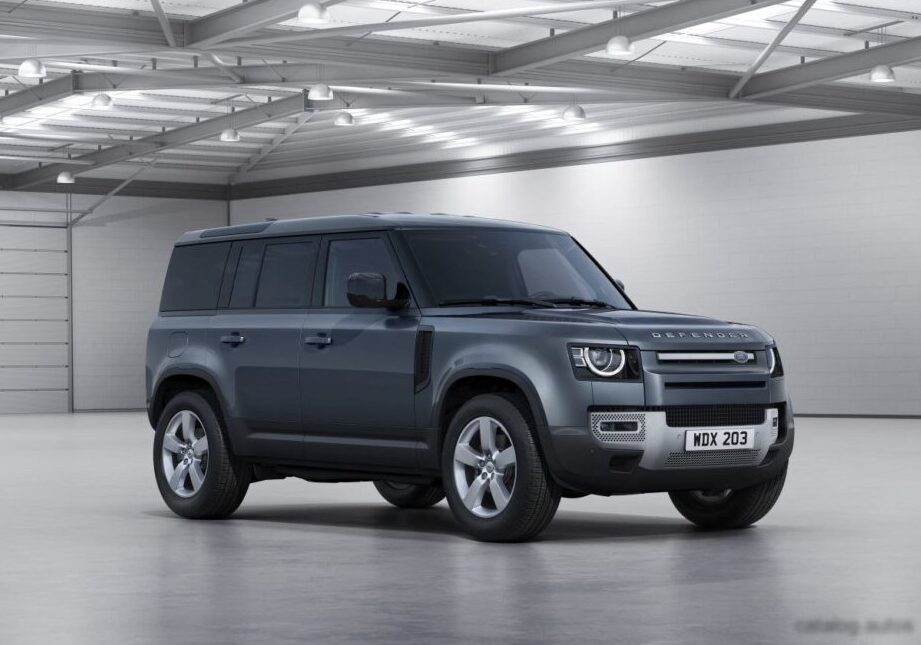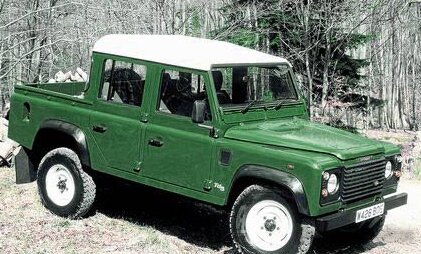
The Land Rover Defender 130 2.5 TDi, producing 113 horsepower, was a relatively short-lived variant of the iconic Defender series, manufactured between 1995 and 1998. Positioned as a utility-focused, long-wheelbase version of the Defender, the 130 catered to those needing increased cargo capacity or specialized configurations. It was built upon the existing Defender chassis, but with a 13-inch longer wheelbase than the standard 90 and 110 models. This extended length primarily benefited the rear passenger space and load area, making it popular with rural users, tradespeople, and those requiring a robust vehicle for carrying equipment. The 2.5 TDi engine represented a move towards more modern diesel technology for the Defender line, though it retained the series’ core ruggedness and off-road capability.
Technical Specifications
| Brand | Land Rover |
| Model | Defender |
| Generation | Defender 130 |
| Type (Engine) | 2.5 TDi (113 Hp) |
| Start of production | 1995 |
| End of production | 1998 |
| Powertrain Architecture | Internal Combustion engine |
| Body type | Pick-up |
| Seats | 5 |
| Doors | 4 |
| Fuel Type | Diesel |
| Maximum speed | 128 km/h (79.54 mph) |
| Weight-to-power ratio | 17.5 kg/Hp, 57.1 Hp/tonne |
| Weight-to-torque ratio | 7.5 kg/Nm, 133.8 Nm/tonne |
| Power | 113 Hp @ 4000 rpm |
| Power per litre | 45.3 Hp/l |
| Torque | 265 Nm @ 1800 rpm (195.45 lb.-ft. @ 1800 rpm) |
| Engine layout | Front, Longitudinal |
| Engine displacement | 2496 cm3 (152.32 cu. in.) |
| Number of cylinders | 4 |
| Engine configuration | Inline |
| Cylinder Bore | 90.5 mm (3.56 in.) |
| Piston Stroke | 97 mm (3.82 in.) |
| Compression ratio | 19.5:1 |
| Number of valves per cylinder | 2 |
| Fuel injection system | Diesel Commonrail |
| Engine aspiration | Turbocharger |
| Kerb Weight | 1980 kg (4365.15 lbs.) |
| Max. weight | 3500 kg (7716.18 lbs.) |
| Max load | 1520 kg (3351.03 lbs.) |
| Fuel tank capacity | 80 l (21.13 US gal | 17.6 UK gal) |
| Length | 5132 mm (202.05 in.) |
| Width | 1790 mm (70.47 in.) |
| Height | 2035 mm (80.12 in.) |
| Wheelbase | 3226 mm (127.01 in.) |
| Front track | 1511 mm (59.49 in.) |
| Rear (Back) track | 1511 mm (59.49 in.) |
| Drive wheel | All wheel drive (4×4) |
| Number of gears and type of gearbox | 5 gears, manual transmission |
| Front suspension | Rigid axle suspension |
| Rear suspension | Rigid axle suspension |
| Front brakes | Disc |
| Rear brakes | Disc |
| Assisting systems | ABS (Anti-lock braking system) |
| Power steering | Hydraulic Steering |
Powertrain & Engine Architecture
The heart of the Defender 130 2.5 TDi was the 2496cc inline-four cylinder diesel engine, designated as the 200Tdi or 300Tdi depending on the specific year and market. This engine represented a significant upgrade over the older naturally aspirated diesel engines previously used in the Defender. The 2.5 TDi featured a turbocharger and direct injection, boosting power output to 113 horsepower and 265 Nm (195 lb-ft) of torque. The engine utilized a Bosch fuel injection system, delivering fuel directly into the cylinders at extremely high pressure. The engine’s robust construction, with a cast iron block and head, contributed to its longevity and reliability. The five-speed manual transmission was the standard offering, providing a suitable gear range for both on-road and off-road driving. While an automatic transmission was available on some Defender models, it was less common with the 2.5 TDi engine due to concerns about its ability to handle the engine’s torque output in demanding conditions.
Driving Characteristics
The Defender 130 2.5 TDi, even with the turbocharger, wasn’t about outright speed. Its performance was characterized by strong low-end torque, making it exceptionally capable for towing, hauling, and navigating challenging terrain. The 0-60 mph time was estimated to be around 15-17 seconds, and top speed was limited to approximately 79.5 mph. The five-speed manual transmission allowed drivers to effectively utilize the engine’s powerband, although the gear ratios were relatively widely spaced. Compared to the more powerful V8-equipped Defenders, the 2.5 TDi offered significantly better fuel economy, making it a more practical choice for everyday use. However, it lacked the responsiveness and refinement of the V8 models. The longer wheelbase of the 130 did impact handling somewhat, making it feel less nimble than the shorter 90 and 110 models, particularly on paved roads.
Equipment & Trim Levels
The Defender 130 2.5 TDi was not known for luxury. It was a utilitarian vehicle, and its equipment levels reflected that. Standard features typically included basic cloth upholstery, vinyl floor coverings, and a simple dashboard layout. Power steering and anti-lock brakes (ABS) were often included, but air conditioning, electric windows, and central locking were typically optional extras. The 130 was often purchased as a base vehicle and then customized by owners or specialist converters to meet specific needs. Common modifications included the addition of roof racks, winches, auxiliary lighting, and specialized storage solutions. Trim levels were minimal, with most variations stemming from optional equipment choices.
Chassis & Braking
The Defender 130 retained the traditional body-on-frame construction of the Defender series, providing exceptional strength and durability. The chassis was a ladder-frame design, capable of withstanding significant stresses. Suspension consisted of traditional leaf springs and telescopic shock absorbers, offering a comfortable, if somewhat bouncy, ride. Front and rear brakes were typically disc brakes, providing adequate stopping power for the vehicle’s weight. The 130’s increased weight compared to the 90 and 110 models meant that the braking system was often working harder, and careful driving was essential, especially when carrying a heavy load. The robust axles and transfer case provided excellent off-road capability, allowing the 130 to tackle even the most challenging terrain.
Market Reception & Comparison
The Defender 130 2.5 TDi was generally well-received by those who needed a large, capable, and reliable workhorse vehicle. Critics praised its practicality, durability, and off-road performance. However, it was also criticized for its lack of refinement, relatively slow performance, and somewhat cumbersome handling. Compared to the V8-powered Defenders, the 2.5 TDi offered better fuel economy but lacked the same level of performance. Compared to the 1.9 TDI versions available in some markets, the 2.5 TDi offered a bit more power, but at the expense of slightly higher fuel consumption. The 2.5 TDi was often seen as a good compromise between performance, economy, and reliability.
Legacy
The Land Rover Defender 130 2.5 TDi, while a relatively short-lived model, has become a sought-after vehicle among enthusiasts and collectors. Its robust construction and relatively simple mechanicals make it a relatively easy vehicle to maintain and repair. The 2.5 TDi engine is known for its longevity and reliability, provided it is properly maintained. Today, these Defenders are often used for overland adventures, off-road expeditions, and as classic work vehicles. The 130’s extended wheelbase and increased cargo capacity make it particularly well-suited for these applications. Values for well-maintained examples have been steadily increasing in recent years, reflecting the growing demand for these iconic vehicles.