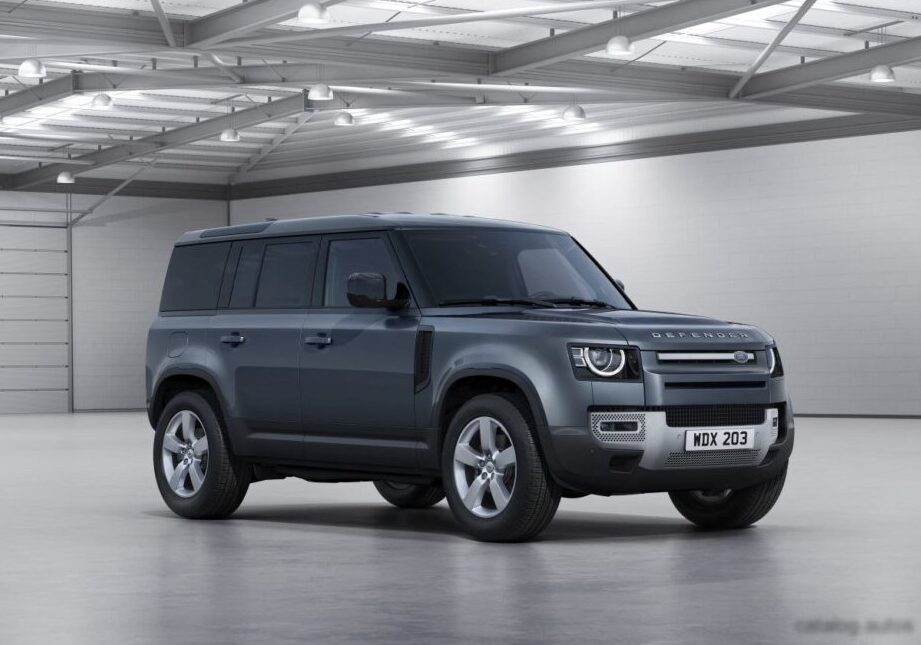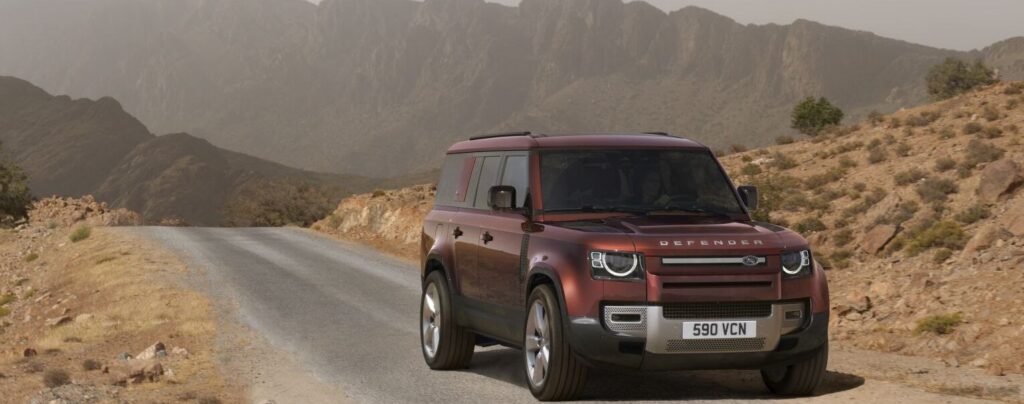
The Land Rover Defender 130 (L663) 3.0 D300, launched in May 2022, represents the largest iteration of the revived Defender family. Positioned as a premium, full-size SUV, the 130 expands upon the capabilities of the standard Defender 90 and 110 models by offering optional eight-seat accommodation alongside enhanced cargo capacity. This variant, powered by Land Rover’s Ingenium 3.0-liter inline-six diesel engine producing 300 horsepower, caters to buyers seeking a blend of off-road prowess, luxury, and practicality. It’s built on the D7x architecture, a monocoque aluminum-intensive platform designed for strength, rigidity, and weight optimization, marking a significant departure from the body-on-frame construction of the original Defender.
Technical Specifications
| Brand | Land Rover |
| Model | Defender |
| Generation | Defender 130 (L663) |
| Type (Engine) | 3.0 D300 (300 Hp) AWD Automatic |
| Start of production | May, 2022 |
| Powertrain Architecture | Internal Combustion engine |
| Body type | Off-road vehicle |
| Seats | 5-8 |
| Doors | 5 |
| Fuel consumption (economy) – combined (NEDC) | 8.2 l/100 km (28.7 US mpg, 34.4 UK mpg, 12.2 km/l) |
| CO2 emissions (NEDC) | 216 g/km |
| Fuel Type | Diesel |
| Acceleration 0 – 100 km/h | 7.5 sec |
| Acceleration 0 – 62 mph | 7.5 sec |
| Acceleration 0 – 60 mph | 7.1 sec |
| Maximum speed | 191 km/h (118.68 mph) |
| Weight-to-power ratio | 8.4 kg/Hp, 119.1 Hp/tonne |
| Weight-to-torque ratio | 7.2 kg/Nm, 138.9 Nm/tonne |
| Power | 300 Hp @ 4000 rpm |
| Power per litre | 100.1 Hp/l |
| Torque | 350 Nm @ 1500-2500 rpm (258.15 lb.-ft. @ 1500-2500 rpm) |
| Engine layout | Front, Longitudinal |
| Engine Model/Code | Ingenium / DT306 |
| Engine displacement | 2997 cm3 (182.89 cu. in.) |
| Number of cylinders | 6 |
| Engine configuration | Inline |
| Cylinder Bore | 83 mm (3.27 in.) |
| Piston Stroke | 92.3 mm (3.63 in.) |
| Compression ratio | 15.5:1 |
| Number of valves per cylinder | 4 |
| Fuel injection system | Diesel Commonrail |
| Engine aspiration | Turbocharger, Intercooler |
| Valvetrain | DOHC |
| Engine oil capacity | 8.8 l (9.3 US qt | 7.74 UK qt) |
| Coolant | 11.6 l (12.26 US qt | 10.21 UK qt) |
| Kerb Weight | 2519-2559 kg (5553.44 – 5641.63 lbs.) |
| Max. weight | 3375 kg (7440.6 lbs.) |
| Max load | 816-856 kg (1798.97 – 1887.16 lbs.) |
| Trunk (boot) space – minimum | 290 l (10.24 cu. ft.) |
| Trunk (boot) space – maximum | 2078 l (73.38 cu. ft.) |
| Fuel tank capacity | 89 l (23.51 US gal | 19.58 UK gal) |
| AdBlue tank | 20.7 l (5.47 US gal | 4.55 UK gal) |
| Max. roof load | 168 kg (370.38 lbs.) |
| Permitted trailer load with brakes (12%) | 3000 kg (6613.87 lbs.) |
| Permitted trailer load without brakes | 750 kg (1653.47 lbs.) |
| Permitted towbar download | 120 kg (264.55 lbs.) |
| Length | 5358 mm (210.94 in.) |
| Width with mirrors folded | 2008 mm (79.06 in.) |
| Width including mirrors | 2105 mm (82.87 in.) |
| Height | 1970 mm (77.56 in.) |
| Front track | 1706 mm (67.17 in.) |
| Rear (Back) track | 1702 mm (67.01 in.) |
| Ride height (ground clearance) | 219-290 mm (8.62 – 11.42 in.) |
| Minimum turning circle (turning diameter) | 13.1 m (42.98 ft.) |
| Approach angle | 30.1-37.5° |
| Departure angle | 24.5-28.5° |
| Ramp-over (brakeover) angle | 22-27.8° |
| Wading depth | 900 mm (35.43 in.) |
| Drivetrain Architecture | The Internal combustion engine (ICE) drives permanently the four wheels of the vehicle. |
| Drive wheel | All wheel drive (4×4) |
| Number of gears and type of gearbox | 8 gears, automatic transmission |
| Front suspension | Double wishbone |
| Rear suspension | Independent multi-link suspension |
| Front brakes | Ventilated discs, 363 mm |
| Rear brakes | Ventilated discs, 350 mm |
| Assisting systems | ABS (Anti-lock braking system) |
| Steering type | Steering rack and pinion |
| Power steering | Electric Steering |
Powertrain & Engine Architecture
The heart of the Defender 130 D300 is Land Rover’s Ingenium 3.0-liter inline-six diesel engine, designated DT306. This engine utilizes a sophisticated diesel commonrail fuel injection system and a single turbocharger with an intercooler to deliver a balance of power and efficiency. The engine boasts a high compression ratio of 15.5:1 and a double overhead camshaft (DOHC) valvetrain with four valves per cylinder. The Ingenium engine family is known for its modular design and use of lightweight materials, contributing to overall vehicle weight reduction. The D300 variant produces 300 horsepower at 4000 rpm and 350 Nm (258.15 lb-ft) of torque between 1500 and 2500 rpm. Paired with this engine is an eight-speed automatic transmission, providing smooth and responsive gear changes. The transmission is calibrated to prioritize both on-road comfort and off-road capability, with close gear ratios for acceleration and a deep final drive for low-speed crawling.
Driving Characteristics
The Defender 130 D300 offers a composed and refined driving experience, particularly on paved roads. The automatic transmission contributes to effortless cruising, while the engine provides ample torque for confident overtaking maneuvers. While the 7.5-second 0-62 mph acceleration isn’t sports car territory, it’s more than adequate for a vehicle of this size and weight. Compared to the higher-output D350 variant, the D300 feels slightly less urgent in its acceleration, but the difference is subtle. The eight-speed transmission’s gear ratios are well-matched to the engine’s torque curve, minimizing the need for frequent downshifts. Off-road, the D300’s torque delivery and the automatic transmission’s ability to hold gears make it a capable performer, although experienced off-road drivers may prefer the greater control offered by a manual transmission.
Equipment & Trim Levels
The Defender 130 D300 typically comes well-equipped as standard, reflecting its premium positioning. Standard features include leather upholstery, a touchscreen infotainment system with Apple CarPlay and Android Auto integration, a panoramic sunroof, and a suite of advanced driver-assistance systems (ADAS) such as adaptive cruise control, lane keep assist, and automatic emergency braking. Higher trim levels offer additional luxuries such as premium audio systems, heated and ventilated seats, and more extensive leather trim. Optional extras include a rear entertainment system, configurable interior lighting, and a variety of exterior styling enhancements.
Chassis & Braking
The Defender 130 utilizes a double-wishbone front suspension and an independent multi-link rear suspension, providing a comfortable ride and good handling characteristics. The suspension is tuned to balance on-road comfort with off-road capability. Braking duties are handled by ventilated discs on all four wheels, with larger discs at the front (363mm) compared to the rear (350mm). An anti-lock braking system (ABS) is standard, along with electronic brake-force distribution and brake assist. The electronic power steering provides precise and responsive steering feel.
Market Reception & Comparison
The Defender 130 D300 has been generally well-received by automotive critics, who praise its spacious interior, comfortable ride, and off-road capability. However, some reviewers have noted its relatively high price tag and its size, which can make it challenging to maneuver in tight urban environments. Compared to the Defender 110 D300, the 130 offers significantly more cargo space and the option of eight-seat accommodation, but at the cost of some agility. Fuel economy is respectable for a vehicle of this size, with combined fuel consumption of around 28.7 US mpg. Reliability reports are still emerging, but the Ingenium engine family has generally proven to be durable and reliable.
Legacy
The Defender 130 D300 represents a significant evolution of the Defender lineage, blending iconic design cues with modern technology and luxury. While it’s too early to assess its long-term reliability definitively, the Ingenium engine and the robust D7x platform suggest that it should prove to be a durable and dependable vehicle. On the used car market, the 130 D300 is expected to hold its value well, appealing to buyers seeking a premium, capable, and spacious SUV with a strong brand reputation.