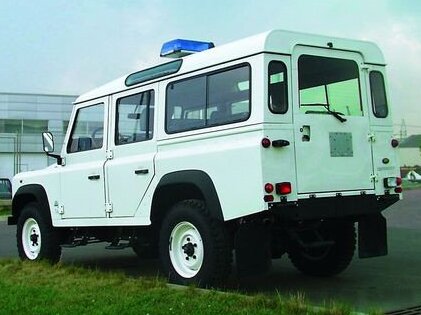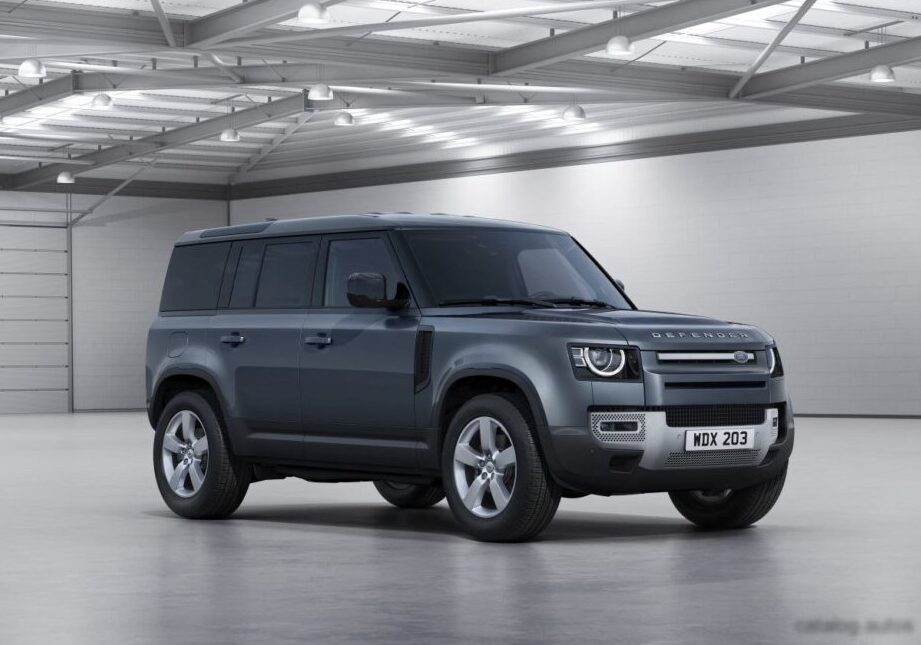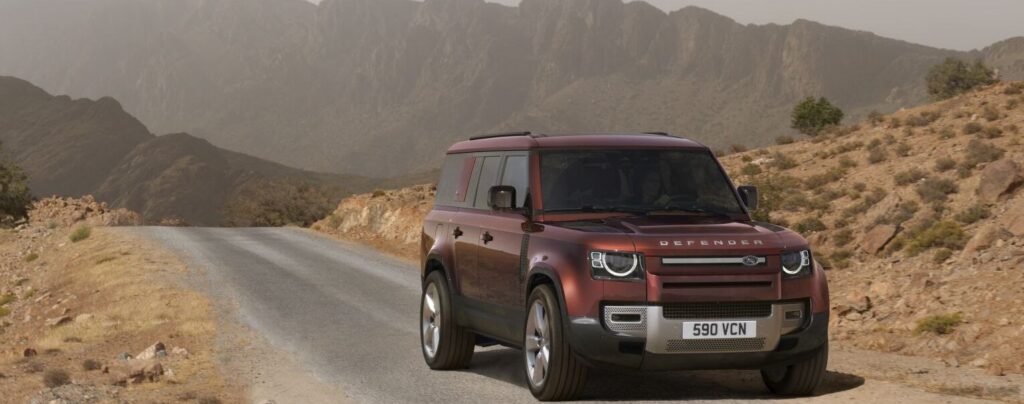
The Land Rover Defender 130 (L663) 3.0 D300, launched in May 2022, represents the largest iteration of the revived Defender family. Positioned as a premium, full-size SUV, the 130 expands upon the capabilities of the standard Defender 90 and 110 models by offering optional eight-seat accommodation alongside enhanced cargo capacity. This variant, powered by Land Rover’s Ingenium 3.0-liter inline-six diesel engine with mild-hybrid technology, aims to balance off-road prowess with on-road refinement and practicality for larger families or those requiring substantial passenger and luggage space. It builds upon the L663 platform, introduced in 2020, which marked a significant departure from the traditional body-on-frame construction of previous Defender generations, adopting a modern monocoque chassis.
Technical Specifications
| Brand | Land Rover |
| Model | Defender |
| Generation | Defender 130 (L663) |
| Type (Engine) | 3.0 D300 (300 Hp) Mild Hybrid AWD Automatic |
| Start of production | May, 2022 |
| Powertrain Architecture | MHEV (Mild Hybrid Electric Vehicle) |
| Body type | Off-road vehicle |
| Seats | 5-8 |
| Doors | 5 |
| Fuel consumption at Low speed (WLTP) | 12.3-12.8 l/100 km (19.1 – 18.4 US mpg) |
| Fuel consumption at Medium speed (WLTP) | 8.7-9 l/100 km (27 – 26.1 US mpg) |
| Fuel consumption at high speed (WLTP) | 7.2-7.7 l/100 km (32.7 – 30.5 US mpg) |
| Fuel consumption at very high speed (WLTP) | 9-9.6 l/100 km (26.1 – 24.5 US mpg) |
| Combined fuel consumption (WLTP) | 8.8-9.4 l/100 km (26.7 – 25 US mpg) |
| CO2 emissions (WLTP) | 232-246 g/km |
| Fuel Type | Diesel |
| Acceleration 0 – 100 km/h | 7.5 sec |
| Acceleration 0 – 62 mph | 7.5 sec |
| Acceleration 0 – 60 mph | 7.1 sec |
| Maximum speed | 191 km/h (118.68 mph) |
| Weight-to-power ratio | 8.5 kg/Hp, 117.6 Hp/tonne |
| Weight-to-torque ratio | 3.9 kg/Nm, 254.9 Nm/tonne |
| Battery technology | Lithium-ion (Li-Ion) |
| Power | 300 Hp @ 4000 rpm |
| Torque | 650 Nm @ 1500-2500 rpm (479.42 lb.-ft. @ 1500-2500 rpm) |
| Engine layout | Front, Longitudinal |
| Engine Model/Code | Ingenium / DT306 |
| Engine displacement | 2997 cm3 (182.89 cu. in.) |
| Number of cylinders | 6 |
| Engine configuration | Inline |
| Cylinder Bore | 83 mm (3.27 in.) |
| Piston Stroke | 92.3 mm (3.63 in.) |
| Compression ratio | 15.5:1 |
| Number of valves per cylinder | 4 |
| Fuel injection system | Diesel Commonrail |
| Engine aspiration | Turbocharger, Intercooler |
| Valvetrain | DOHC |
| Engine oil capacity | 8.8 l (9.3 US qt | 7.74 UK qt) |
| Coolant | 11.6 l (12.26 US qt | 10.21 UK qt) |
| Kerb Weight | 2550-2589 kg (5621.79 – 5707.77 lbs.) |
| Max. weight | 3380 kg (7451.62 lbs.) |
| Max load | 791-830 kg (1743.86 – 1829.84 lbs.) |
| Trunk (boot) space – minimum | 290 l (10.24 cu. ft.) |
| Trunk (boot) space – maximum | 2078 l (73.38 cu. ft.) |
| Fuel tank capacity | 89 l (23.51 US gal | 19.58 UK gal) |
| AdBlue tank | 20.7 l (5.47 US gal | 4.55 UK gal) |
| Max. roof load | 168 kg (370.38 lbs.) |
| Permitted trailer load with brakes (12%) | 3000 kg (6613.87 lbs.) |
| Permitted trailer load without brakes | 750 kg (1653.47 lbs.) |
| Permitted towbar download | 120 kg (264.55 lbs.) |
| Length | 5358 mm (210.94 in.) |
| Width with mirrors folded | 2008 mm (79.06 in.) |
| Width including mirrors | 2105 mm (82.87 in.) |
| Height | 1970 mm (77.56 in.) |
| Front track | 1706 mm (67.17 in.) |
| Rear (Back) track | 1702 mm (67.01 in.) |
| Ride height (ground clearance) | 219-290 mm (8.62 – 11.42 in.) |
| Minimum turning circle (turning diameter) | 13.1 m (42.98 ft.) |
| Approach angle | 30.1-37.5° |
| Departure angle | 24.5-28.5° |
| Ramp-over (brakeover) angle | 22-27.8° |
| Wading depth | 900 mm (35.43 in.) |
| Drivetrain Architecture | ICE and electric motor permanently drive all four wheels. |
| Drive wheel | All wheel drive (4×4) |
| Number of gears and type of gearbox | 8 gears, automatic transmission |
| Front suspension | Double wishbone |
| Rear suspension | Independent multi-link suspension |
| Front brakes | Ventilated discs, 363 mm |
| Rear brakes | Ventilated discs, 350 mm |
| Steering type | Steering rack and pinion |
| Power steering | Electric Steering |
Powertrain & Engine Architecture
The heart of the Defender 130 D300 is Land Rover’s Ingenium 3.0-liter inline-six diesel engine, designated DT306. This engine benefits from a mild-hybrid system (MHEV) incorporating a 48-volt electrical architecture. The MHEV system utilizes a Belt-integrated Starter Generator (BiSG) to enable smoother stop/start functionality, regenerative braking, and a small boost in power delivery. The engine employs a sophisticated diesel commonrail fuel injection system, delivering fuel at extremely high pressures for optimized combustion. A single turbocharger, coupled with an intercooler, provides forced induction, contributing to the engine’s 300 horsepower output at 4,000 rpm and a substantial 650 Nm (479.42 lb-ft) of torque available from 1,500 to 2,500 rpm. The engine features a double overhead camshaft (DOHC) valvetrain with four valves per cylinder. Power is transmitted to all four wheels via an eight-speed automatic transmission, calibrated for both on-road comfort and off-road capability.
Driving Characteristics
The 3.0 D300 powertrain in the Defender 130 delivers a refined and capable driving experience. While not overtly sporty, the engine provides ample torque for effortless acceleration and strong performance in various driving conditions. The eight-speed automatic transmission shifts smoothly and efficiently, contributing to relaxed cruising on highways. Compared to the higher-output gasoline variants, the D300 offers improved fuel economy and a more relaxed power delivery. However, it lacks the immediate responsiveness of the petrol engines. The added weight of the 130, compared to the 90 and 110, is noticeable, particularly during spirited driving, but the engine’s torque helps mitigate this. The automatic transmission’s gear ratios are optimized for both on-road efficiency and low-speed off-road crawling.
Equipment & Trim Levels
The Defender 130 D300 typically comes well-equipped as standard. Features include premium leather upholstery, a touchscreen infotainment system with navigation, Apple CarPlay and Android Auto integration, a panoramic sunroof, and a comprehensive suite of driver-assistance systems such as adaptive cruise control, lane-keeping assist, and automatic emergency braking. Optional extras include upgraded audio systems, configurable interior lighting, and various off-road packages. Trim levels, such as SE, HSE, and X, offer progressively more luxurious appointments and features. The 130 specifically benefits from available third-row seating, increasing passenger capacity to eight.
Chassis & Braking
The Defender 130 utilizes a robust monocoque chassis constructed from lightweight aluminum. The suspension system consists of a double-wishbone setup at the front and an independent multi-link arrangement at the rear, providing a comfortable ride and good handling characteristics. Ventilated disc brakes are fitted to all four wheels, with larger diameter discs at the front (363mm) compared to the rear (350mm). The braking system is augmented by ABS (Anti-lock Braking System) and electronic brake-force distribution. Stabilizer bars are fitted front and rear to reduce body roll during cornering.
Market Reception & Comparison
The Defender 130 D300 has been generally well-received by automotive critics, praised for its spacious interior, comfortable ride, and capable off-road performance. However, its size and price point have been noted as potential drawbacks. Compared to the Defender 110 D300, the 130 offers significantly more cargo space and the option of eight-seat accommodation, but at the expense of some maneuverability. Fuel economy figures are competitive for a vehicle of its size and weight, although the diesel engine’s emissions are subject to increasing scrutiny. Reliability reports are still emerging, but Land Rover has made strides in improving the dependability of its vehicles in recent years.
Legacy
The Land Rover Defender 130 D300 represents a modern interpretation of the iconic Defender lineage. While the transition to a monocoque chassis and sophisticated technology has alienated some traditionalists, the 130 expands the Defender’s appeal to a wider audience seeking a luxurious and capable SUV with ample space for passengers and cargo. The Ingenium diesel engine, with its mild-hybrid assistance, offers a balance of performance, efficiency, and refinement. As a relatively new model, the long-term reliability of the 130 D300 remains to be fully assessed, but its robust construction and advanced engineering suggest it will become a sought-after vehicle in the used car market.