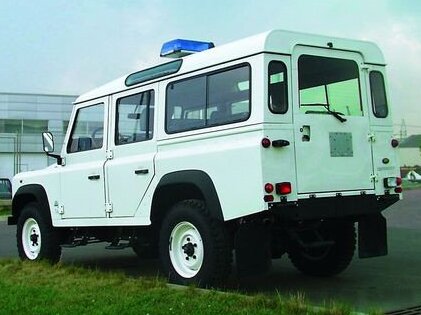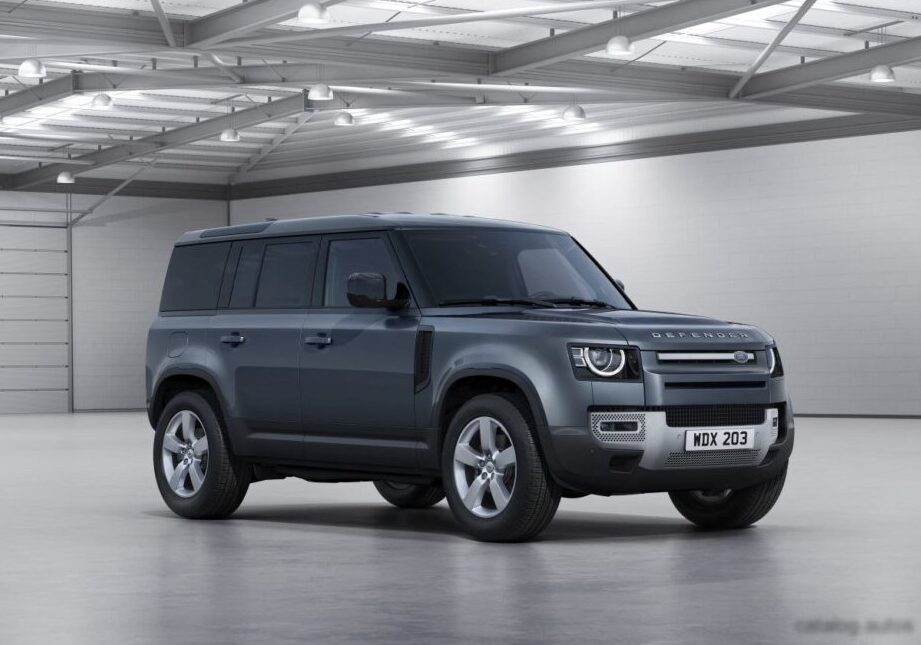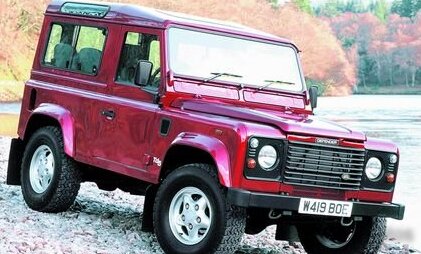
The Land Rover Defender 90 2.5, producing 83 horsepower, represents a foundational iteration of the iconic Defender lineage. Produced from 1985 to 1997, this variant occupied a crucial position within the broader Defender 90 range, serving as the entry point for buyers prioritizing rugged capability over outright performance. It was part of the Series III stage of the original Land Rover, evolving from the earlier Land Rover II, and laid the groundwork for the more modern Defenders that followed. This particular model was primarily sold in Europe, Australia, and other Commonwealth markets, where its robust simplicity and off-road prowess were highly valued.
Technical Specifications
| Brand | Land Rover |
| Model | Defender |
| Generation | Defender 90 |
| Type (Engine) | 2.5 (83 Hp) |
| Start of production | 1985 |
| End of production | 1997 |
| Powertrain Architecture | Internal Combustion engine |
| Body type | Off-road vehicle |
| Seats | 6 |
| Doors | 2 |
| Fuel consumption (combined) | 14.8 l/100 km (15.9 US mpg, 19.1 UK mpg, 6.8 km/l) |
| Fuel Type | Petrol (Gasoline) |
| Maximum speed | 115 km/h (71.46 mph) |
| Weight-to-power ratio | 19.7 kg/Hp, 50.7 Hp/tonne |
| Weight-to-torque ratio | 9 kg/Nm, 110.6 Nm/tonne |
| Power | 83 Hp @ 4000 rpm |
| Power per litre | 33.3 Hp/l |
| Torque | 181 Nm @ 2000 rpm (133.5 lb.-ft. @ 2000 rpm) |
| Engine layout | Front, Longitudinal |
| Engine displacement | 2495 cm3 (152.25 cu. in.) |
| Number of cylinders | 4 |
| Engine configuration | Inline |
| Cylinder Bore | 90.5 mm (3.56 in.) |
| Piston Stroke | 97 mm (3.82 in.) |
| Compression ratio | 8:1 |
| Number of valves per cylinder | 2 |
| Fuel injection system | Carburettor |
| Engine aspiration | Naturally aspirated engine |
| Kerb Weight | 1636 kg (3606.76 lbs.) |
| Max. weight | 2400 kg (5291.09 lbs.) |
| Max load | 764 kg (1684.33 lbs.) |
| Trunk (boot) space – minimum | 1600 l (56.5 cu. ft.) |
| Fuel tank capacity | 55 l (14.53 US gal | 12.1 UK gal) |
| Length | 3722 mm (146.54 in.) |
| Width | 1790 mm (70.47 in.) |
| Height | 2000 mm (78.74 in.) |
| Wheelbase | 2360 mm (92.91 in.) |
| Front track | 1486 mm (58.5 in.) |
| Rear (Back) track | 1486 mm (58.5 in.) |
| Drive wheel | All wheel drive (4×4) |
| Number of gears and type of gearbox | 5 gears, manual transmission |
| Front suspension | Rigid axle suspension |
| Rear suspension | Rigid axle suspension |
| Front brakes | Disc |
| Rear brakes | Drum |
| Assisting systems | ABS (Anti-lock braking system) |
| Tires size | 205/80 R16 S |
Powertrain & Engine Architecture
The heart of the Defender 90 2.5 was the 2.495-liter inline-four cylinder petrol engine. This engine, often referred to as the 2.5-liter, was a naturally aspirated unit utilizing a single Zenith 36mm carburetor for fuel delivery. The engine featured a relatively low 8:1 compression ratio, contributing to its durability and ability to run on lower octane fuels, a necessity in many of its target markets. The valvetrain employed a two-valve per cylinder configuration (OHV), a design choice prioritizing simplicity and reliability over high-revving performance. The engine code varied slightly depending on the year and market, but generally fell within the 205 or 225 series. Power output was rated at 83 horsepower at 4000 rpm and 181 Nm (133.5 lb-ft) of torque at 2000 rpm. The engine was mounted longitudinally in the chassis. The standard transmission was a five-speed manual gearbox, known for its robust construction but relatively long throws.
Driving Characteristics
The Defender 90 2.5 with the 83 hp engine and manual transmission offered a driving experience focused on capability rather than speed. Acceleration was modest, and highway cruising required careful planning, particularly when laden with cargo or tackling inclines. The gear ratios were geared towards low-speed torque, making it exceptionally adept at navigating challenging off-road terrain. Compared to the later 200Tdi and 300Tdi diesel variants, or even the V8-powered Defenders, the 2.5-liter petrol engine felt significantly underpowered. However, its lighter weight compared to the V8 models did offer some advantage in maneuverability. The carbureted engine also meant a less refined throttle response compared to fuel-injected engines.
Equipment & Trim Levels
The Defender 90 2.5 was typically offered in a fairly basic trim level, reflecting its positioning as the entry-level model. Standard features included vinyl upholstery, rubber floor mats, and a simple dashboard layout. Optional extras included features like door locks, upgraded seating materials, and a basic sound system. The emphasis was on functionality and durability, with minimal concessions to luxury. The vehicle was often purchased by farmers, rural workers, and those needing a utilitarian vehicle for work or exploration.
Chassis & Braking
The Defender 90 2.5 utilized a traditional body-on-frame construction, providing exceptional strength and durability. The chassis was a ladder frame design, capable of withstanding significant stresses from off-road use. Suspension consisted of a rigid axle setup with leaf springs at both the front and rear, offering a comfortable ride on rough terrain but a somewhat bouncy experience on paved roads. Braking was accomplished via disc brakes on the front wheels and drum brakes on the rear. An anti-lock braking system (ABS) was available as an option, but not standard equipment. The tires were typically 205/80 R16, chosen for their off-road grip and durability.
Market Reception & Comparison
The Defender 90 2.5 was generally well-received in its target markets, particularly by those who valued its ruggedness and off-road capability. Critics acknowledged its simplicity and durability but often noted its lack of power and refinement compared to more modern vehicles. Compared to the diesel-powered Defenders, the 2.5-liter petrol engine offered less torque and lower fuel economy. However, it was often preferred by those who disliked the noise and vibration of diesel engines. The 2.5 was also seen as a more affordable entry point into Defender ownership.
Legacy
The Land Rover Defender 90 2.5, while not the most powerful or refined Defender variant, holds a significant place in the model’s history. Its robust simplicity and off-road prowess have earned it a loyal following among enthusiasts. Today, well-maintained examples are sought after by collectors and those seeking a classic off-road vehicle. The 2.5-liter engine, while prone to occasional carburetor issues, is generally considered reliable if properly maintained. Parts availability can be a challenge, but a thriving aftermarket supports the continued operation of these iconic vehicles. The Defender 90 2.5 represents a bygone era of automotive engineering, where durability and capability were prioritized over luxury and performance.