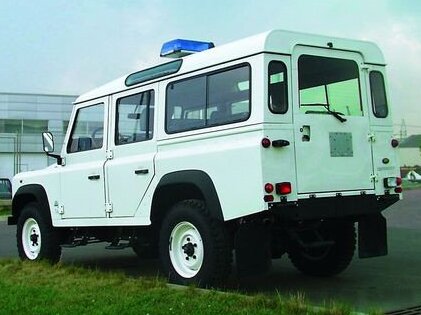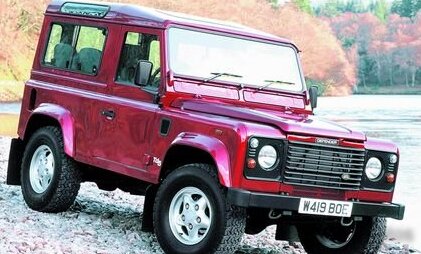
The Land Rover Defender 90 2.5 Diesel, produced from 1984 to 1990, represents a pivotal point in the lineage of the iconic Defender model. This variant, powered by a naturally aspirated 2.5-liter diesel engine producing 68 horsepower, was a workhorse designed for utility and durability rather than outright speed. It occupied the entry-level position within the Defender 90 range, appealing to buyers prioritizing functionality and affordability over performance. The Defender 90, as a whole, was the shortest wheelbase version of the Defender family, making it particularly adept at navigating challenging terrain. This specific diesel configuration was especially popular in agricultural and rural settings, as well as in export markets where fuel efficiency and low running costs were paramount.
Technical Specifications
| Brand | Land Rover |
| Model | Defender |
| Generation | Defender 90 |
| Type (Engine) | 2.5 D (68 Hp) |
| Start of production | 1984 |
| End of production | 1990 |
| Powertrain Architecture | Internal Combustion engine |
| Body type | Off-road vehicle |
| Seats | 6 |
| Doors | 2 |
| Fuel consumption (combined) | 10.3 l/100 km (22.8 US mpg, 27.4 UK mpg, 9.7 km/l) |
| Fuel Type | Diesel |
| Maximum speed | 105 km/h (65.24 mph) |
| Weight-to-power ratio | 24.4 kg/Hp, 41.1 Hp/tonne |
| Weight-to-torque ratio | 10.5 kg/Nm, 95.4 Nm/tonne |
| Power | 68 Hp @ 4000 rpm |
| Power per litre | 27.3 Hp/l |
| Torque | 158 Nm @ 1800 rpm (116.53 lb.-ft. @ 1800 rpm) |
| Engine layout | Front, Longitudinal |
| Engine displacement | 2495 cm3 (152.25 cu. in.) |
| Number of cylinders | 4 |
| Engine configuration | Inline |
| Cylinder Bore | 90.5 mm (3.56 in.) |
| Piston Stroke | 97 mm (3.82 in.) |
| Compression ratio | 21:1 |
| Number of valves per cylinder | 2 |
| Fuel injection system | Precombustion chamber injection |
| Engine aspiration | Naturally aspirated engine |
| Kerb Weight | 1656 kg (3650.86 lbs.) |
| Max. weight | 2400 kg (5291.09 lbs.) |
| Max load | 744 kg (1640.24 lbs.) |
| Trunk (boot) space – minimum | 1600 l (56.5 cu. ft.) |
| Fuel tank capacity | 55 l (14.53 US gal | 12.1 UK gal) |
| Length | 3722 mm (146.54 in.) |
| Width | 1790 mm (70.47 in.) |
| Height | 2000 mm (78.74 in.) |
| Wheelbase | 2360 mm (92.91 in.) |
| Front track | 1486 mm (58.5 in.) |
| Rear (Back) track | 1486 mm (58.5 in.) |
| Drive wheel | All wheel drive (4×4) |
| Number of gears and type of gearbox | 5 gears, manual transmission |
| Front suspension | Rigid axle suspension |
| Rear suspension | Rigid axle suspension |
| Front brakes | Disc |
| Rear brakes | Drum |
| Assisting systems | ABS (Anti-lock braking system) |
| Tires size | 205/80 R16 S |
Powertrain & Engine Architecture
The heart of the Defender 90 2.5 D is the 2.5-liter inline-four diesel engine. This engine, often referred to by its engine code 200TDI (though earlier versions existed), was a robust and relatively simple design. It utilized precombustion chamber injection, a system common in diesel engines of the era, where fuel is injected into a small chamber within the cylinder head before entering the main combustion chamber. This aids in cold starting and improves combustion efficiency. The engine featured a two-valve per cylinder configuration and a relatively low compression ratio of 21:1. The 5-speed manual transmission was the only gearbox option available with this engine, chosen for its durability and suitability for off-road driving. The transmission’s gear ratios were geared towards low-speed torque, prioritizing tractability over rapid acceleration.
Driving Characteristics
The 68 horsepower output of the 2.5 Diesel resulted in modest performance. Acceleration was slow, and highway cruising required careful planning. However, the engine’s strength lay in its substantial low-end torque of 158 Nm (116.53 lb.-ft.). This torque, available from just 1800 rpm, made the Defender 90 exceptionally capable off-road, allowing it to crawl over obstacles and navigate difficult terrain with ease. Compared to the later 200Tdi and 300Tdi engines, or even the petrol versions, this 2.5 Diesel felt significantly underpowered. The manual transmission, while robust, required frequent shifting to maintain momentum, especially when laden with cargo or tackling inclines. The gearing was optimized for off-road use, meaning higher speeds resulted in a noisy and strained engine.
Equipment & Trim Levels
The Defender 90 2.5 D was typically sparsely equipped, reflecting its utilitarian purpose. Standard features included basic steel wheels, vinyl upholstery, and a rudimentary dashboard. Amenities were kept to a minimum. Optional extras, such as a heater, upgraded seats, and a basic radio, were available, but were often specified by commercial buyers or those intending to use the vehicle for demanding tasks. The interior was designed for practicality and ease of cleaning, with rubber floor mats and durable plastic trim. The focus was on providing a functional and hard-wearing interior rather than luxury or comfort.
Chassis & Braking
The Defender 90 chassis was a traditional ladder-frame construction, renowned for its strength and durability. Suspension consisted of rigid axles front and rear, with leaf springs providing a firm but capable ride. The front brakes were discs, offering better stopping power than the drum brakes fitted to the rear wheels. An anti-lock braking system (ABS) was available as an option, but was not standard equipment. The relatively simple suspension setup prioritized robustness and off-road capability over on-road comfort. The short wheelbase of the Defender 90 contributed to its excellent maneuverability in tight spaces.
Market Reception & Comparison
The Defender 90 2.5 D was not a vehicle praised for its performance or refinement. Critics acknowledged its limitations but recognized its exceptional off-road capability and low running costs. Compared to the petrol-powered Defenders, the 2.5 Diesel offered significantly better fuel economy, making it a popular choice for those covering long distances or operating in areas where fuel was expensive. Against other diesel-powered 4x4s of the era, the Defender 90 offered a unique combination of ruggedness, simplicity, and affordability. However, its slow acceleration and limited top speed were often cited as drawbacks.
Legacy
The 2.5 Diesel engine, in its various iterations, proved to be remarkably durable and reliable. Many examples of the Defender 90 2.5 D are still in use today, testament to the quality of their construction. While not as sought-after as later, more powerful Defenders, the 2.5 D holds a special place in the hearts of Land Rover enthusiasts who appreciate its simplicity and rugged charm. In the used car market, these Defenders are typically more affordable than their more powerful counterparts, making them an accessible entry point into Land Rover ownership. However, potential buyers should be aware of the need for regular maintenance and the potential for age-related issues, such as corrosion and wear on mechanical components.