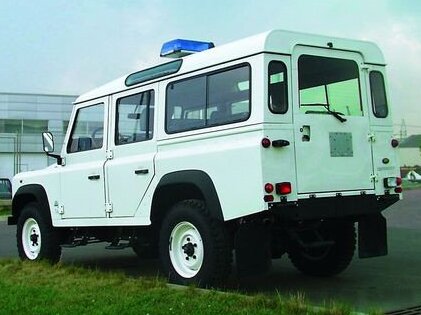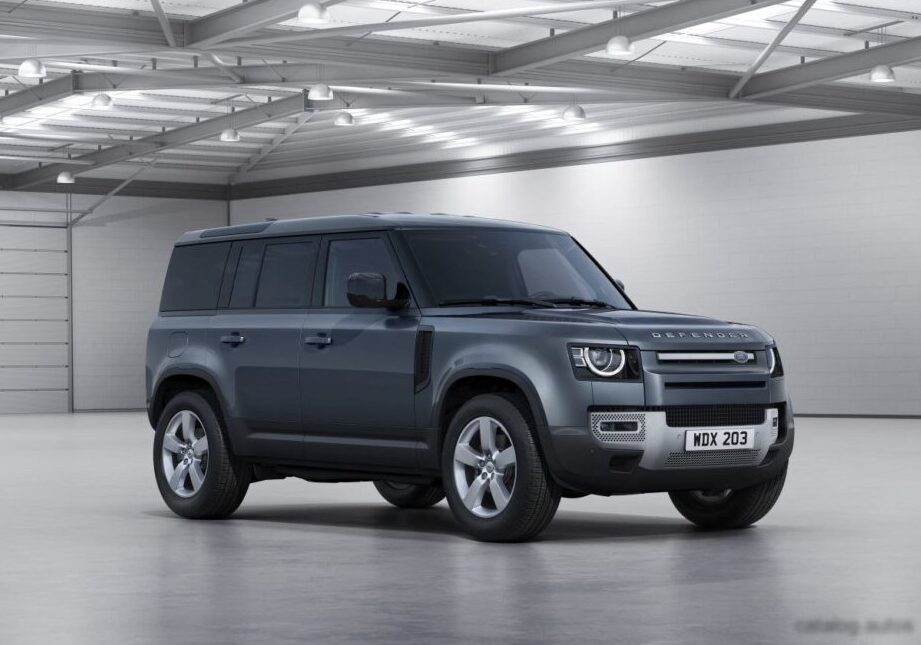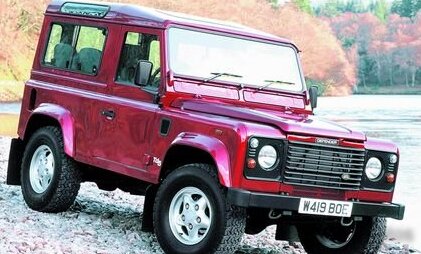
The Land Rover Defender 90 2.5 TD5, produced from 1998 to 2001, represents a pivotal moment in the iconic Defender lineage. Falling within the second generation of the Defender (introduced in 1994, internally designated as the 1HX0/A3 platform), the TD5 model was a significant upgrade over its predecessor, offering improved refinement and performance while retaining the legendary off-road capability that defined the Defender nameplate. This particular 90 variant – signifying the short-wheelbase three-door body style – served as a workhorse for farmers, explorers, and enthusiasts alike, particularly in European and Commonwealth markets. It occupied a middle ground in the Defender 90 lineup, offering a balance between affordability and capability, slotting below the more powerful V8 models and above the base 2.0L petrol versions.
Technical Specifications
| Brand | Land Rover |
| Model | Defender |
| Generation | Defender 90 |
| Type (Engine) | 2.5 TD5 (122 Hp) |
| Start of production | 1998 |
| End of production | 2001 |
| Powertrain Architecture | Internal Combustion engine |
| Body type | Off-road vehicle |
| Seats | 6 |
| Doors | 2 |
| Fuel consumption (urban) | 11.9 l/100 km (19.8 US mpg, 23.7 UK mpg, 8.4 km/l) |
| Fuel consumption (extra urban) | 8.8 l/100 km (26.7 US mpg, 32.1 UK mpg, 11.4 km/l) |
| Fuel consumption (combined) | 10.1 l/100 km (23.3 US mpg, 28 UK mpg, 9.9 km/l) |
| Fuel Type | Diesel |
| Acceleration 0 – 100 km/h | 17.5 sec |
| Acceleration 0 – 62 mph | 17.5 sec |
| Acceleration 0 – 60 mph | 16.6 sec |
| Maximum speed | 130 km/h (80.78 mph) |
| Weight-to-power ratio | 15.3 kg/Hp, 65.2 Hp/tonne |
| Weight-to-torque ratio | 6.2 kg/Nm, 160.4 Nm/tonne |
| Power | 122 Hp @ 4200 rpm |
| Power per litre | 48.9 Hp/l |
| Torque | 300 Nm @ 1950 rpm (221.27 lb.-ft. @ 1950 rpm) |
| Engine layout | Front, Longitudinal |
| Engine displacement | 2495 cm3 (152.25 cu. in.) |
| Number of cylinders | 5 |
| Engine configuration | Inline |
| Cylinder Bore | 84.5 mm (3.33 in.) |
| Piston Stroke | 89 mm (3.5 in.) |
| Compression ratio | 19.5:1 |
| Number of valves per cylinder | 2 |
| Fuel injection system | Diesel Commonrail |
| Engine aspiration | Turbocharger |
| Valvetrain | OHC |
| Engine oil capacity | 8.2 l (8.66 US qt | 7.21 UK qt) |
| Coolant capacity | 13 l (13.74 US qt | 11.44 UK qt) |
| Kerb Weight | 1870 kg (4122.64 lbs.) |
| Max. weight | 2550 kg (5621.79 lbs.) |
| Max load | 680 kg (1499.14 lbs.) |
| Trunk (boot) space – minimum | 590 l (20.84 cu. ft.) |
| Trunk (boot) space – maximum | 1850 l (65.33 cu. ft.) |
| Fuel tank capacity | 60 l (15.85 US gal | 13.2 UK gal) |
| Length | 3880 mm (152.76 in.) |
| Width | 1790 mm (70.47 in.) |
| Height | 2059 mm (81.06 in.) |
| Wheelbase | 2360 mm (92.91 in.) |
| Front track | 1486 mm (58.5 in.) |
| Rear track | 1486 mm (58.5 in.) |
| Drive wheel | All wheel drive (4×4) |
| Number of gears | 5 |
| Gearbox type | Manual transmission |
| Front suspension | Coil spring |
| Rear suspension | Coil spring |
| Front brakes | Ventilated discs |
| Rear brakes | Disc |
| Assisting systems | ABS (Anti-lock braking system) |
| Power steering | Hydraulic Steering |
| Tires size | 205/80 R16 S |
Powertrain & Engine Architecture
The heart of the Defender 90 2.5 TD5 is the 5-cylinder, 2.5-liter turbocharged diesel engine, designated as the 200Tdi derivative. While sharing a lineage with the earlier 200Tdi engine, the TD5 introduced significant advancements. Most notably, it featured a Bosch Electronic Diesel Control (EDC) system, a sophisticated electronic fuel injection system that improved combustion efficiency and reduced emissions. The engine utilized a direct injection system with a turbocharger and intercooler to boost power output to 122 horsepower and 300 Nm (221 lb-ft) of torque. The engine’s robust construction, featuring a cast iron block and aluminum cylinder head, contributed to its longevity. The five-speed manual transmission was the standard offering, providing a suitable gear spread for both on-road and off-road driving. The engine’s longitudinal mounting and the 4×4 drivetrain configuration ensured optimal weight distribution and traction.
Driving Characteristics
The 2.5 TD5 engine in the Defender 90 delivered a characteristically diesel driving experience. While not particularly fast – 0-60 mph took around 16.6 seconds – it offered ample low-end torque, making it exceptionally capable in challenging off-road conditions. The manual transmission allowed for precise control, and the gear ratios were well-suited to both crawling over obstacles and maintaining reasonable speeds on paved roads. Compared to the higher-output V8 Defenders, the TD5 felt less hurried, but its fuel efficiency was significantly better. Against the 2.0L petrol versions, the TD5 offered a substantial increase in torque and overall usability, particularly when carrying loads or towing. The relatively high compression ratio (19.5:1) contributed to the engine’s responsiveness, but also meant it required high-quality diesel fuel.
Equipment & Trim Levels
The Defender 90 2.5 TD5 was typically equipped with a utilitarian interior focused on durability and functionality. Standard features included vinyl upholstery, rubber floor mats, and a basic dashboard layout. Power steering was often included, but air conditioning and electric windows were typically optional extras. Trim levels were relatively sparse; the focus was on providing a robust and capable vehicle rather than luxury. Optional equipment could include a roof rack, side steps, and a winch, catering to the vehicle’s intended use as a workhorse or adventure vehicle. The relatively simple interior design contributed to the Defender’s ease of maintenance and repair.
Chassis & Braking
The Defender 90’s chassis was a traditional ladder-frame construction, renowned for its strength and rigidity. The suspension consisted of coil springs all around, providing a comfortable ride despite the vehicle’s off-road focus. Braking duties were handled by ventilated discs at the front and discs at the rear, offering adequate stopping power for the vehicle’s weight. ABS (Anti-lock Braking System) was often included as standard equipment, enhancing safety in slippery conditions. The relatively simple suspension setup prioritized durability and off-road articulation over on-road handling finesse.
Market Reception & Comparison
The Defender 90 2.5 TD5 was generally well-received by critics and buyers alike. It was praised for its off-road capability, reliability, and fuel efficiency. Compared to the V8 models, the TD5 offered a more economical and practical option for everyday use. Against the 2.0L petrol versions, it provided a significant performance advantage. However, some critics noted the engine’s relatively noisy operation and lack of outright speed. The TD5’s reputation for durability and its relatively simple mechanical design made it a popular choice among those seeking a reliable and capable off-road vehicle.
Legacy
The Land Rover Defender 90 2.5 TD5 remains a highly sought-after vehicle in the used car market today. Its robust construction, legendary off-road capability, and relatively simple mechanical design make it a popular choice among enthusiasts and collectors. The TD5 engine, while not the most powerful, is known for its longevity and relatively easy maintenance. Well-maintained examples command premium prices, reflecting the Defender’s enduring appeal and its status as a true icon of British automotive engineering. The TD5 engine, in particular, is often considered one of the most reliable and durable diesel engines ever produced by Land Rover.