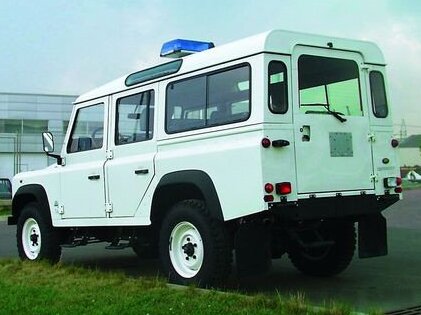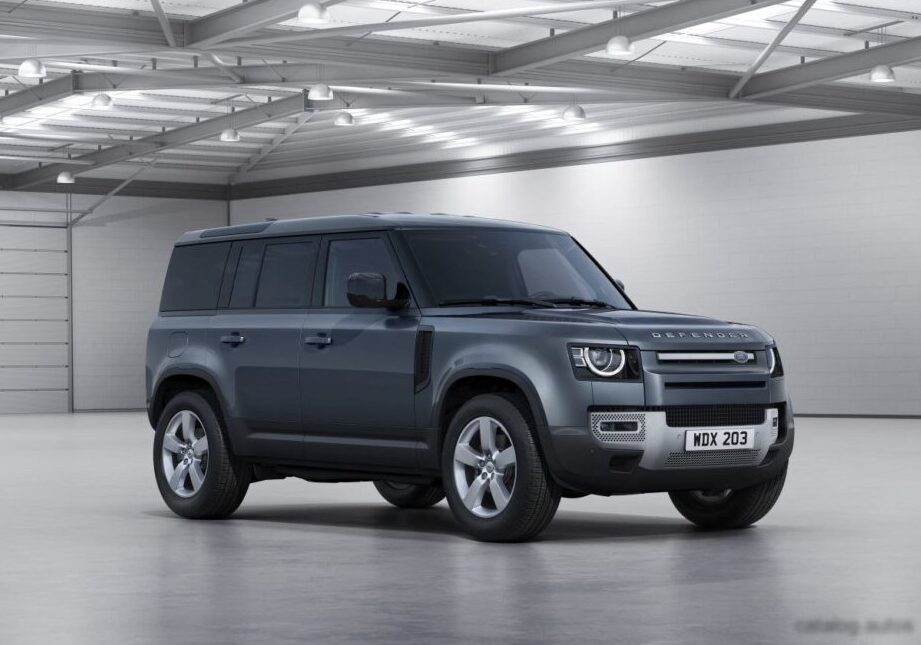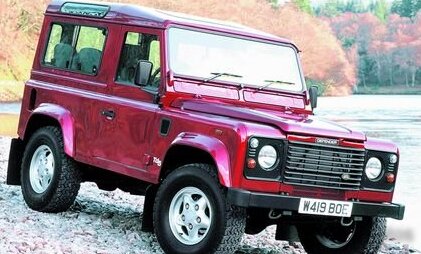
The Land Rover Defender 90 4.0 i V8 (182 hp) represents a significant, though relatively short-lived, chapter in the iconic Defender lineage. Produced between 1990 and 1993, this variant offered a substantial performance upgrade over the traditionally four-cylinder powered Defenders, aimed at buyers seeking a more refined and capable off-road experience. It sat within the early stages of the Series III evolution, before the full transition to the later 300Tdi and Td5 engines. This particular configuration, combining the Rover V8 with the short-wheelbase 90 body style, provided a unique blend of power, agility, and classic Land Rover character.
Technical Specifications
| Brand | Land Rover |
| Model | Defender |
| Generation | Defender 90 |
| Type (Engine) | 4.0 i V8 (182 Hp) |
| Start of production | 1990 |
| End of production | 1993 |
| Powertrain Architecture | Internal Combustion engine |
| Body type | Off-road vehicle |
| Seats | 6 |
| Doors | 2 |
| Fuel Type | Petrol (Gasoline) |
| Maximum speed | 140 km/h (86.99 mph) |
| Power | 182 Hp @ 4750 rpm |
| Power per litre | 46.1 Hp/l |
| Torque | 312 Nm @ 3100 rpm (230.12 lb.-ft. @ 3100 rpm) |
| Engine layout | Front, Longitudinal |
| Engine displacement | 3947 cm3 (240.86 cu. in.) |
| Number of cylinders | 8 |
| Engine configuration | V-engine |
| Cylinder Bore | 94 mm (3.7 in.) |
| Piston Stroke | 71.1 mm (2.8 in.) |
| Compression ratio | 9.4:1 |
| Number of valves per cylinder | 2 |
| Fuel injection system | Multi-port manifold injection |
| Engine aspiration | Naturally aspirated engine |
| Trunk (boot) space – minimum | 1600 l (56.5 cu. ft.) |
| Fuel tank capacity | 55 l (14.53 US gal | 12.1 UK gal) |
| Length | 3722 mm (146.54 in.) |
| Width | 1790 mm (70.47 in.) |
| Height | 2000 mm (78.74 in.) |
| Wheelbase | 2360 mm (92.91 in.) |
| Front track | 1486 mm (58.5 in.) |
| Rear (Back) track | 1486 mm (58.5 in.) |
| Drive wheel | All wheel drive (4×4) |
| Number of gears and type of gearbox | 5 gears, manual transmission |
| Front suspension | Rigid axle suspension |
| Rear suspension | Rigid axle suspension |
| Front brakes | Disc |
| Rear brakes | Disc |
| Assisting systems | ABS (Anti-lock braking system) |
| Power steering | Hydraulic Steering |
| Tires size | 265/75 R16 S |
Powertrain & Engine Architecture
The heart of the Defender 90 4.0 i V8 is the Rover 3.9-liter V8 engine, internally designated as the 14PBT. This engine, derived from the Buick-Oldsmobile-Pontiac (BOP) V8 design of the 1960s, had undergone significant development by Rover over the years. The 182 hp output was achieved through a combination of a revised cylinder head design, optimized intake manifold, and a Bosch multi-port fuel injection system. The engine’s longitudinal mounting and rear-wheel-drive bias, coupled with a robust transfer case, provided exceptional off-road capability. The five-speed manual transmission, a common unit in Land Rovers of the era, offered a good balance between usability and durability. While an automatic transmission was available in other Defender models with the V8, the 182 hp version was primarily offered with the manual gearbox.
Driving Characteristics
The 4.0-liter V8 transformed the driving experience of the Defender 90. Compared to the more common 2.5-liter naturally aspirated or turbocharged diesel engines, the V8 provided significantly more power and torque across the rev range. This resulted in noticeably quicker acceleration and improved highway cruising ability. However, the V8’s power delivery wasn’t peaky; it offered a broad, usable torque curve, making it well-suited for challenging off-road conditions. The manual transmission allowed for precise control, essential for navigating technical terrain. The short wheelbase of the 90 contributed to a nimble feel, but also meant a slightly firmer ride compared to the longer 110 and 130 models. The gearing was optimized for both on-road and off-road use, providing sufficient low-range capability for serious expeditions.
Equipment & Trim Levels
The Defender 90 4.0 i V8 was not a luxury vehicle, but it did offer a step up in refinement compared to base models. Standard equipment typically included features like a basic heater, vinyl upholstery, and a rudimentary sound system. However, buyers could specify a range of optional extras, including upgraded seating (cloth or leather), power steering, a more comprehensive instrument panel, and even rudimentary air conditioning. The interior remained largely utilitarian, reflecting the Defender’s primary focus on functionality and durability. The exterior trim was similarly basic, with minimal chrome accents and a focus on practicality.
Chassis & Braking
The Defender 90 retained the traditional Land Rover ladder-frame chassis, renowned for its strength and off-road prowess. Both front and rear suspension utilized a rigid axle setup with leaf springs, providing a robust and dependable system capable of handling significant loads and rough terrain. Disc brakes were fitted to all four wheels, offering adequate stopping power for the vehicle’s weight and performance. An anti-lock braking system (ABS) was often included, enhancing safety on paved surfaces. The tires, typically 265/75 R16, were chosen for their off-road grip and durability.
Market Reception & Comparison
The Defender 90 4.0 i V8 was generally well-received by enthusiasts who appreciated the combination of performance and capability. Critics praised the engine’s smooth power delivery and the improved driving experience it offered. However, the V8’s fuel consumption was significantly higher than that of the diesel engines, making it a less practical choice for everyday use. Compared to the 2.5-liter diesel versions, the V8 offered a substantial performance advantage but came at a higher price point. The V8 was also more complex and potentially more expensive to maintain than the simpler diesel engines.
Legacy
The Defender 90 4.0 i V8 represents a unique and desirable variant within the Defender lineage. While production numbers were relatively low, these vehicles have become increasingly sought after by collectors and enthusiasts. The Rover V8 engine is known for its reliability and relative ease of maintenance, although parts availability can sometimes be a challenge. Today, well-maintained examples command a premium in the used car market. The 4.0 i V8 Defender 90 is remembered as a capable, charismatic, and surprisingly refined off-road vehicle that offered a taste of performance in the iconic Defender package.