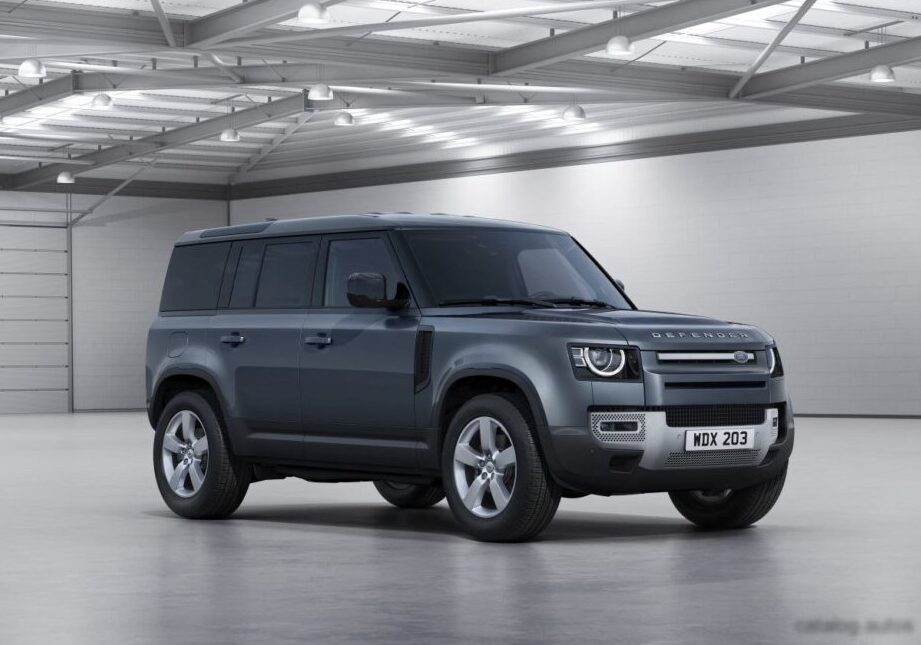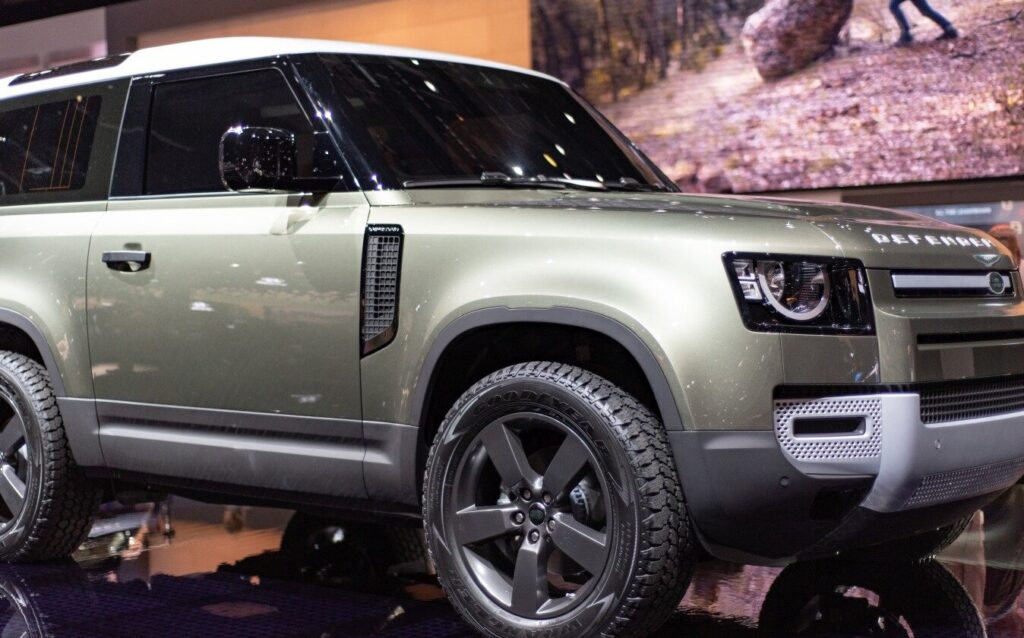
The Land Rover Defender 90 (L663) 2.0 P300 AWD Automatic represents a significant departure from the traditional Defender lineage, marking the model’s transition into a modern, technologically advanced SUV. Introduced in February 2020 and produced through October 2021, this variant occupied a key position in the 90 (short wheelbase) lineup, offering a balance between performance, efficiency, and accessibility. It’s built on the D7x architecture, a lightweight aluminum-intensive monocoque chassis, a radical shift from the body-on-frame construction of its predecessors. The P300, with its 300 horsepower engine and automatic transmission, aimed to broaden the Defender’s appeal to a wider audience, particularly those seeking a more refined driving experience without sacrificing off-road capability. This six-seat configuration further enhanced its practicality for families and groups.
Technical Specifications
| Brand | Land Rover |
| Model | Defender |
| Generation | Defender 90 (L663) |
| Type | 2.0 P300 (300 Hp) AWD Automatic 6 Seat |
| Start of production | February, 2020 |
| End of production | October, 2021 |
| Powertrain Architecture | Internal Combustion engine |
| Body type | Off-road vehicle |
| Seats | 6 |
| Doors | 3 |
| Fuel consumption at Low speed (WLTP) | 14.1-14.9 l/100 km (16.7 – 15.8 US mpg, 20 – 19 UK mpg, 7.1 – 6.7 km/l) |
| Fuel consumption at Medium speed (WLTP) | 10.8-11.6 l/100 km (21.8 – 20.3 US mpg, 26.2 – 24.4 UK mpg, 9.3 – 8.6 km/l) |
| Fuel consumption at high speed (WLTP) | 9.8-10.6 l/100 km (24 – 22.2 US mpg, 28.8 – 26.6 UK mpg, 10.2 – 9.4 km/l) |
| Fuel consumption at very high speed (WLTP) | 11.8-13.0 l/100 km (19.9 – 18.1 US mpg, 23.9 – 21.7 UK mpg, 8.5 – 7.7 km/l) |
| Combined fuel consumption (WLTP) | 11.3-12.2 l/100 km (20.8 – 19.3 US mpg, 25 – 23.2 UK mpg, 8.8 – 8.2 km/l) |
| CO2 emissions (WLTP) | 256-277 g/km |
| Fuel consumption (economy) – urban (NEDC, WLTP equivalent) | 11.5-11.8 l/100 km (20.5 – 19.9 US mpg, 24.6 – 23.9 UK mpg, 8.7 – 8.5 km/l) |
| Fuel consumption (economy) – extra urban (NEDC, WLTP equivalent) | 9.0-9.2 l/100 km (26.1 – 25.6 US mpg, 31.4 – 30.7 UK mpg, 11.1 – 10.9 km/l) |
| Fuel consumption (economy) – combined (NEDC, WLTP equivalent) | 9.9-10.2 l/100 km (23.8 – 23.1 US mpg, 28.5 – 27.7 UK mpg, 10.1 – 9.8 km/l) |
| CO2 emissions (NEDC, WLTP equivalent) | 227-233 g/km |
| Fuel Type | Petrol (Gasoline) |
| Acceleration 0 – 100 km/h | 8 sec |
| Acceleration 0 – 62 mph | 8 sec |
| Acceleration 0 – 60 mph | 7.6 sec |
| Maximum speed | 191 km/h (118.68 mph) |
| Emission standard | Euro 6d-TEMP-EVAP-ISC |
| Weight-to-power ratio | 7 kg/Hp, 143.7 Hp/tonne |
| Weight-to-torque ratio | 5.2 kg/Nm, 191.7 Nm/tonne |
| Power | 300 Hp @ 5500 rpm |
| Power per litre | 150.2 Hp/l |
| Torque | 400 Nm @ 1500-4000 rpm (295.02 lb.-ft. @ 1500-4000 rpm) |
| Engine layout | Front, Longitudinal |
| Engine Model/Code | Ingenium / PT204 |
| Engine displacement | 1997 cm3 (121.86 cu. in.) |
| Number of cylinders | 4 |
| Engine configuration | Inline |
| Cylinder Bore | 83 mm (3.27 in.) |
| Piston Stroke | 92.29 mm (3.63 in.) |
| Compression ratio | 9.5:1 |
| Number of valves per cylinder | 4 |
| Fuel injection system | Direct injection |
| Engine aspiration | Turbocharger, Intercooler |
| Engine oil capacity | 7 l (7.4 US qt | 6.16 UK qt) |
| Coolant | 11.3 l (11.94 US qt | 9.94 UK qt) |
| Kerb Weight | 2087 kg (4601.05 lbs.) |
| Max. weight | 2950 kg (6503.64 lbs.) |
| Max load | 863 kg (1902.59 lbs.) |
| Trunk (boot) space – minimum | 397 l (14.02 cu. ft.) |
| Trunk (boot) space – maximum | 1563 l (55.2 cu. ft.) |
| Fuel tank capacity | 88.5 l (23.38 US gal | 19.47 UK gal) |
| Max. roof load | 100-118 kg (220.46 – 260.15 lbs.) |
| Permitted trailer load with brakes (12%) | 3500 kg (7716.18 lbs.) |
| Permitted trailer load without brakes | 750 kg (1653.47 lbs.) |
| Permitted towbar download | 150 kg (330.69 lbs.) |
| Length | 4583 mm (180.43 in.) |
| Width | 1996 mm (78.58 in.) |
| Width with mirrors folded | 2008 mm (79.06 in.) |
| Width including mirrors | 2105 mm (82.87 in.) |
| Height | 1969-1974 mm (77.52 – 77.72 in.) |
| Wheelbase | 2587 mm (101.85 in.) |
| Front track | 1704-1706 mm (67.09 – 67.17 in.) |
| Rear (Back) track | 1702 mm (67.01 in.) |
| Front overhang | 845 mm (33.27 in.) |
| Rear overhang | 1151 mm (45.31 in.) |
| Ride height (ground clearance) | 216-291 mm (8.5 – 11.46 in.) |
| Drag coefficient (Cd) | 0.38 |
| Minimum turning circle (turning diameter) | 12.0 m (39.37 ft.) |
| Approach angle | 30.1-38.0° |
| Departure angle | 37.6-40.0° |
| Ramp-over (brakeover) angle | 24.2-31.0° |
| Climb angle | 45° |
| Wading depth | 850-900 mm (33.46 – 35.43 in.) |
| Drivetrain Architecture | The Internal combustion engine (ICE) drives permanently the four wheels of the vehicle. |
| Drive wheel | All wheel drive (4×4) |
| Number of gears and type of gearbox | 8 gears, automatic transmission |
| Front suspension | Double wishbone |
| Rear suspension | Independent multi-link suspension |
| Front brakes | Disc, 349 mm |
| Rear brakes | Disc, 325 mm |
| Assisting systems | ABS (Anti-lock braking system) |
| Steering type | Steering rack and pinion |
| Power steering | Electric Steering |
| Tires size | 255/70 R18; 255/65 R19; 255/60 R20 |
| Wheel rims size | 8J x 18; 8J x 19; 8.5J x 20 |
Powertrain & Engine Architecture
The heart of the Defender 90 P300 is Jaguar Land Rover’s Ingenium engine family, specifically the PT204, a 2.0-liter turbocharged inline-four cylinder petrol engine. This engine utilizes direct injection and a single twin-scroll turbocharger, producing 300 horsepower at 5500 rpm and 400 Nm (295 lb-ft) of torque between 1500 and 4000 rpm. The engine features a relatively high compression ratio of 9.5:1. The Ingenium engine is known for its lightweight construction, utilizing aluminum components to reduce overall weight. It’s paired with an eight-speed automatic transmission, providing smooth and efficient gear changes. This transmission is a ZF 8HP series unit, renowned for its robustness and adaptability. The powertrain is longitudinally mounted, driving all four wheels via Land Rover’s intelligent all-wheel-drive system.
Driving Characteristics
The 2.0 P300 Automatic offers a noticeably different driving experience compared to the more powerful six-cylinder variants or the diesel options. While it doesn’t deliver the same exhilarating acceleration, it provides ample power for everyday driving and even confident highway cruising. The eight-speed automatic transmission is well-tuned, offering quick shifts and keeping the engine within its optimal torque band. The gear ratios are optimized for a balance of fuel efficiency and responsiveness. Compared to the six-speed manual transmission available on some Defender models, the automatic prioritizes ease of use and comfort over outright driver engagement. The all-wheel-drive system provides excellent traction in various conditions, making it a capable off-roader, though perhaps not as adept as models equipped with the Terrain Response 2 system and electronic active differential.
Equipment & Trim Levels
The Defender 90 P300 typically came standard with a generous array of features, including LED headlights, a touchscreen infotainment system with Apple CarPlay and Android Auto integration, and a suite of safety technologies like autonomous emergency braking and lane keep assist. Interior upholstery was typically cloth or leatherette, with options for full leather upgrades. The six-seat configuration featured a versatile seating arrangement, with individual seats in the second and third rows. Optional extras included a panoramic sunroof, premium audio systems, heated and cooled seats, and advanced driver-assistance features like adaptive cruise control and a 360-degree camera system. Trim levels varied by market, but generally offered increasing levels of luxury and technology.
Chassis & Braking
The Defender 90 P300 utilizes a double-wishbone front suspension and an independent multi-link rear suspension, providing a comfortable and controlled ride both on and off-road. The suspension is tuned to handle the vehicle’s weight and provide adequate articulation for off-road excursions. Braking duties are handled by disc brakes on all four wheels, with 349mm discs up front and 325mm discs at the rear. The vehicle is equipped with ABS (Anti-lock Braking System) and electronic brake-force distribution. Stabilizer bars are fitted front and rear to reduce body roll during cornering.
Market Reception & Comparison
The Defender 90 P300 was generally well-received by critics as an accessible entry point into the new Defender lineup. While some reviewers noted that the 2.0-liter engine lacked the punch of the larger engines, they praised its fuel efficiency and refinement. Compared to the more expensive P400 and P500 models, the P300 offered a more affordable option for buyers who didn’t require maximum performance. The fuel economy, while not exceptional, was respectable for a vehicle of its size and capability, averaging around 20-23 mpg in combined driving. Reliability reports have been generally positive, with the Ingenium engine proving to be a durable and dependable unit.
Legacy
The Land Rover Defender 90 2.0 P300 represents a pivotal moment in the Defender’s history, bridging the gap between its rugged past and its modern future. While it may not possess the iconic status of its predecessors, it has proven to be a popular and capable SUV, offering a compelling blend of performance, practicality, and technology. On the used car market, these models hold their value reasonably well, particularly those with low mileage and a comprehensive service history. The Ingenium engine’s reputation for reliability contributes to its continued desirability, making it a solid choice for buyers seeking a versatile and well-equipped SUV.