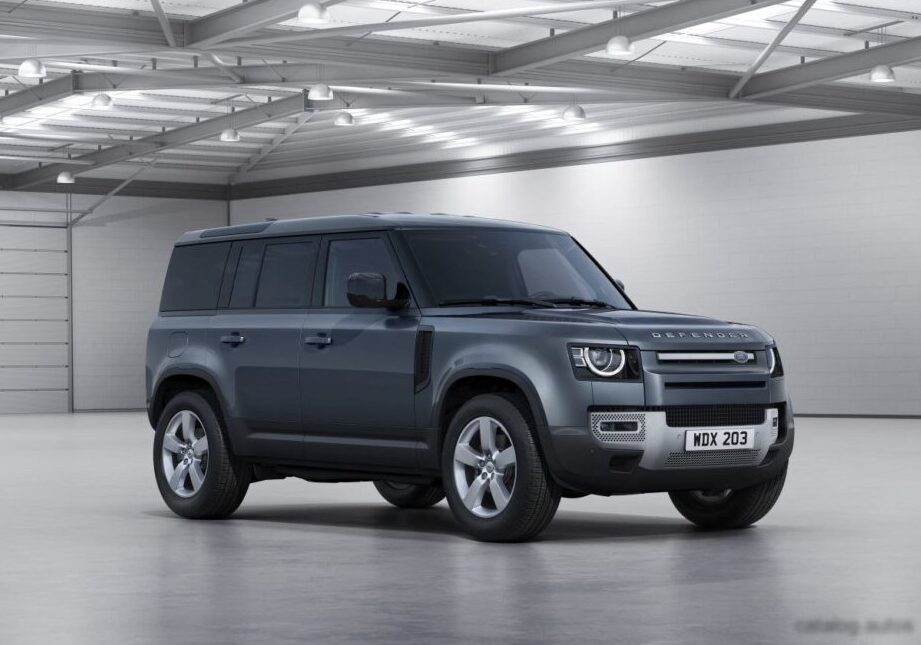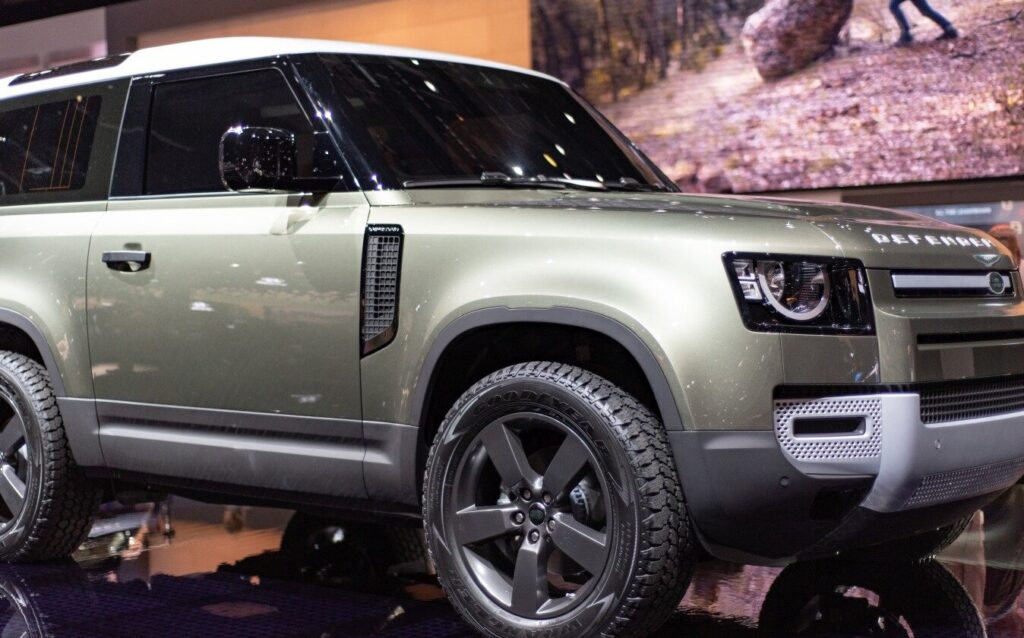
The Land Rover Defender 90 (L663) 3.0 D250, introduced in September 2020, represents a significant departure from its iconic predecessor while attempting to retain the spirit of rugged capability. This variant, positioned as a mid-range offering within the new Defender 90 lineup, combines a 3.0-liter inline-six diesel engine with mild-hybrid technology and an eight-speed automatic transmission, paired with all-wheel drive. The L663 generation marked the Defender’s transition from a utilitarian, body-on-frame vehicle to a more modern, unibody construction, aiming for a broader appeal and improved on-road refinement without sacrificing off-road prowess. This particular configuration, seating six, was designed to balance practicality with a more premium experience.
Technical Specifications
| Brand | Land Rover |
| Model | Defender |
| Generation | Defender 90 (L663) |
| Type | 3.0 D250 (249 Hp) Mild Hybrid AWD Automatic 6 Seat |
| Start of production | September, 2020 |
| Powertrain Architecture | MHEV (Mild Hybrid Electric Vehicle) |
| Body type | Off-road vehicle |
| Seats | 6 |
| Doors | 3 |
| Combined fuel consumption (WLTP) | 8.7-9.3 l/100 km (27 – 25.3 US mpg) |
| CO2 emissions (WLTP) | 227-245 g/km |
| Fuel consumption (NEDC) | 7.6 l/100 km (30.9 US mpg) |
| CO2 emissions (NEDC) | 199 g/km |
| Fuel Type | Diesel |
| Acceleration 0 – 100 km/h | 8.0 sec |
| Acceleration 0 – 62 mph | 8.0 sec |
| Acceleration 0 – 60 mph | 7.6 sec |
| Maximum speed | 188 km/h (116.82 mph) |
| Emission standard | Euro 6d-F |
| Weight-to-power ratio | 9 kg/Hp |
| Weight-to-torque ratio | 3.9 kg/Nm |
| Power | 249 Hp @ 4000 rpm |
| Torque | 570 Nm @ 1250-2250 rpm (420.41 lb.-ft.) |
| Engine Model/Code | Ingenium / DT306 |
| Engine displacement | 2996 cm3 (182.83 cu. in.) |
| Number of cylinders | 6 |
| Engine configuration | Inline |
| Cylinder Bore | 83.01 mm (3.27 in.) |
| Piston Stroke | 92.3 mm (3.63 in.) |
| Compression ratio | 15.5:1 |
| Number of valves per cylinder | 4 |
| Fuel injection system | Diesel Commonrail |
| Engine aspiration | Turbocharger, Intercooler |
| Engine oil capacity | 8.8 l (9.3 US qt | 7.74 UK qt) |
| Coolant capacity | 11.6 l (12.26 US qt | 10.21 UK qt) |
| Kerb Weight | 2251 kg (4962.61 lbs.) |
| Trunk (boot) space – minimum | 397 l (14.02 cu. ft.) |
| Trunk (boot) space – maximum | 1563 l (55.2 cu. ft.) |
| Fuel tank capacity | 89 l (23.51 US gal | 19.58 UK gal) |
| AdBlue tank capacity | 20.7 l (5.47 US gal | 4.55 UK gal) |
| Permitted trailer load with brakes (12%) | 3500 kg (7716.18 lbs.) |
| Permitted trailer load without brakes | 750 kg (1653.47 lbs.) |
| Length | 4583 mm (180.43 in.) |
| Width | 1996 mm (78.58 in.) |
| Width with mirrors folded | 2008 mm (79.06 in.) |
| Width including mirrors | 2105 mm (82.87 in.) |
| Height | 1969-1974 mm (77.52 – 77.72 in.) |
| Wheelbase | 2587 mm (101.85 in.) |
| Front track | 1701-1706 mm (66.97 – 67.17 in.) |
| Rear track | 1697-1702 mm (66.81 – 67.01 in.) |
| Front overhang | 845 mm (33.27 in.) |
| Rear overhang | 1151 mm (45.31 in.) |
| Ride height (ground clearance) | 216-291 mm (8.5 – 11.46 in.) |
| Drag coefficient (Cd) | 0.41 |
| Minimum turning circle | 12 m (39.37 ft.) |
| Approach angle | 30.1-37.5° |
| Departure angle | 35.5-40° |
| Ramp-over angle | 24.2-31° |
| Climb angle | 45° |
| Wading depth | 850-900 mm (33.46 – 35.43 in.) |
| Drivetrain Architecture | All wheel drive (4×4). MHEV. ICE and electric motor drive all wheels. |
| Number of gears | 8 |
| Gearbox type | Automatic transmission |
| Front suspension | Double wishbone |
| Rear suspension | Independent multi-link suspension |
| Front brakes | Disc, 349 mm |
| Rear brakes | Disc, 325 mm |
Powertrain & Engine Architecture
The heart of the D250 is Land Rover’s Ingenium engine family, specifically the DT306, a 3.0-liter inline-six diesel. This engine benefits from mild-hybrid technology, incorporating a 48-volt electrical system and a belt-integrated starter generator (BiSG). The BiSG assists the engine during acceleration, allowing for smoother starts and improved fuel efficiency, and also enables the start-stop system to operate at lower speeds. The engine utilizes a sophisticated diesel commonrail fuel injection system and a single turbocharger with an intercooler to deliver 249 horsepower at 4,000 rpm and a substantial 570 Nm (420 lb-ft) of torque between 1,250 and 2,250 rpm. The eight-speed automatic transmission, sourced from ZF, is known for its smooth shifting and wide gear ratios, contributing to both on-road comfort and off-road capability.
Driving Characteristics
The D250 Automatic offers a compelling blend of performance and efficiency. While not as overtly sporty as some of its gasoline-powered siblings, the ample torque provides strong acceleration, particularly in the mid-range. The 0-60 mph sprint takes around 7.6 seconds, and the engine feels responsive in most driving situations. The automatic transmission is well-tuned, providing seamless gear changes and effectively utilizing the engine’s torque band. Compared to the higher-output D300 variant, the D250 feels slightly less urgent, but the difference is not dramatic. The mild-hybrid system contributes to a refined driving experience, minimizing vibrations and enhancing responsiveness. The automatic transmission, while convenient, doesn’t offer the same level of driver engagement as a manual gearbox.
Equipment & Trim Levels
The D250 trim typically includes features such as leather upholstery, heated front seats, a touchscreen infotainment system with Apple CarPlay and Android Auto compatibility, and a suite of driver-assistance technologies including emergency braking and lane-keeping assist. Optional extras could include a panoramic sunroof, premium audio system, and advanced off-road packages with features like electronic active differential and Terrain Response 2 system. The six-seat configuration provides flexible seating arrangements, with a 3+3 layout offering reasonable space for passengers. Interior trim options varied, allowing buyers to personalize the cabin to their preferences.
Chassis & Braking
The L663 Defender utilizes a monocoque construction, a significant departure from the previous generation’s body-on-frame design. This contributes to improved rigidity and reduced weight. The D250 variant features double-wishbone front suspension and an independent multi-link rear suspension, providing a comfortable ride both on and off-road. Braking duties are handled by disc brakes on all four wheels, with 349mm rotors up front and 325mm rotors at the rear. ABS (Anti-lock Braking System) is standard. The suspension is tuned to balance on-road comfort with off-road capability, offering a good compromise for a vehicle designed to excel in both environments.
Market Reception & Comparison
The Defender 90 D250 was generally well-received by automotive critics. It was praised for its blend of refinement, capability, and fuel efficiency. The mild-hybrid system was seen as a positive step towards reducing emissions, and the automatic transmission was lauded for its smoothness. Compared to the more powerful D300, the D250 offered a more affordable entry point into the Defender 90 range, appealing to buyers who prioritized fuel economy and everyday usability over outright performance. The fuel economy, ranging from 8.7 to 9.3 l/100km, was competitive for a vehicle of its size and capability.
Legacy
The Ingenium engine family, including the DT306, has proven to be relatively reliable, although some owners have reported issues with the diesel particulate filter (DPF) system, particularly on vehicles used primarily for short journeys. The eight-speed ZF automatic transmission is known for its durability. As a used vehicle, the Defender 90 D250 holds its value well, reflecting the enduring appeal of the Defender brand and the vehicle’s inherent capability. The L663 generation represents a significant evolution of the Defender, successfully bridging the gap between its rugged past and a more modern, sophisticated future.