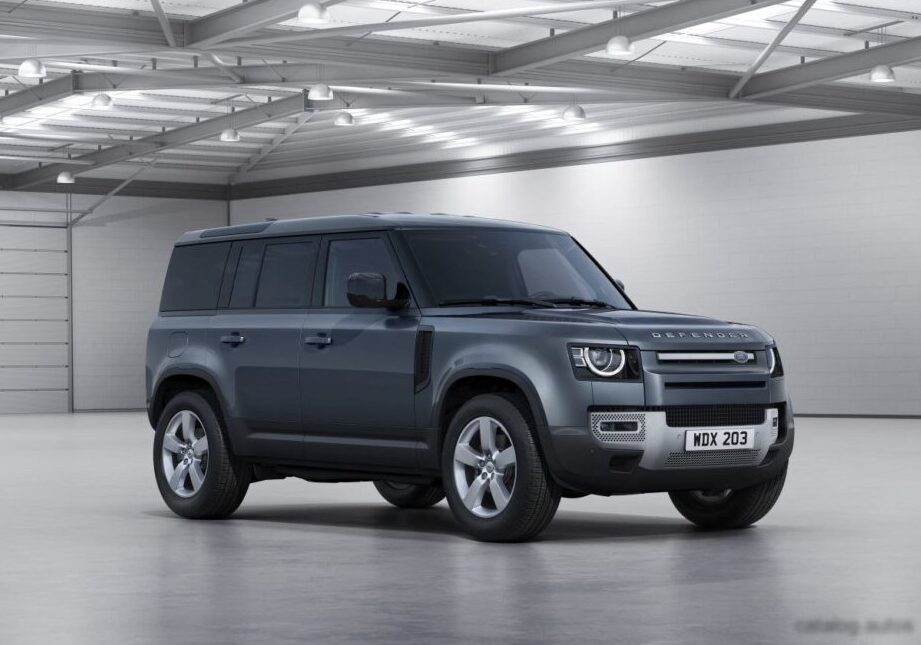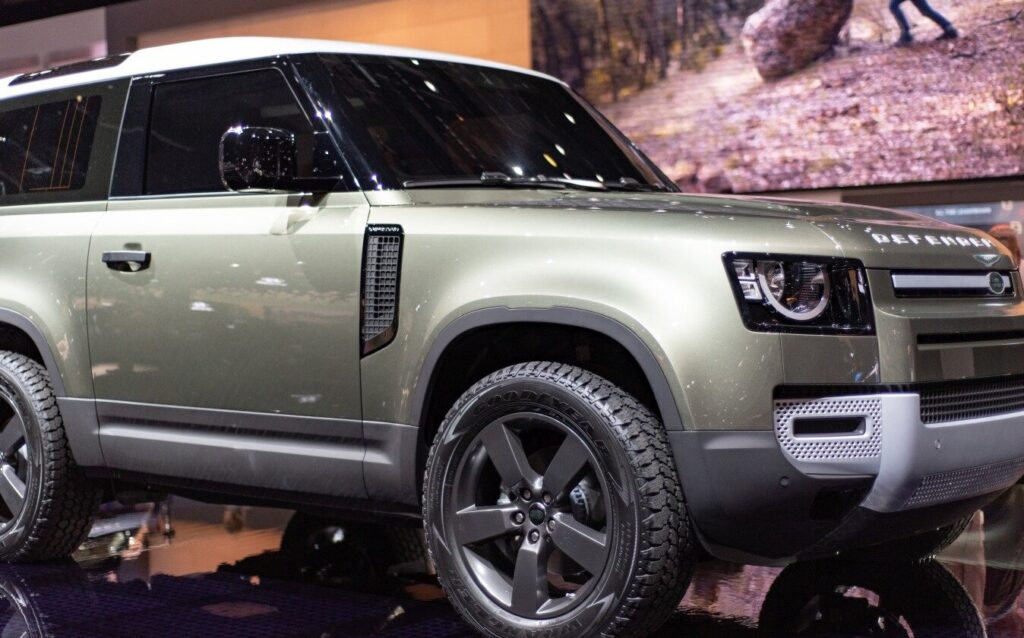
The Land Rover Defender 90 (L663) 3.0 D300, introduced in September 2020, represents a significant departure from its iconic predecessor while attempting to retain the spirit of off-road capability that defined the Defender nameplate for over seven decades. This variant, positioned as a mid-to-high range offering within the new L663 generation, combines a 3.0-liter inline-six diesel engine with mild-hybrid technology and an eight-speed automatic transmission, delivering a blend of performance, refinement, and fuel efficiency. The L663 series marked the Defender’s transition from a rugged, body-on-frame construction to a more modern, aluminum-intensive monocoque chassis, aiming to broaden its appeal beyond hardcore off-road enthusiasts.
Technical Specifications
| Brand | Land Rover |
| Model | Defender |
| Generation | Defender 90 (L663) |
| Type (Engine) | 3.0 D300 (299 Hp) Mild Hybrid AWD Automatic |
| Start of production | September, 2020 |
| Powertrain Architecture | MHEV (Mild Hybrid Electric Vehicle) |
| Body type | Off-road vehicle |
| Seats | 5 |
| Doors | 3 |
| Combined fuel consumption (WLTP) | 8.6-9.3 l/100 km (27.4 – 25.3 US mpg, 32.8 – 30.4 UK mpg, 11.6 – 10.8 km/l) |
| CO2 emissions (WLTP) | 226-244 g/km |
| Fuel consumption (NEDC, WLTP equivalent) | 7.6 l/100 km (30.9 US mpg, 37.2 UK mpg, 13.2 km/l) |
| CO2 emissions (NEDC, WLTP equivalent) | 199 g/km |
| Fuel Type | Diesel |
| Acceleration 0 – 100 km/h | 6.7 sec |
| Acceleration 0 – 62 mph | 6.7 sec |
| Acceleration 0 – 60 mph | 6.3 sec |
| Maximum speed | 191 km/h (118.68 mph) |
| Emission standard | Euro 6d-F |
| Weight-to-power ratio | 7.5 kg/Hp, 134.2 Hp/tonne |
| Weight-to-torque ratio | 3.4 kg/Nm, 291.7 Nm/tonne |
| Power | 299 Hp @ 4000 rpm |
| Power per litre | 99.8 Hp/l |
| Torque | 650 Nm @ 1500-2500 rpm (479.42 lb.-ft. @ 1500-2500 rpm) |
| Engine Model/Code | Ingenium / DT306 |
| Engine displacement | 2996 cm3 (182.83 cu. in.) |
| Number of cylinders | 6 |
| Engine configuration | Inline |
| Cylinder Bore | 83.01 mm (3.27 in.) |
| Piston Stroke | 92.3 mm (3.63 in.) |
| Compression ratio | 15.5:1 |
| Number of valves per cylinder | 4 |
| Fuel injection system | Diesel Commonrail |
| Engine aspiration | Turbocharger, Intercooler |
| Engine oil capacity | 8.8 l (9.3 US qt | 7.74 UK qt) |
| Coolant | 11.6 l (12.26 US qt | 10.21 UK qt) |
| Kerb Weight | 2228 kg (4911.9 lbs.) |
| Trunk (boot) space – minimum | 397 l (14.02 cu. ft.) |
| Trunk (boot) space – maximum | 1563 l (55.2 cu. ft.) |
| Fuel tank capacity | 89 l (23.51 US gal | 19.58 UK gal) |
| AdBlue tank | 20.7 l (5.47 US gal | 4.55 UK gal) |
| Permitted trailer load with brakes (12%) | 3500 kg (7716.18 lbs.) |
| Permitted trailer load without brakes | 750 kg (1653.47 lbs.) |
| Length | 4583 mm (180.43 in.) |
| Width | 1996 mm (78.58 in.) |
| Width with mirrors folded | 2008 mm (79.06 in.) |
| Width including mirrors | 2105 mm (82.87 in.) |
| Height | 1969-1974 mm (77.52 – 77.72 in.) |
| Wheelbase | 2587 mm (101.85 in.) |
| Front track | 1701-1706 mm (66.97 – 67.17 in.) |
| Rear (Back) track | 1697-1702 mm (66.81 – 67.01 in.) |
| Front overhang | 845 mm (33.27 in.) |
| Rear overhang | 1151 mm (45.31 in.) |
| Ride height (ground clearance) | 216-291 mm (8.5 – 11.46 in.) |
| Drag coefficient (Cd) | 0.41 |
| Minimum turning circle (turning diameter) | 12 m (39.37 ft.) |
| Approach angle | 30.1-37.5° |
| Departure angle | 35.5-40° |
| Ramp-over (brakeover) angle | 24.2-31° |
| Climb angle | 45° |
| Wading depth | 850-900 mm (33.46 – 35.43 in.) |
| Drivetrain Architecture | ICE and electric motor permanently drive all four wheels. |
| Drive wheel | All wheel drive (4×4) |
| Number of gears and type of gearbox | 8 gears, automatic transmission |
| Front suspension | Double wishbone |
| Rear suspension | Independent multi-link suspension |
| Front brakes | Disc, 349 mm |
| Rear brakes | Disc, 325 mm |
| Assisting systems | ABS (Anti-lock braking system) |
| Steering type | Steering rack and pinion |
| Power steering | Electric Steering |
| Tires size | 255/70 R18; 255/65 R19; 255/60 R20; 275/45 R22 |
| Wheel rims size | 8.0J x 18; 8.0J x 19; 8.5J x 20; 9.0J x 22 |
Powertrain & Engine Architecture
The heart of the D300 is Land Rover’s Ingenium engine family, specifically the DT306, a 3.0-liter inline-six diesel. This engine utilizes a sophisticated diesel commonrail fuel injection system and a single turbocharger with an intercooler to deliver a substantial 299 horsepower at 4000 rpm and a robust 650 Nm (479.42 lb-ft) of torque between 1500 and 2500 rpm. The mild-hybrid system, incorporating a 48-volt electrical architecture, adds a belt-integrated starter generator (BiSG) that assists the engine during acceleration and enables smoother start-stop functionality, improving fuel economy. The engine boasts a high compression ratio of 15.5:1 and features four valves per cylinder. The eight-speed automatic transmission, sourced from ZF, is a crucial component, providing smooth and efficient gear changes. It’s programmed with ratios optimized for both on-road comfort and off-road crawling, contributing to the Defender’s versatility.
Driving Characteristics
The D300 Automatic offers a compelling driving experience, balancing power and refinement. While not as overtly sporty as some competitors, the engine’s ample torque provides strong acceleration, achieving 0-60 mph in approximately 6.3 seconds. The automatic transmission shifts smoothly and responsively, although it can occasionally feel hesitant during quick downshifts. Compared to the lower-powered 2.0-liter Ingenium diesel variants, the D300 delivers a noticeably more relaxed and confident driving experience, particularly when fully loaded or tackling challenging terrain. The eight-speed transmission’s gear ratios are well-suited to both highway cruising and low-speed off-road maneuvers. The mild-hybrid system provides a subtle but noticeable boost during acceleration, enhancing responsiveness.
Equipment & Trim Levels
The Defender 90 D300 typically came well-equipped, reflecting its mid-to-high position in the lineup. Standard features included LED headlights, a touchscreen infotainment system with Apple CarPlay and Android Auto integration, leather upholstery, heated front seats, and a comprehensive suite of safety features. Optional extras included a panoramic sunroof, premium audio systems, advanced driver-assistance systems (ADAS) like adaptive cruise control and lane-keeping assist, and various off-road enhancements such as electronic active differential and all-terrain tires. Interior trim options ranged from durable cloth to luxurious Windsor leather, with a variety of color combinations available.
Chassis & Braking
The L663 Defender utilizes a robust aluminum monocoque chassis, providing a significant improvement in rigidity and weight reduction compared to the previous generation. The suspension consists of a double-wishbone setup at the front and an independent multi-link arrangement at the rear, offering a comfortable ride both on and off-road. Braking duties are handled by ventilated disc brakes on all four wheels, with diameters of 349mm at the front and 325mm at the rear. An anti-lock braking system (ABS) is standard, along with electronic brake-force distribution and emergency brake assist. The D300 variant typically featured slightly thicker stabilizer bars compared to the base models, enhancing body control during cornering.
Market Reception & Comparison
The Defender 90 D300 received generally positive reviews from automotive critics. It was praised for its blend of performance, refinement, and off-road capability. However, some reviewers noted the relatively high price tag and the complexity of the infotainment system. Compared to the lower-powered diesel variants, the D300 offered a more satisfying driving experience, but at the cost of slightly reduced fuel economy. Against competitors like the Jeep Wrangler and Mercedes-Benz G-Class, the Defender 90 D300 distinguished itself with its more modern interior, on-road comfort, and advanced technology.
Legacy
The Land Rover Defender 90 D300 represents a pivotal moment in the Defender’s history, bridging the gap between its rugged past and a more sophisticated future. The Ingenium engine and mild-hybrid technology have proven to be relatively reliable, although preventative maintenance is crucial. On the used car market, the D300 variant commands a premium due to its performance and equipment levels. Its combination of off-road prowess, on-road comfort, and modern technology ensures its continued appeal to a wide range of buyers seeking a versatile and capable SUV.