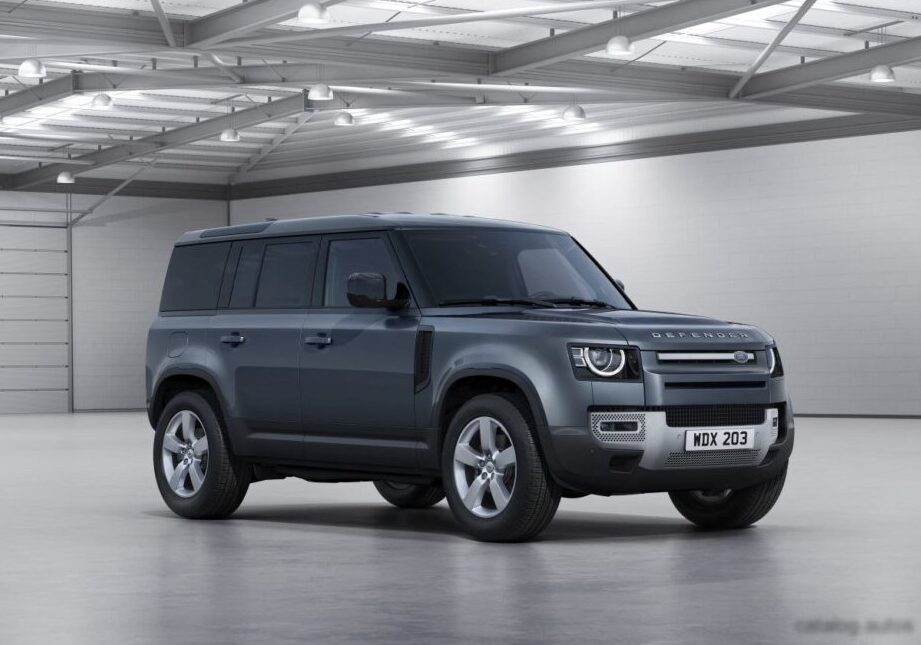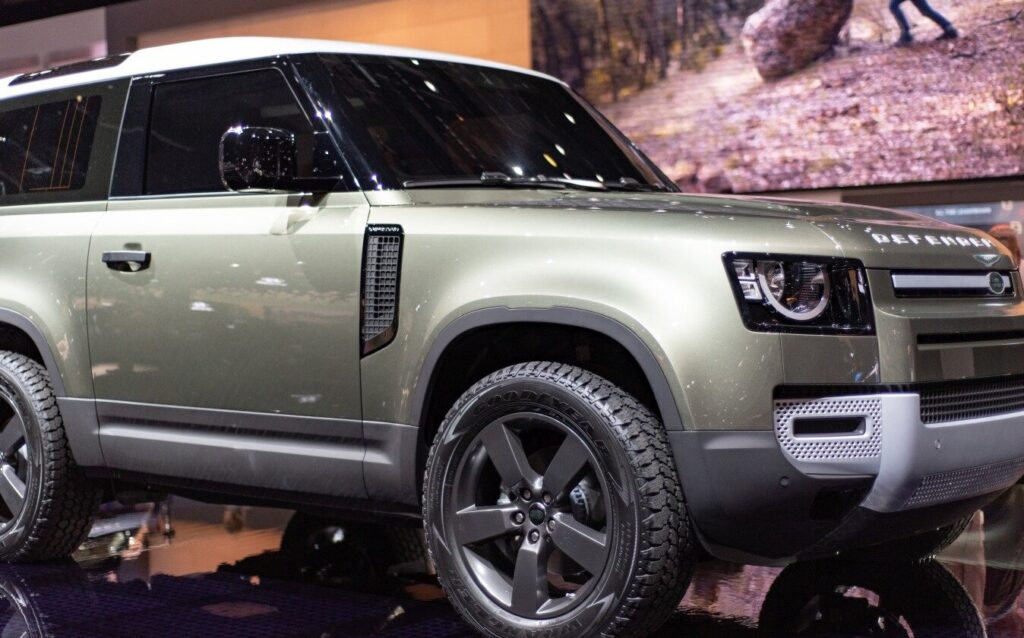
The Land Rover Defender 90 (L663) 3.0 P400 represents a significant evolution in the iconic Defender lineage, launched in February 2020 and continuing through May 2024. This variant, positioned as a mid-to-high range offering within the new Defender 90 (short wheelbase) lineup, combines a potent 3.0-liter inline-six cylinder engine with mild hybrid technology and a sophisticated all-wheel-drive system. It marked Land Rover’s attempt to modernize the Defender while retaining its off-road capability and adding a layer of on-road refinement. The L663 generation moved away from the traditional body-on-frame construction to a more modern monocoque chassis, fundamentally changing the vehicle’s character.
Technical Specifications
| Brand | Land Rover |
| Model | Defender |
| Generation | Defender 90 (L663) |
| Type (Engine) | 3.0 P400 (400 Hp) Mild Hybrid AWD Automatic |
| Start of production | February, 2020 |
| End of production | May, 2024 |
| Powertrain Architecture | MHEV (Mild Hybrid Electric Vehicle) |
| Body type | Off-road vehicle |
| Seats | 5 |
| Doors | 3 |
| Fuel consumption at Low speed (WLTP) | 14.6-15.5 l/100 km (16.1 – 15.2 US mpg, 19.3 – 18.2 UK mpg, 6.8 – 6.5 km/l) |
| Fuel consumption at Medium speed (WLTP) | 10.4-11.1 l/100 km (22.6 – 21.2 US mpg, 27.2 – 25.4 UK mpg, 9.6 – 9 km/l) |
| Fuel consumption at high speed (WLTP) | 9.3-10.1 l/100 km (25.3 – 23.3 US mpg, 30.4 – 28 UK mpg, 10.8 – 9.9 km/l) |
| Fuel consumption at very high speed (WLTP) | 11.5-12.7 l/100 km (20.5 – 18.5 US mpg, 24.6 – 22.2 UK mpg, 8.7 – 7.9 km/l) |
| Combined fuel consumption (WLTP) | 11-12 l/100 km (21.4 – 19.6 US mpg, 25.7 – 23.5 UK mpg, 9.1 – 8.3 km/l) |
| CO2 emissions (WLTP) | 251-271 g/km |
| Fuel consumption (economy) – urban (NEDC, WLTP equivalent) | 12.1-12.4 l/100 km (19.4 – 19 US mpg, 23.3 – 22.8 UK mpg, 8.3 – 8.1 km/l) |
| Fuel consumption (economy) – extra urban (NEDC, WLTP equivalent) | 8.1-8.4 l/100 km (29 – 28 US mpg, 34.9 – 33.6 UK mpg, 12.3 – 11.9 km/l) |
| Fuel consumption (economy) – combined (NEDC, WLTP equivalent) | 9.6-9.8 l/100 km (24.5 – 24 US mpg, 29.4 – 28.8 UK mpg, 10.4 – 10.2 km/l) |
| CO2 emissions (NEDC, WLTP equivalent) | 219-225 g/km |
| Fuel Type | Petrol (Gasoline) |
| Acceleration 0 – 100 km/h | 6 sec |
| Acceleration 0 – 62 mph | 6 sec |
| Acceleration 0 – 60 mph | 5.7 sec |
| Maximum speed | 208 km/h (129.25 mph) |
| Emission standard | Euro 6d-TEMP-EVAP-ISC |
| Weight-to-power ratio | 5.4 kg/Hp, 184.3 Hp/tonne |
| Weight-to-torque ratio | 3.9 kg/Nm, 253.5 Nm/tonne |
| Power | 400 Hp @ 5500 rpm |
| Power per litre | 133.5 Hp/l |
| Torque | 550 Nm @ 2000-5000 rpm (405.66 lb.-ft. @ 2000-5000 rpm) |
| Engine layout | Front, Longitudinal |
| Engine Model/Code | Ingenium / PT306 |
| Engine displacement | 2996 cm3 (182.83 cu. in.) |
| Number of cylinders | 6 |
| Engine configuration | Inline |
| Cylinder Bore | 83 mm (3.27 in.) |
| Piston Stroke | 92.29 mm (3.63 in.) |
| Compression ratio | 10.5:1 |
| Number of valves per cylinder | 4 |
| Fuel injection system | Direct injection |
| Engine aspiration | Turbocharger, Intercooler |
| Engine oil capacity | 8.8 l (9.3 US qt | 7.74 UK qt) |
| Coolant | 12.4 l (13.1 US qt | 10.91 UK qt) |
| Kerb Weight | 2170 kg (4784.03 lbs.) |
| Max. weight | 2970 kg (6547.73 lbs.) |
| Max load | 800 kg (1763.7 lbs.) |
| Trunk (boot) space – minimum | 397 l (14.02 cu. ft.) |
| Trunk (boot) space – maximum | 1563 l (55.2 cu. ft.) |
| Fuel tank capacity | 88.5 l (23.38 US gal | 19.47 UK gal) |
| Max. roof load | 80 kg (176.37 lbs.) |
| Permitted trailer load with brakes (12%) | 3500 kg (7716.18 lbs.) |
| Permitted trailer load without brakes | 750 kg (1653.47 lbs.) |
| Permitted towbar download | 150 kg (330.69 lbs.) |
| Length | 4583 mm (180.43 in.) |
| Width | 1996 mm (78.58 in.) |
| Width with mirrors folded | 2008 mm (79.06 in.) |
| Width including mirrors | 2105 mm (82.87 in.) |
| Height | 1969-1974 mm (77.52 – 77.72 in.) |
| Wheelbase | 2587 mm (101.85 in.) |
| Front track | 1704-1706 mm (67.09 – 67.17 in.) |
| Rear (Back) track | 1702 mm (67.01 in.) |
| Front overhang | 845 mm (33.27 in.) |
| Rear overhang | 1151 mm (45.31 in.) |
| Ride height (ground clearance) | 216-291 mm (8.5 – 11.46 in.) |
| Drag coefficient (Cd) | 0.4 |
| Minimum turning circle (turning diameter) | 12.0 m (39.37 ft.) |
| Approach angle | 30.1-38.0° |
| Departure angle | 37.6-40.0° |
| Ramp-over (brakeover) angle | 24.2-31.0° |
| Climb angle | 45° |
| Wading depth | 850-900 mm (33.46 – 35.43 in.) |
| Drivetrain Architecture | ICE and electric motor permanently drive all four wheels. |
| Drive wheel | All wheel drive (4×4) |
| Number of gears and type of gearbox | 8 gears, automatic transmission |
| Front suspension | Double wishbone |
| Rear suspension | Independent multi-link suspension |
| Front brakes | Disc, 363 mm |
| Rear brakes | Disc, 350 mm |
| Steering type | Steering rack and pinion |
| Power steering | Electric Steering |
| Tires size | 255/70 R18; 255/65 R19; 255/60 R20 |
| Wheel rims size | 8J x 18; 8J x 19; 8.5J x 20 |
INTRODUCTION
The Land Rover Defender 90 (L663) 3.0 P400, introduced in 2020, represents a departure from the traditional Defender formula while attempting to retain the spirit of the original. Built on the D7x architecture (a derivative of the Jaguar Land Rover Premium Lightweight Architecture – PLA), this iteration of the Defender prioritizes on-road comfort and technology alongside its renowned off-road prowess. The P400 designation signifies the engine’s output – 400 horsepower – and its mild hybrid configuration. This variant occupied a sweet spot in the lineup, offering a significant performance upgrade over the base models without reaching the price point of the higher-spec trims like the X or V8 versions. It was aimed at buyers who desired a capable and comfortable daily driver with genuine off-road credentials.
Powertrain & Engine Architecture
At the heart of the Defender 90 P400 lies the Ingenium engine family’s PT306 3.0-liter inline-six cylinder engine. This engine utilizes a combination of turbocharging and direct fuel injection to deliver a substantial 400 horsepower at 5500 rpm and 550 Nm (405.66 lb.-ft.) of torque between 2000 and 5000 rpm. The mild hybrid system, employing a 48-volt electrical architecture, assists the engine during acceleration and allows for smoother start-stop operation, improving fuel efficiency. The engine’s architecture features a sophisticated valvetrain and a robust engine block designed for longevity. The engine is longitudinally mounted, driving all four wheels through a ZF eight-speed automatic transmission. This transmission is known for its smooth shifting and responsiveness, and it’s specifically tuned for the Defender’s weight and off-road requirements.
Driving Characteristics
The Defender 90 P400 offers a compelling blend of performance and capability. The 400 hp engine provides brisk acceleration, achieving 0-60 mph in approximately 5.7 seconds. While not a sports car, the P400 feels surprisingly agile for its size and weight. The eight-speed automatic transmission contributes to a relaxed driving experience on the highway, while providing quick downshifts when needed for overtaking or tackling challenging terrain. Compared to the lower-powered four-cylinder models, the P400 offers significantly more effortless performance, particularly when fully loaded or towing. The gear ratios are optimized for both on-road cruising and low-speed off-road crawling. The all-wheel-drive system, coupled with Land Rover’s Terrain Response system, allows drivers to tailor the vehicle’s settings to various surfaces, maximizing traction and control.
Equipment & Trim Levels
The Defender 90 P400 typically came well-equipped, even in its base form. Standard features included leather upholstery, a touchscreen infotainment system with Apple CarPlay and Android Auto integration, LED headlights, and a suite of driver-assistance systems such as emergency braking and lane-keeping assist. Optional extras included a panoramic sunroof, heated and cooled seats, a premium audio system, and various off-road accessories like a winch and roof rack. Interior trim options ranged from durable cloth to luxurious Windsor leather. The dashboard layout is modern and functional, with a focus on usability. The P400 trim often served as a base for customers to add personalized options, making each vehicle somewhat unique.
Chassis & Braking
The L663 Defender utilizes an aluminum-intensive monocoque chassis, providing a significant weight reduction compared to the previous generation’s body-on-frame construction. The suspension consists of a double-wishbone setup at the front and an independent multi-link system at the rear, offering a comfortable ride both on and off-road. The P400 variant typically features disc brakes on all four wheels, with larger front rotors (363mm) and rear rotors (350mm) providing ample stopping power. Anti-lock braking system (ABS) and electronic stability control (ESC) are standard features. The chassis is designed to withstand significant torsional forces, enhancing its off-road durability.
Market Reception & Comparison
The Defender 90 P400 received generally positive reviews from automotive critics. It was praised for its blend of performance, comfort, and off-road capability. However, some reviewers noted the higher price point compared to competitors and the complexity of the infotainment system. Compared to the 2.0-liter four-cylinder models, the P400 offered a substantial performance upgrade, justifying the price premium for many buyers. Against the higher-spec V8 Defender, the P400 provided a more balanced combination of performance and fuel economy. Fuel economy figures, while not exceptional, were reasonable for a vehicle of its size and capability, averaging around 21-24 mpg in mixed driving conditions.
Legacy
The Land Rover Defender 90 P400 represents a pivotal moment in the Defender’s history. It successfully modernized the iconic vehicle while retaining its core values of robustness and off-road capability. The Ingenium engine and mild hybrid technology provide a good balance of performance and efficiency. While long-term reliability data is still emerging, the Ingenium engine family has generally proven to be reliable. On the used car market, the P400 variant holds its value well, appealing to buyers who seek a capable and stylish SUV with a strong brand reputation. Its combination of performance, technology, and off-road prowess ensures its continued desirability for years to come.