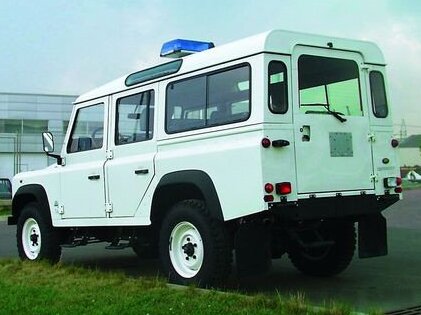
The Land Rover Discovery I 2.5 TDi (5-door), produced from 1990 to 1998, represented a significant step for Land Rover, bridging the gap between the rugged, utilitarian Series vehicles and the more luxurious Range Rover. This variant, powered by a 2.5-liter turbocharged diesel engine producing 113 horsepower, was a key offering in the Discovery I lineup, particularly in European and export markets. It aimed to provide a balance of off-road capability, practicality, and affordability, appealing to families and those needing a versatile vehicle for work and leisure. The Discovery I, internally designated as the LJ platform, was a landmark vehicle for Land Rover, establishing the brand’s presence in a new segment.
Technical Specifications
| Brand | Land Rover |
| Model | Discovery |
| Generation | Discovery I |
| Type (Engine) | 2.5 TDi (5 dr) (113 Hp) |
| Start of production | 1990 |
| End of production | 1998 |
| Powertrain Architecture | Internal Combustion engine |
| Body type | SUV |
| Seats | 7 |
| Doors | 5 |
| Fuel consumption (urban) | 11.3 l/100 km (20.8 US mpg) |
| Fuel consumption (extra urban) | 7.5 l/100 km (31.4 US mpg) |
| Fuel consumption (combined) | 8.9 l/100 km (26.4 US mpg) |
| Fuel Type | Diesel |
| Acceleration 0 – 100 km/h | 18.5 sec |
| Acceleration 0 – 62 mph | 18.5 sec |
| Acceleration 0 – 60 mph | 17.6 sec |
| Maximum speed | 148 km/h (91.96 mph) |
| Weight-to-power ratio | 17 kg/Hp |
| Weight-to-torque ratio | 7.3 kg/Nm |
| Power | 113 Hp @ 4000 rpm |
| Torque | 265 Nm @ 1800 rpm (195.45 lb.-ft. @ 1800 rpm) |
| Engine layout | Front, Longitudinal |
| Engine displacement | 2496 cm3 (152.32 cu. in.) |
| Number of cylinders | 4 |
| Engine configuration | Inline |
| Cylinder Bore | 90.5 mm (3.56 in.) |
| Piston Stroke | 97 mm (3.82 in.) |
| Compression ratio | 19.5:1 |
| Number of valves per cylinder | 2 |
| Fuel injection system | Diesel Commonrail |
| Engine aspiration | Turbocharger |
| Engine oil capacity | 5.8 l (6.13 US qt | 5.1 UK qt) |
| Coolant capacity | 11.5 l (12.15 US qt | 10.12 UK qt) |
| Kerb Weight | 1925 kg (4243.9 lbs.) |
| Max. weight | 2720 kg (5996.57 lbs.) |
| Max load | 795 kg (1752.67 lbs.) |
| Trunk (boot) space – minimum | 1290 l (45.56 cu. ft.) |
| Trunk (boot) space – maximum | 1970 l (69.57 cu. ft.) |
| Fuel tank capacity | 88 l (23.25 US gal | 19.36 UK gal) |
| Length | 4520 mm (177.95 in.) |
| Width | 1795 mm (70.67 in.) |
| Height | 1960 mm (77.17 in.) |
| Wheelbase | 2540 mm (100 in.) |
| Front track | 1485 mm (58.46 in.) |
| Rear track | 1485 mm (58.46 in.) |
| Drive wheel | All wheel drive (4×4) |
| Number of gears | 5 |
| Gearbox type | Manual transmission |
| Front suspension | Rigid axle suspension |
| Rear suspension | Rigid axle suspension |
| Front brakes | Ventilated discs |
| Rear brakes | Disc |
| Assisting systems | ABS (Anti-lock braking system) |
| Power steering | Hydraulic Steering |
| Tires size | 205/80 R16 |
Powertrain & Engine Architecture
The heart of the Discovery I 2.5 TDi is the 2496cc (152.32 cu. in.) inline-four cylinder diesel engine. This engine, often identified by engine codes like 200Tdi or 300Tdi depending on the specific year and market, was a robust and relatively simple design. The 2.5 TDi featured indirect injection, utilizing a Bosch rotary injection pump to deliver fuel into the pre-chamber before entering the main combustion chamber. This system, while not as refined as direct injection, offered good fuel economy and reliability. A turbocharger, typically a Garrett unit, was added to boost power output to 113 horsepower and 195 lb-ft of torque. The engine’s longitudinal mounting and rear-wheel-drive bias, coupled with a selectable four-wheel-drive system, provided excellent off-road traction. The five-speed manual transmission was the standard offering, providing a good balance between fuel efficiency and usability.
Driving Characteristics
The 2.5 TDi Discovery I, with its 113 horsepower and 195 lb-ft of torque, wasn’t about outright speed. Acceleration from 0-60 mph took around 17.6 seconds, and top speed was limited to approximately 92 mph. However, the engine’s strong low-end torque made it well-suited for off-road driving and towing. The manual transmission allowed for precise control, but the gear ratios were spaced to prioritize fuel economy and usability rather than performance. Compared to the later 300Tdi engine, the 2.5 TDi felt less refined and had a narrower power band. It also lacked the outright grunt of the V8 petrol engines available in the Discovery I range. However, the 2.5 TDi offered significantly better fuel economy than the petrol options, making it a popular choice for those covering long distances.
Equipment & Trim Levels
The 2.5 TDi typically sat in the mid-range of the Discovery I lineup. Standard equipment included power steering, central locking, and basic instrumentation. Interior trim was generally functional and durable, with cloth upholstery and a relatively simple dashboard layout. Optional extras included air conditioning, electric windows, a sunroof, and upgraded audio systems. Higher trim levels, such as the ‘Country’ or ‘Limited’ editions, added features like leather upholstery, wood trim, and alloy wheels. The 2.5 TDi was often seen as a practical and well-equipped vehicle, offering a good balance of comfort and capability.
Chassis & Braking
The Discovery I utilized a body-on-frame construction, providing a robust and durable chassis. Suspension consisted of a rigid axle setup with coil springs at the front and rear, offering good articulation for off-road driving. The front brakes were ventilated discs, while the rear brakes were typically solid discs. Anti-lock braking system (ABS) was available as an option, enhancing safety. The steering was hydraulic, providing relatively light steering effort. The 2.5 TDi’s weight of around 4244 lbs was reasonably well-managed by the suspension, providing a comfortable ride on and off-road.
Market Reception & Comparison
The 2.5 TDi Discovery I was generally well-received by critics and buyers alike. It was praised for its off-road capability, practicality, and fuel efficiency. Compared to the petrol-powered Discovery I models, the 2.5 TDi offered significantly better fuel economy, making it a more economical choice for long-distance driving. However, it was criticized for its relatively slow acceleration and lack of refinement compared to some of its competitors. Against rivals like the Toyota Land Cruiser and Nissan Patrol, the Discovery I offered a more modern and comfortable interior, but often at a slightly higher price point.
Legacy
The Land Rover Discovery I 2.5 TDi has become a popular classic vehicle, particularly among enthusiasts. The 200Tdi and 300Tdi engines are known for their durability and relatively simple mechanics, making them relatively easy to maintain. While age and mileage can lead to issues with rust and wear and tear, these vehicles are generally considered to be reliable and capable. Today, the 2.5 TDi Discovery I is often sought after by those looking for a rugged and versatile vehicle with a classic Land Rover pedigree. The engine’s robust design and readily available parts ensure that these vehicles will continue to be enjoyed for years to come.