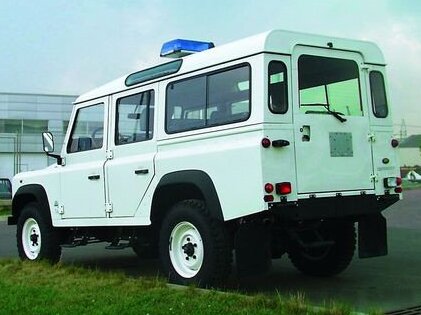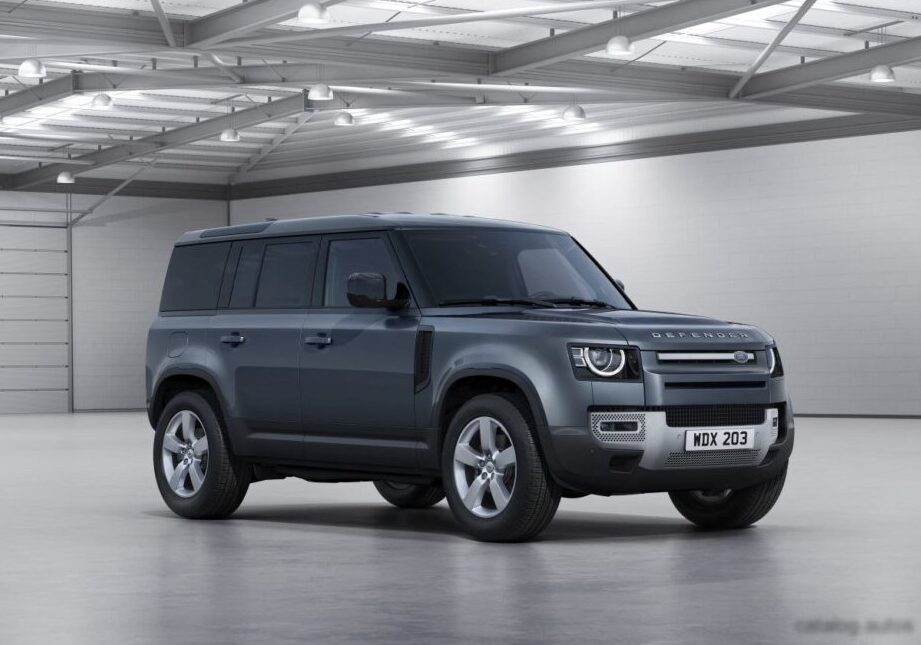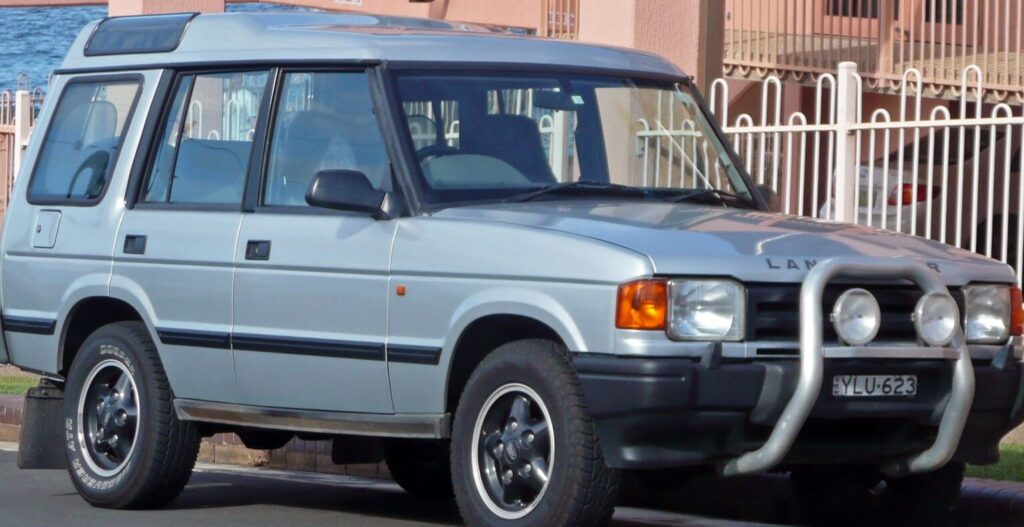
The Land Rover Discovery I 3.5i V8, produced from 1990 to 1998, represented a significant step for Land Rover, bridging the gap between the rugged, utilitarian Series vehicles and the more luxurious Range Rover. Positioned as a versatile family vehicle capable both on and off-road, the 3.5i V8 variant was a key offering in the initial Discovery lineup. It was built on the 1HX0 platform, and aimed to provide a more accessible entry point into the Land Rover brand while still delivering the core attributes of go-anywhere capability and durability. This particular engine and transmission combination, while not the most common, offered a blend of performance and refinement for the time.
Technical Specifications
| Brand | Land Rover |
| Model | Discovery |
| Generation | Discovery I |
| Type (Engine) | 3.5 i V8 (5 dr) (155 Hp) |
| Start of production | 1990 |
| End of production | 1998 |
| Powertrain Architecture | Internal Combustion engine |
| Body type | SUV |
| Seats | 7 |
| Doors | 5 |
| Fuel consumption (urban) | 19.1 l/100 km (12.3 US mpg, 14.8 UK mpg, 5.2 km/l) |
| Fuel consumption (extra urban) | 10.5 l/100 km (22.4 US mpg, 26.9 UK mpg, 9.5 km/l) |
| Fuel consumption (combined) | 14.9 l/100 km (15.8 US mpg, 19 UK mpg, 6.7 km/l) |
| Fuel Type | Petrol (Gasoline) |
| Acceleration 0 – 100 km/h | 12.8 sec |
| Acceleration 0 – 62 mph | 12.8 sec |
| Acceleration 0 – 60 mph | 12.2 sec |
| Maximum speed | 171 km/h (106.25 mph) |
| Weight-to-power ratio | 12.4 kg/Hp, 80.5 Hp/tonne |
| Weight-to-torque ratio | 7.4 kg/Nm, 135.6 Nm/tonne |
| Power | 155 Hp @ 4750 rpm |
| Power per litre | 43.9 Hp/l |
| Torque | 261 Nm @ 3000 rpm (192.5 lb.-ft. @ 3000 rpm) |
| Engine layout | Front, Longitudinal |
| Engine Model/Code | 22 D |
| Engine displacement | 3532 cm3 (215.54 cu. in.) |
| Number of cylinders | 8 |
| Engine configuration | V-engine |
| Cylinder Bore | 88.9 mm (3.5 in.) |
| Piston Stroke | 71.12 mm (2.8 in.) |
| Compression ratio | 8:1 |
| Number of valves per cylinder | 2 |
| Fuel injection system | Multi-port manifold injection |
| Engine aspiration | Naturally aspirated engine |
| Valvetrain | OHC |
| Engine oil capacity | 5.7 l (6.02 US qt | 5.02 UK qt) |
| Coolant capacity | 11.3 l (11.94 US qt | 9.94 UK qt) |
| Kerb Weight | 1925 kg (4243.9 lbs.) |
| Max. weight | 2720 kg (5996.57 lbs.) |
| Max load | 795 kg (1752.67 lbs.) |
| Trunk (boot) space – minimum | 1290 l (45.56 cu. ft.) |
| Trunk (boot) space – maximum | 1970 l (69.57 cu. ft.) |
| Fuel tank capacity | 88 l (23.25 US gal | 19.36 UK gal) |
| Length | 4520 mm (177.95 in.) |
| Width | 1795 mm (70.67 in.) |
| Height | 1960 mm (77.17 in.) |
| Wheelbase | 2540 mm (100 in.) |
| Front track | 1485 mm (58.46 in.) |
| Rear (Back) track | 1485 mm (58.46 in.) |
| Drive wheel | All wheel drive (4×4) |
| Number of gears and type of gearbox | 5 gears, manual transmission |
| Front suspension | Rigid axle suspension |
| Rear suspension | Rigid axle suspension |
| Front brakes | Ventilated discs |
| Rear brakes | Disc |
| Assisting systems | ABS (Anti-lock braking system) |
| Power steering | Hydraulic Steering |
| Tires size | 205/80 R16 |
Powertrain & Engine Architecture
The heart of the Discovery I 3.5i V8 is the Rover 22D engine, a 3.5-liter naturally aspirated V8. This engine, derived from the Buick-Oldsmobile-Pontiac 3.5L V8, was adapted by Rover and featured a 90-degree V-angle. It utilized a multi-port fuel injection system, providing adequate fuel delivery for its displacement. The engine’s overhead camshaft (OHC) design, with two valves per cylinder, was relatively simple but robust. The 22D produced 155 horsepower at 4750 rpm and 261 Nm (192.5 lb-ft) of torque at 3000 rpm. The five-speed manual transmission was the standard offering, providing a direct connection to the engine’s power. This transmission was known for its durability, but its shift quality wasn’t particularly refined by modern standards.
Driving Characteristics
The 3.5i V8 Discovery I offered a distinct driving experience. While not exceptionally quick – 0-60 mph took around 12.2 seconds – the V8 provided ample low-end torque, making it capable in off-road situations and when towing. The manual transmission allowed for greater driver control, but the gear ratios were spaced to prioritize usability over outright performance. Compared to the later 2.0-liter inline-four or the 2.5-liter turbodiesel versions, the V8 felt more relaxed at highway speeds, but it came at the cost of significantly higher fuel consumption. The 3.5i V8 was noticeably more responsive than the diesel, and offered a more engaging driving experience than the lower-powered four-cylinder models.
Equipment & Trim Levels
The Discovery I 3.5i V8 typically came with a reasonable level of standard equipment. This included power steering, central locking, and basic instrumentation. Interior upholstery was generally cloth, though leather was available as an option. Trim levels varied depending on the market, but common options included air conditioning, electric windows, and a sunroof. The Discovery I was designed with practicality in mind, offering a spacious interior with seating for up to seven passengers. The rear seats could be folded or removed to create a larger cargo area.
Chassis & Braking
The Discovery I utilized a body-on-frame construction, providing a robust and durable chassis. Suspension consisted of a rigid axle setup at both the front and rear, with coil springs and shock absorbers. This setup prioritized off-road capability over on-road handling. Braking was accomplished with ventilated discs at the front and discs at the rear, assisted by an anti-lock braking system (ABS). While adequate for its time, the braking system lacked the sophistication of more modern vehicles. The tires, typically 205/80 R16, were chosen for their all-terrain capabilities.
Market Reception & Comparison
The Discovery I 3.5i V8 was generally well-received by critics, who praised its versatility and off-road prowess. However, the V8 engine’s fuel consumption was a common criticism. Compared to the four-cylinder and diesel versions, the 3.5i V8 was more expensive to purchase and operate. The diesel models offered significantly better fuel economy, making them a popular choice for those who prioritized practicality. The four-cylinder versions were more affordable, but lacked the V8’s power and refinement. The V8 appealed to buyers who wanted a capable and comfortable SUV with a touch of luxury.
Legacy
The Land Rover Discovery I 3.5i V8, while not the most common variant, holds a special place in the model’s history. The 22D V8 engine, while thirsty, proved to be relatively reliable when properly maintained. Today, well-maintained examples are sought after by enthusiasts. Common issues include oil leaks, cooling system problems, and corrosion. However, parts availability is generally good, and the Discovery I remains a relatively affordable classic SUV. Its blend of off-road capability, practicality, and classic British styling continues to appeal to a dedicated following.