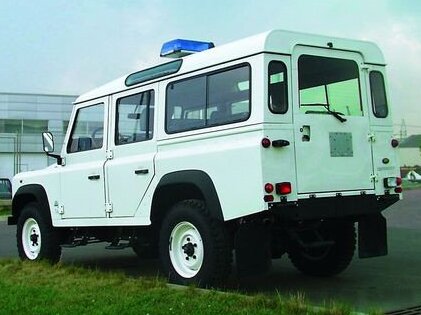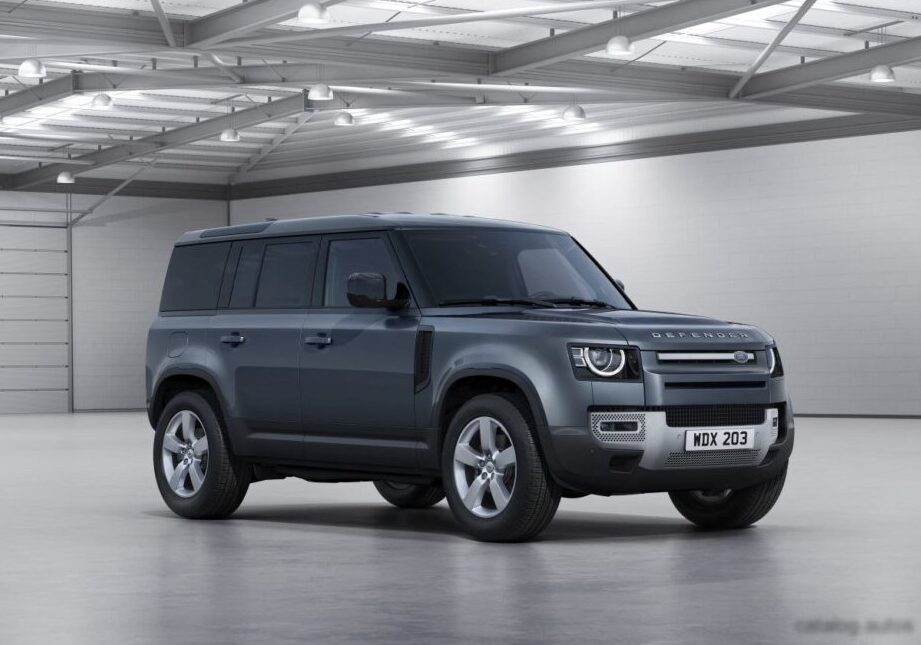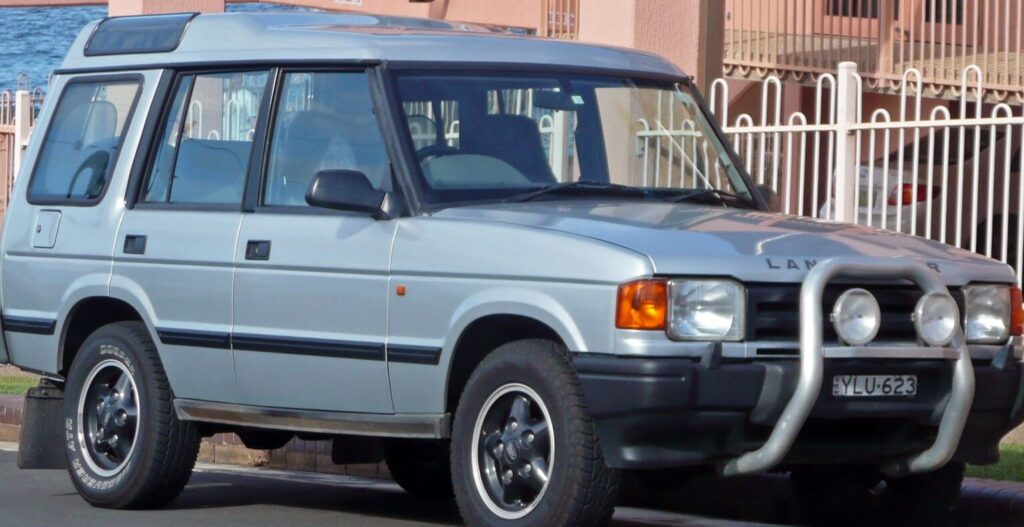
The Land Rover Discovery I 3.9i V8 Automatic, produced between 1994 and 1998, represented a significant step forward for the British marque, blending off-road capability with family-friendly practicality. Positioned as a premium SUV, it aimed to bridge the gap between the rugged Defender and the more luxurious Range Rover. This particular variant, equipped with the 3.9-liter V8 engine and a four-speed automatic transmission, was a mid-range offering within the Discovery I lineup, appealing to buyers seeking a balance of performance and convenience. It was built on the 1HX0 platform, shared with other Rover Group vehicles of the era.
Technical Specifications
| Brand | Land Rover |
| Model | Discovery |
| Generation | Discovery I |
| Type (Engine) | 3.9i V8 (182 Hp) Automatic |
| Start of production | 1994 |
| End of production | 1998 |
| Powertrain Architecture | Internal Combustion engine |
| Body type | SUV |
| Seats | 7 |
| Doors | 5 |
| Fuel consumption (combined) | 14.9 l/100 km |
| Fuel consumption (US mpg) | 15.8 US mpg |
| Fuel consumption (UK mpg) | 19 UK mpg |
| Fuel consumption (km/l) | 6.7 km/l |
| Fuel Type | Petrol (Gasoline) |
| Acceleration 0 – 100 km/h | 11.5 sec |
| Acceleration 0 – 62 mph | 11.5 sec |
| Acceleration 0 – 60 mph | 10.9 sec |
| Maximum speed | 170 km/h (105.63 mph) |
| Weight-to-power ratio | 11.1 kg/Hp, 90.1 Hp/tonne |
| Weight-to-torque ratio | 6.5 kg/Nm, 154.5 Nm/tonne |
| Power | 182 Hp @ 4750 rpm |
| Power per litre | 46.1 Hp/l |
| Torque | 312 Nm @ 3100 rpm (230.12 lb.-ft. @ 3100 rpm) |
| Engine layout | Front, Longitudinal |
| Engine Model/Code | 35 D, 36 D |
| Engine displacement | 3947 cm3 (240.86 cu. in.) |
| Number of cylinders | 8 |
| Engine configuration | V-engine |
| Cylinder Bore | 94 mm (3.7 in.) |
| Piston Stroke | 71.1 mm (2.8 in.) |
| Compression ratio | 9.3:1 |
| Number of valves per cylinder | 2 |
| Fuel injection system | Multi-port manifold injection |
| Engine aspiration | Naturally aspirated engine |
| Engine oil capacity | 6.1 l (6.45 US qt | 5.37 UK qt) |
| Coolant capacity | 11.3 l (11.94 US qt | 9.94 UK qt) |
| Kerb Weight | 2020 kg (4453.34 lbs.) |
| Max. weight | 2720 kg (5996.57 lbs.) |
| Max load | 700 kg (1543.24 lbs.) |
| Trunk (boot) space – minimum | 1290 l (45.56 cu. ft.) |
| Trunk (boot) space – maximum | 1970 l (69.57 cu. ft.) |
| Fuel tank capacity | 89 l (23.51 US gal | 19.58 UK gal) |
| Length | 4524 mm (178.11 in.) |
| Width | 1810 mm (71.26 in.) |
| Height | 1960 mm (77.17 in.) |
| Wheelbase | 2540 mm (100 in.) |
| Front track | 1486 mm (58.5 in.) |
| Rear (Back) track | 1486 mm (58.5 in.) |
| Drive wheel | All wheel drive (4×4) |
| Number of gears and type of gearbox | 4 gears, automatic transmission |
| Front suspension | Rigid axle suspension |
| Rear suspension | Rigid axle suspension |
| Front brakes | Ventilated discs |
| Rear brakes | Disc |
| Assisting systems | ABS (Anti-lock braking system) |
| Power steering | Hydraulic Steering |
| Tires size | 205/80 R16 |
Powertrain & Engine Architecture
The heart of the Discovery I 3.9i V8 Automatic is the Rover 3.9-liter V8 engine, designated as either the 35D or 36D depending on minor variations. This engine, derived from the Buick-Oldsmobile-Pontiac 3.5L V8, was a robust and relatively simple design. It featured a 90-degree V-angle, two valves per cylinder, and a multi-port fuel injection system. The 3.9L displacement was achieved by increasing the bore size. The engine’s inherent smoothness and torque characteristics were well-suited to the Discovery’s intended role as a capable all-terrain vehicle. The four-speed automatic transmission, sourced from ZF, provided relatively smooth shifts but wasn’t known for its outright speed or efficiency. It was a conventional hydraulic automatic, lacking the electronic controls found in later transmissions.
Driving Characteristics
The 182 horsepower and 312 lb-ft of torque delivered by the 3.9i V8, coupled with the automatic transmission, resulted in a driving experience that prioritized usability over outright performance. Acceleration to 60 mph took around 10.9 seconds, which was adequate for the time but not particularly quick. The automatic transmission’s gear ratios were geared towards providing sufficient torque for off-road situations and towing, rather than maximizing acceleration. Compared to the five-speed manual transmission available on other Discovery I models, the automatic felt somewhat sluggish, especially during overtaking maneuvers. However, the automatic offered a more relaxed driving experience, particularly in urban environments and during off-road excursions where precise throttle control was crucial.
Equipment & Trim Levels
The 3.9i V8 Automatic typically came with a reasonably well-equipped specification. Standard features included power steering, ABS brakes, central locking, electric windows, and a basic audio system. Interior upholstery was typically cloth, although leather was available as an option. Trim levels varied depending on the market, but generally, this variant sat in the mid-range of the Discovery I lineup. Optional extras included a sunroof, air conditioning, upgraded audio systems, and a rear wash/wipe system. The seven-seat configuration was a popular option, adding versatility for families.
Chassis & Braking
The Discovery I utilized a body-on-frame construction, providing a robust and durable chassis. Suspension consisted of a rigid axle setup at both the front and rear, with coil springs and shock absorbers. This configuration prioritized off-road articulation and ride comfort over precise on-road handling. Braking was provided by ventilated discs at the front and solid discs at the rear. While adequate for most driving conditions, the braking system lacked the sophistication of more modern setups. The Discovery I’s relatively high weight and limited tire grip meant that stopping distances were longer than those of contemporary cars.
Market Reception & Comparison
The Discovery I 3.9i V8 Automatic was generally well-received by automotive critics. It was praised for its off-road capability, spacious interior, and comfortable ride. However, the fuel economy was a common criticism, averaging around 15.8 US mpg. Compared to the 2.0-liter four-cylinder and 2.5-liter turbodiesel versions, the V8 offered significantly more power and refinement but at the cost of increased fuel consumption and maintenance. The diesel models were favored by those prioritizing economy and towing capacity, while the four-cylinder offered a more affordable entry point into the Discovery range.
Legacy
The Rover 3.9i V8 engine, while not known for its cutting-edge technology, proved to be a remarkably durable and reliable powerplant. With proper maintenance, these engines can continue to provide years of service. Today, the Discovery I 3.9i V8 Automatic holds a certain appeal for enthusiasts and collectors. Its classic design, robust construction, and off-road capability make it a desirable vehicle. However, potential buyers should be aware of the potential for corrosion, particularly in older examples, and the relatively high cost of parts and maintenance. The combination of V8 power and automatic convenience continues to make this variant a popular choice in the used car market, particularly among those seeking a capable and characterful SUV.