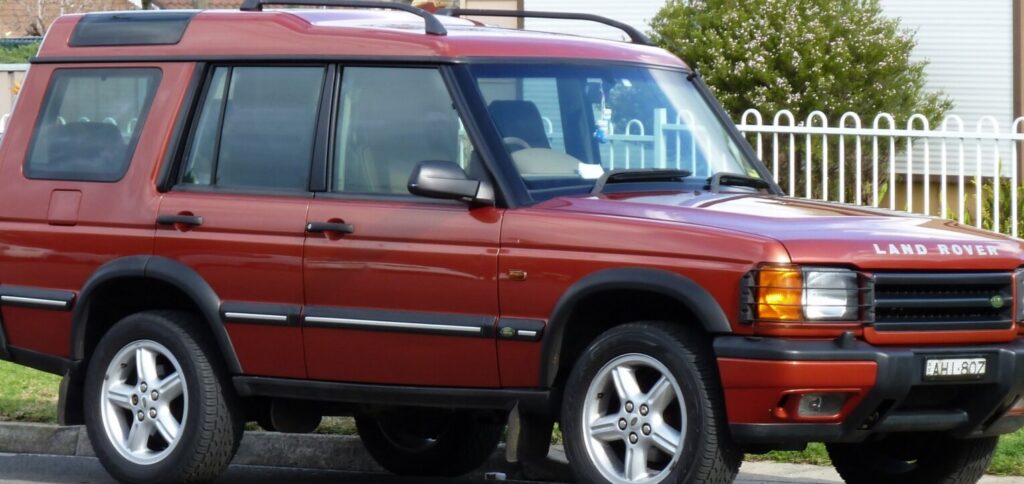
The Land Rover Discovery II 2.5 TDi Automatic, produced from 1998 to 2004, represented a significant evolution of the original Discovery, blending off-road capability with increased refinement and practicality. Positioned as a mid-range offering within the Discovery II lineup, the 2.5 TDi Automatic aimed to provide a balance between fuel efficiency, torque for towing and challenging terrain, and the convenience of an automatic transmission. It served as a popular choice for families and those requiring a versatile vehicle capable of both daily commuting and adventurous excursions, particularly in European and Commonwealth markets. This variant occupied a space between the base 2.0-liter petrol models and the more powerful, and often more expensive, V8 options.
Technical Specifications
| Brand | Land Rover |
| Model | Discovery |
| Generation | Discovery II |
| Type (Engine) | 2.5 TDi (136 Hp) Automatic |
| Start of production | 1998 |
| End of production | 2004 |
| Powertrain Architecture | Internal Combustion engine |
| Body type | SUV |
| Seats | 7 |
| Doors | 5 |
| Fuel consumption (urban) | 12.7 l/100 km (18.5 US mpg, 22.2 UK mpg, 7.9 km/l) |
| Fuel consumption (extra urban) | 9 l/100 km (26.1 US mpg, 31.4 UK mpg, 11.1 km/l) |
| Fuel consumption (combined) | 10.3 l/100 km (22.8 US mpg, 27.4 UK mpg, 9.7 km/l) |
| Fuel Type | Diesel |
| Acceleration 0 – 100 km/h | 17.1 sec |
| Acceleration 0 – 62 mph | 17.1 sec |
| Acceleration 0 – 60 mph | 16.2 sec |
| Maximum speed | 157 km/h (97.56 mph) |
| Weight-to-power ratio | 14.9 kg/Hp, 67.3 Hp/tonne |
| Weight-to-torque ratio | 6.7 kg/Nm, 148.5 Nm/tonne |
| Power | 136 Hp @ 4200 rpm |
| Power per litre | 54.5 Hp/l |
| Torque | 300 Nm @ 1950 rpm (221.27 lb.-ft. @ 1950 rpm) |
| Engine layout | Front, Longitudinal |
| Engine Model/Code | 10P |
| Engine displacement | 2496 cm3 (152.32 cu. in.) |
| Number of cylinders | 5 |
| Engine configuration | Inline |
| Cylinder Bore | 84.45 mm (3.32 in.) |
| Piston Stroke | 89 mm (3.5 in.) |
| Compression ratio | 19.5:1 |
| Number of valves per cylinder | 2 |
| Fuel injection system | Diesel Commonrail |
| Engine aspiration | Turbocharger |
| Valvetrain | OHC |
| Engine oil capacity | 7.2 l (7.61 US qt | 6.34 UK qt) |
| Kerb Weight | 2020 kg (4453.34 lbs.) |
| Max. weight | 2750 kg (6062.71 lbs.) |
| Max load | 730 kg (1609.37 lbs.) |
| Trunk (boot) space – minimum | 1290 l (45.56 cu. ft.) |
| Trunk (boot) space – maximum | 1970 l (69.57 cu. ft.) |
| Fuel tank capacity | 95 l (25.1 US gal | 20.9 UK gal) |
| Length | 4710 mm (185.43 in.) |
| Width | 1860 mm (73.23 in.) |
| Height | 1890 mm (74.41 in.) |
| Wheelbase | 2540 mm (100 in.) |
| Front track | 1540 mm (60.63 in.) |
| Rear (Back) track | 1560 mm (61.42 in.) |
| Drive wheel | All wheel drive (4×4) |
| Number of gears and type of gearbox | 4 gears, automatic transmission |
| Front suspension | Coil spring |
| Rear suspension | Coil spring |
| Front brakes | Ventilated discs |
| Rear brakes | Disc |
| Assisting systems | ABS (Anti-lock braking system) |
| Power steering | Hydraulic Steering |
| Tires size | 235/70 R16 |
| Wheel rims size | 16 |
Powertrain & Engine Architecture
The heart of the Discovery II 2.5 TDi Automatic is the 10P engine, a 2.5-liter inline five-cylinder diesel. This engine, a product of Land Rover’s engineering, was known for its robust construction and ample torque. The 2.5 TDi utilized a Bosch electronic diesel injection (EDI) system, later upgraded to a common rail system for improved refinement and efficiency. The common rail injection allowed for more precise fuel delivery, resulting in reduced noise and improved emissions. The engine featured an overhead camshaft (OHC) valvetrain with two valves per cylinder. A turbocharger with an intercooler was employed to boost power output, delivering 136 horsepower and 300 Nm (221 lb-ft) of torque. The automatic transmission was a four-speed unit, providing smooth gear changes but lacking the efficiency of more modern transmissions. It was chosen to appeal to buyers prioritizing ease of use over ultimate performance.
Driving Characteristics
The 2.5 TDi Automatic offered a comfortable and capable driving experience. While not particularly quick – 0-60 mph took around 16.2 seconds – the engine’s torque provided sufficient power for everyday driving and towing. The automatic transmission, while smooth, could feel somewhat sluggish, especially during kickdown maneuvers. Compared to the manual transmission versions of the 2.5 TDi, the automatic sacrificed some responsiveness. The higher-output V8 models offered significantly more performance, but at the cost of increased fuel consumption. The gear ratios were optimized for towing and off-road use, rather than outright acceleration. The Discovery II’s permanent four-wheel drive system, combined with the engine’s torque, made it a capable off-roader, able to tackle moderate to challenging terrain.
Equipment & Trim Levels
The 2.5 TDi Automatic typically came equipped with features such as air conditioning, power windows, central locking, and an AM/FM radio. Higher trim levels offered options like leather upholstery, sunroof, heated seats, and upgraded audio systems. Interior trim generally consisted of durable cloth or leather, with a functional, rather than luxurious, design. The dashboard layout was typical of Land Rover at the time, with clearly labeled controls and a focus on practicality. Optional extras included side steps, roof racks, and a rear parking sensor.
Chassis & Braking
The Discovery II utilized a body-on-frame construction, providing a robust and durable chassis. Suspension consisted of coil springs all around, offering a comfortable ride both on and off-road. Front brakes were ventilated discs, while rear brakes were solid discs. Anti-lock Braking System (ABS) was standard, enhancing safety. The steering was hydraulic power-assisted, providing a light and responsive feel. Stabilizer bars were fitted front and rear to reduce body roll during cornering.
Market Reception & Comparison
The Discovery II 2.5 TDi Automatic was generally well-received by critics and buyers alike. It was praised for its practicality, off-road capability, and comfortable ride. Fuel economy was reasonable for a vehicle of its size and type, averaging around 22.8 US mpg in combined driving. Compared to the petrol-powered models, the 2.5 TDi offered significantly better fuel economy and more torque. However, the automatic transmission was sometimes criticized for its lack of responsiveness. Reliability was generally good, although the early Bosch EDI injection systems could be prone to issues. The 2.5 TDi offered a compelling alternative to rivals like the Mitsubishi Pajero and Toyota Land Cruiser.
Legacy
The Land Rover Discovery II 2.5 TDi Automatic remains a popular choice among enthusiasts and those seeking a capable and affordable SUV. The 10P engine, while aging, is known for its durability and relatively simple maintenance. Parts availability is generally good, although some components can be expensive. Today, these vehicles are often found in the used car market, offering a blend of classic Land Rover charm and modern convenience. While not as refined as newer SUVs, the Discovery II 2.5 TDi Automatic continues to provide a rewarding driving experience and a reputation for rugged reliability.