
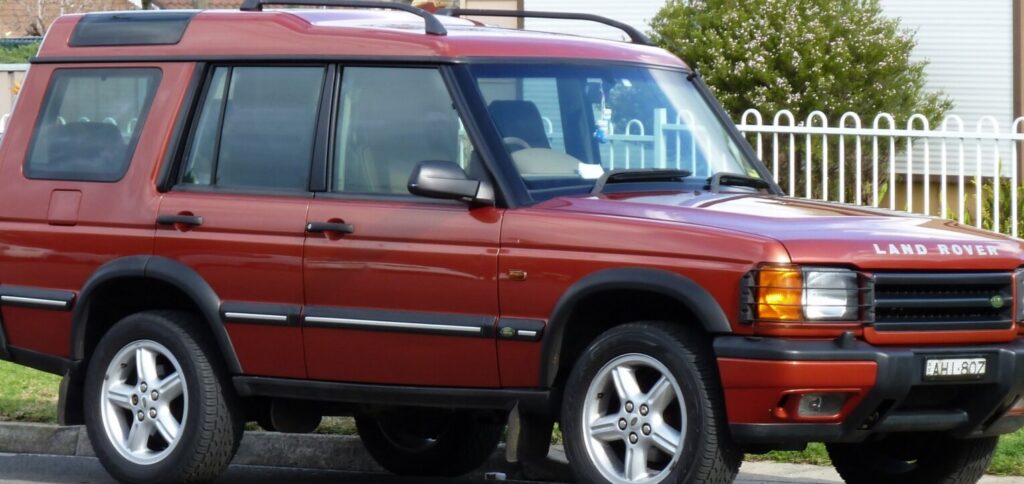
The Land Rover Discovery II 4.0i V8 Automatic, produced from 1998 to 2004, represented a significant evolution of Land Rover’s mid-size SUV offering. Positioned as a premium variant within the Discovery II range, it catered to buyers seeking a blend of off-road capability, family practicality, and a more powerful engine option. This model sat above the four-cylinder and turbocharged diesel versions in the lineup, offering a substantial performance upgrade. It was primarily sold in European and North American markets, appealing to those needing a versatile vehicle capable of both daily commuting and adventurous excursions.
Technical Specifications
| Brand | Land Rover |
| Model | Discovery |
| Generation | Discovery II |
| Type (Engine) | 4.0i V8 (185 Hp) Automatic |
| Start of production | 1998 |
| End of production | 2004 |
| Powertrain Architecture | Internal Combustion engine |
| Body type | SUV |
| Seats | 7 |
| Doors | 5 |
| Fuel consumption (urban) | 22.9 l/100 km (10.3 US mpg, 12.3 UK mpg, 4.4 km/l) |
| Fuel consumption (extra urban) | 13.1 l/100 km (18 US mpg, 21.6 UK mpg, 7.6 km/l) |
| Fuel consumption (combined) | 16.7 l/100 km (14.1 US mpg, 16.9 UK mpg, 6 km/l) |
| Fuel Type | Petrol (Gasoline) |
| Acceleration 0 – 100 km/h | 12.8 sec |
| Acceleration 0 – 62 mph | 12.8 sec |
| Acceleration 0 – 60 mph | 12.2 sec |
| Maximum speed | 184 km/h (114.33 mph) |
| Weight-to-power ratio | 10.9 kg/Hp, 91.6 Hp/tonne |
| Weight-to-torque ratio | 5.9 kg/Nm, 168.3 Nm/tonne |
| Power | 185 Hp @ 4750 rpm |
| Power per litre | 46.9 Hp/l |
| Torque | 340 Nm @ 2600 rpm (250.77 lb.-ft. @ 2600 rpm) |
| Engine layout | Front, Longitudinal |
| Engine displacement | 3947 cm3 (240.86 cu. in.) |
| Number of cylinders | 8 |
| Engine configuration | V-engine |
| Cylinder Bore | 94 mm (3.7 in.) |
| Piston Stroke | 71.1 mm (2.8 in.) |
| Compression ratio | 9.35:1 |
| Number of valves per cylinder | 2 |
| Fuel injection system | Multi-port manifold injection |
| Engine aspiration | Naturally aspirated engine |
| Kerb Weight | 2020 kg (4453.34 lbs.) |
| Max. weight | 2750 kg (6062.71 lbs.) |
| Max load | 730 kg (1609.37 lbs.) |
| Trunk (boot) space – minimum | 1290 l (45.56 cu. ft.) |
| Trunk (boot) space – maximum | 1970 l (69.57 cu. ft.) |
| Fuel tank capacity | 95 l (25.1 US gal | 20.9 UK gal) |
| Length | 4710 mm (185.43 in.) |
| Width | 1860 mm (73.23 in.) |
| Height | 1890 mm (74.41 in.) |
| Wheelbase | 2540 mm (100 in.) |
| Front track | 1540 mm (60.63 in.) |
| Rear (Back) track | 1560 mm (61.42 in.) |
| Drive wheel | All wheel drive (4×4) |
| Number of gears and type of gearbox | 4 gears, automatic transmission |
| Front suspension | Coil spring |
| Rear suspension | Hydraulic elements |
| Front brakes | Ventilated discs |
| Rear brakes | Disc |
| Assisting systems | ABS (Anti-lock braking system) |
| Steering type | Steering rack and pinion |
| Power steering | Hydraulic Steering |
| Tires size | 235/70 R16 |
| Wheel rims size | 16 |
Powertrain & Engine Architecture
The heart of the Discovery II 4.0i V8 is the 4.0-liter Rover V8 engine, internally designated as the 4.0 185 bhp. This engine, a descendant of the original Buick-designed V8, had undergone significant revisions by Rover over the years. It features a 90-degree V-angle, two valves per cylinder, and a multi-port fuel injection system. The engine’s robust construction and relatively simple design contributed to its longevity, though it wasn’t known for exceptional fuel efficiency. The automatic transmission paired with this engine was a ZF 4HP22, a four-speed unit known for its smoothness and reliability. This transmission was chosen for its ability to handle the V8’s torque and provide comfortable shifting for everyday driving. The transmission’s gear ratios were geared towards providing adequate acceleration and towing capacity, rather than outright performance.
Driving Characteristics
The 4.0i V8 Automatic offered a noticeably different driving experience compared to the lower-powered Discovery II variants. While not a sports car, the 185 horsepower and 340 Nm (250 lb-ft) of torque provided ample power for both on-road and off-road driving. Acceleration from 0-60 mph took around 12.2 seconds, which was respectable for an SUV of its size and weight. The automatic transmission contributed to a relaxed driving experience, particularly in urban environments. However, the four-speed transmission meant that the engine could feel strained at higher speeds, and fuel economy suffered. Compared to the manual transmission versions, the automatic offered less driver engagement but greater convenience. The V8’s torque delivery was smooth and predictable, making it well-suited for towing and navigating challenging terrain.
Equipment & Trim Levels
The 4.0i V8 Automatic typically came with a higher level of standard equipment than the base Discovery II models. This included features such as leather upholstery, air conditioning, power windows and locks, and an upgraded audio system. Optional extras included a sunroof, heated seats, and a premium sound system. Trim levels varied depending on the market, but generally, the 4.0i V8 represented the upper echelon of the Discovery II range. Interior appointments were generally focused on comfort and practicality, with durable materials and a functional layout. The seven-seat configuration was standard, providing ample space for families.
Chassis & Braking
The Discovery II utilized a body-on-frame construction, providing a robust and durable platform for off-road adventures. The suspension consisted of coil springs at the front and hydraulic elements at the rear, offering a comfortable ride on paved roads while maintaining good articulation for off-road use. Braking duties were handled by ventilated discs at the front and solid discs at the rear. Anti-lock braking system (ABS) was standard, enhancing safety and control. The steering was a rack and pinion system with hydraulic power assistance, providing precise and responsive handling. The 4×4 system featured a transfer case with high and low range gearing, allowing for excellent off-road capability.
Market Reception & Comparison
The Discovery II 4.0i V8 Automatic was generally well-received by automotive critics, who praised its blend of luxury, practicality, and off-road capability. However, its fuel economy was often criticized, as was typical for a V8 engine of that era. Compared to the four-cylinder and diesel versions, the 4.0i V8 offered significantly more power and refinement, but at a higher price point. The V8’s reliability was generally good, but maintenance costs were higher due to the more complex engine and drivetrain. Against competitors like the Jeep Grand Cherokee and the BMW X5, the Discovery II offered a unique combination of British heritage, off-road prowess, and family-friendly features.
Legacy
The Land Rover Discovery II 4.0i V8 Automatic has developed a loyal following among enthusiasts. While not without its quirks, the powertrain has proven to be relatively durable, and parts availability remains reasonable. Today, well-maintained examples are sought after by collectors and those seeking a capable and comfortable classic SUV. The engine’s simplicity and robust construction make it relatively easy to maintain, although regular servicing is essential. The Discovery II 4.0i V8 Automatic represents a high point in Land Rover’s history, offering a compelling blend of performance, luxury, and off-road capability that continues to appeal to drivers today.


