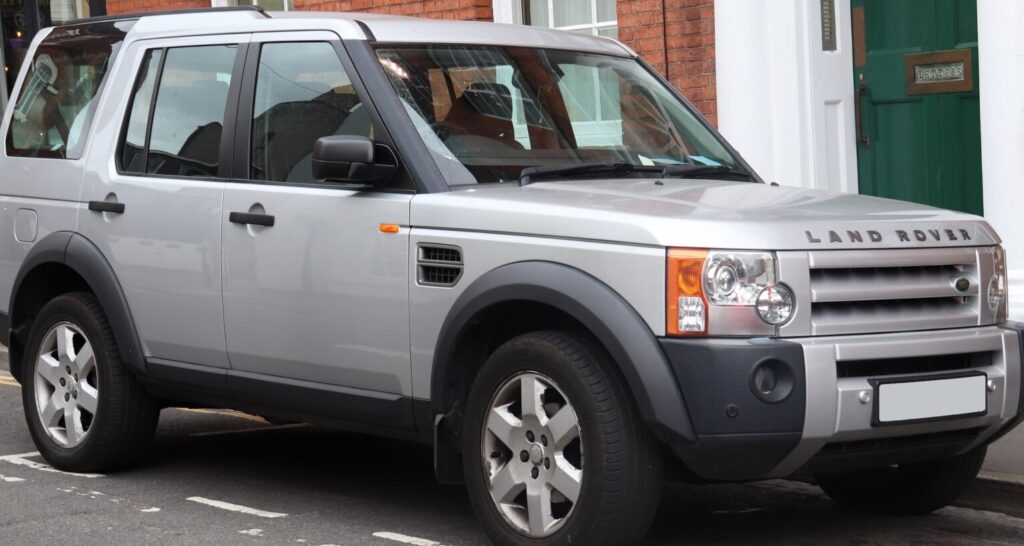
The Land Rover Discovery III 2.7 TDI, produced from 2004 to 2009, represented a significant departure from its predecessors, embracing a more modern and sophisticated design while retaining the brand’s renowned off-road capability. This variant, equipped with the 2.7-liter turbodiesel engine producing 190 horsepower, occupied a middle ground in the Discovery III lineup, offering a balance between performance, fuel economy, and price. It was positioned as a practical choice for families and those requiring a versatile vehicle capable of both on-road comfort and off-road adventures. The Discovery III, internally designated the L319, was a crucial model for Land Rover, aiming to broaden the appeal of the Discovery nameplate beyond its traditional, more rugged image.
Technical Specifications
| Brand | Land Rover |
| Model | Discovery |
| Generation | Discovery III |
| Type (Engine) | 2.7 TDI (190 Hp) |
| Start of production | 2004 |
| End of production | 2009 |
| Powertrain Architecture | Internal Combustion engine |
| Body type | SUV |
| Seats | 7 |
| Doors | 5 |
| Fuel consumption (urban) | 11.5 l/100 km (20.5 US mpg) |
| Fuel consumption (extra urban) | 8.2 l/100 km (28.7 US mpg) |
| Fuel consumption (combined) | 9.4 l/100 km (25 US mpg) |
| Fuel Type | Diesel |
| Acceleration 0 – 100 km/h | 11.5 sec |
| Acceleration 0 – 62 mph | 11.5 sec |
| Acceleration 0 – 60 mph | 10.9 sec |
| Maximum speed | 180 km/h (111.85 mph) |
| Weight-to-power ratio | 13.1 kg/Hp |
| Weight-to-torque ratio | 5.7 kg/Nm |
| Power | 190 Hp @ 4000 rpm |
| Power per litre | 69.9 Hp/l |
| Torque | 440 Nm @ 1900 rpm (324.53 lb.-ft. @ 1900 rpm) |
| Engine layout | Front, Longitudinal |
| Engine Model/Code | 276DT |
| Engine displacement | 2720 cm3 (165.98 cu. in.) |
| Number of cylinders | 6 |
| Engine configuration | V-engine |
| Cylinder Bore | 81 mm (3.19 in.) |
| Piston Stroke | 88 mm (3.46 in.) |
| Compression ratio | 18:1 |
| Number of valves per cylinder | 4 |
| Fuel injection system | Diesel Commonrail |
| Engine aspiration | Turbocharger, Intercooler |
| Valvetrain | DOHC |
| Engine oil capacity | 6.55 l (6.92 US qt | 5.76 UK qt) |
| Coolant | 8 l (8.45 US qt | 7.04 UK qt) |
| Kerb Weight | 2494 kg (5498.33 lbs.) |
| Max. weight | 3230 kg (7120.93 lbs.) |
| Max load | 736 kg (1622.6 lbs.) |
| Fuel tank capacity | 82 l (21.66 US gal | 18.04 UK gal) |
| Length | 4835 mm (190.35 in.) |
| Width | 2009 mm (79.09 in.) |
| Height | 1887 mm (74.29 in.) |
| Wheelbase | 2885 mm (113.58 in.) |
| Front track | 1605 mm (63.19 in.) |
| Rear track | 1613 mm (63.5 in.) |
| Drive wheel | All wheel drive (4×4) |
| Number of gears | 6 |
| Gearbox type | Manual transmission |
| Front suspension | Double wishbone |
| Rear suspension | Double wishbone |
| Front brakes | Ventilated discs |
| Rear brakes | Ventilated discs |
| Assisting systems | ABS (Anti-lock braking system) |
| Tires size | 255/55 R19 |
| Wheel rims size | 19 |
Powertrain & Engine Architecture
The heart of the Discovery III 2.7 TDI is the 276DT engine, a 2.7-liter V6 turbodiesel. This engine was sourced from Peugeot-Citroën as part of a joint venture, and represented a move away from Land Rover’s traditionally in-house engine designs. The 276DT utilizes a common rail direct injection system, delivering fuel at extremely high pressure for improved combustion efficiency and reduced emissions. The engine features a single turbocharger with an intercooler to increase air density and boost power output. The valvetrain is a double overhead camshaft (DOHC) design with four valves per cylinder, optimizing gas flow for enhanced performance. The 6-speed manual transmission, while offering good control, was sometimes criticized for a slightly notchy shift feel. The engine’s longitudinal mounting and all-wheel-drive system contribute to the Discovery III’s robust off-road capabilities.
Driving Characteristics
The 190 horsepower and 324 lb-ft of torque provided by the 2.7 TDI engine offered a respectable level of performance for the Discovery III. While not as quick as the later 3.6-liter V8 petrol variant, the 2.7 TDI delivered adequate acceleration for everyday driving and highway cruising. The torque curve was relatively flat, providing good pulling power from low engine speeds, which was particularly useful when towing or navigating challenging terrain. The 6-speed manual transmission allowed drivers to maintain optimal engine speed for efficiency or performance. Compared to the automatic transmission options available, the manual offered more driver engagement and control. However, the manual version wasn’t as popular as the automatic, particularly in the US market.
Equipment & Trim Levels
The 2.7 TDI variant of the Discovery III was typically offered in mid-range trim levels. Standard equipment generally included air conditioning, power windows and locks, a CD stereo system, and alloy wheels. Higher trim levels added features such as leather upholstery, heated seats, a sunroof, and upgraded audio systems. Optional extras included satellite navigation, rear parking sensors, and a premium sound system. Interior upholstery was typically cloth or leather, with a dashboard layout focused on functionality and ease of use. The Discovery III’s interior was designed to be durable and practical, reflecting its intended role as a versatile family vehicle.
Chassis & Braking
The Discovery III utilized a robust body-on-frame construction, providing excellent strength and durability. The suspension system consisted of double wishbones at both the front and rear, offering a comfortable ride and good off-road articulation. Ventilated disc brakes were fitted to all four wheels, providing ample stopping power. Anti-lock Braking System (ABS) was standard, enhancing safety and control during emergency braking. The Discovery III’s chassis was designed to handle a variety of terrains, and its suspension was tuned to provide a balance between on-road comfort and off-road capability. Stabilizer bars were fitted to both axles to reduce body roll during cornering.
Market Reception & Comparison
The Land Rover Discovery III 2.7 TDI was generally well-received by automotive critics. It was praised for its comfortable ride, spacious interior, and impressive off-road capabilities. The 2.7 TDI engine was considered a good compromise between performance and fuel economy, although some reviewers noted that it could be somewhat noisy under heavy acceleration. Compared to the petrol V6 and V8 variants, the 2.7 TDI offered significantly better fuel economy, making it a more attractive option for those covering long distances. Compared to the later 2.7 SDV6, the earlier 2.7 TDI had a reputation for being slightly less refined and potentially more prone to certain mechanical issues.
Legacy
The Land Rover Discovery III 2.7 TDI remains a popular choice in the used car market today, particularly among those seeking a capable and versatile SUV. While the 2.7 TDI engine has been known to experience issues with the fuel injectors and turbocharger, these problems are often manageable with proper maintenance and repair. The Discovery III’s robust construction and durable components contribute to its longevity. The 2.7 TDI variant offers a good balance of performance, fuel economy, and affordability, making it a compelling option for buyers looking for a capable and reliable SUV with a touch of Land Rover prestige. Its blend of on-road comfort and off-road prowess continues to appeal to a wide range of drivers.