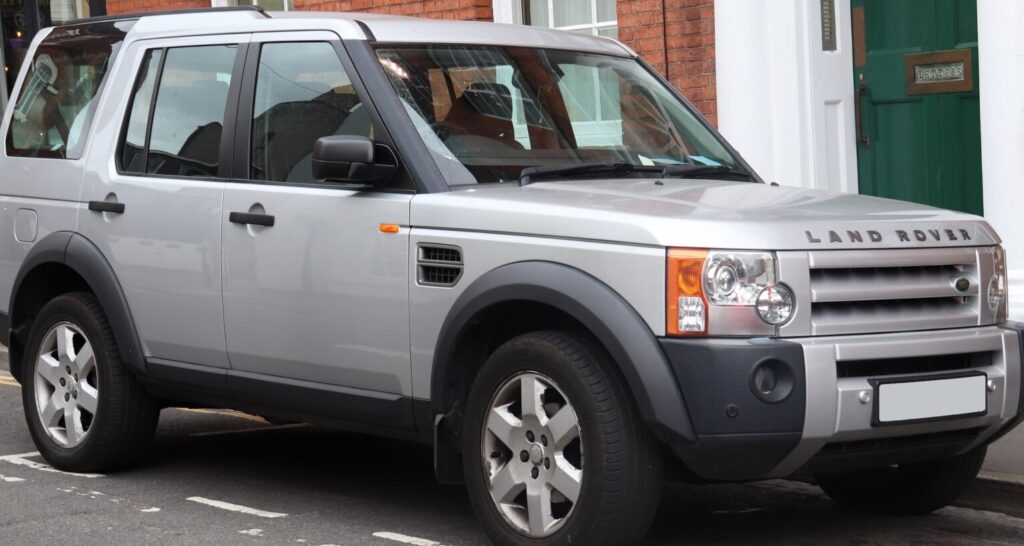
The Land Rover Discovery III 4.4 i V8 32V, produced from 2004 to 2009, represented a significant departure for the Discovery line. Moving away from the aging Series II platform, the Discovery III (internally designated as the L319) utilized a new integrated body-frame construction derived from the Range Rover T4 platform. This generation aimed to blend off-road capability with improved on-road refinement and a more luxurious interior. The 4.4-liter V8 variant, producing 295 horsepower, sat at the top of the Discovery III range, offering a substantial performance upgrade over the four-cylinder and turbocharged diesel options available. It was positioned as the premium choice for buyers seeking both power and towing capacity.
Technical Specifications
| Brand | Land Rover |
| Model | Discovery |
| Generation | Discovery III |
| Type (Engine) | 4.4 i V8 32V (295 Hp) |
| Start of production | 2004 |
| End of production | 2009 |
| Powertrain Architecture | Internal Combustion engine |
| Body type | SUV |
| Seats | 7 |
| Doors | 5 |
| Fuel consumption (urban) | 20.9 l/100 km (11.3 US mpg, 13.5 UK mpg, 4.8 km/l) |
| Fuel consumption (extra urban) | 11.6 l/100 km (20.3 US mpg, 24.4 UK mpg, 8.6 km/l) |
| Fuel consumption (combined) | 15 l/100 km (15.7 US mpg, 18.8 UK mpg, 6.7 km/l) |
| Fuel Type | Petrol (Gasoline) |
| Acceleration 0 – 100 km/h | 8.6 sec |
| Acceleration 0 – 62 mph | 8.6 sec |
| Acceleration 0 – 60 mph | 8.2 sec |
| Maximum speed | 195 km/h (121.17 mph) |
| Weight-to-power ratio | 8.6 kg/Hp, 116.3 Hp/tonne |
| Weight-to-torque ratio | 6 kg/Nm, 167.6 Nm/tonne |
| Power | 295 Hp @ 5500 rpm |
| Power per litre | 67.1 Hp/l |
| Torque | 425 Nm @ 4000 rpm (313.46 lb.-ft. @ 4000 rpm) |
| Engine layout | Front, Longitudinal |
| Engine Model/Code | 448PN |
| Engine displacement | 4394 cm3 (268.14 cu. in.) |
| Number of cylinders | 8 |
| Engine configuration | V-engine |
| Cylinder Bore | 88 mm (3.46 in.) |
| Piston Stroke | 90.3 mm (3.56 in.) |
| Compression ratio | 10.75:1 |
| Number of valves per cylinder | 4 |
| Fuel injection system | Multi-port manifold injection |
| Engine aspiration | Naturally aspirated engine |
| Valvetrain | DOHC |
| Engine oil capacity | 7.7 l (8.14 US qt | 6.78 UK qt) |
| Coolant | 9.3 l (9.83 US qt | 8.18 UK qt) |
| Kerb Weight | 2536 kg (5590.92 lbs.) |
| Max. weight | 3230 kg (7120.93 lbs.) |
| Max load | 694 kg (1530.01 lbs.) |
| Fuel tank capacity | 86 l (22.72 US gal | 18.92 UK gal) |
| Length | 4835 mm (190.35 in.) |
| Width | 2009 mm (79.09 in.) |
| Height | 1887 mm (74.29 in.) |
| Wheelbase | 2885 mm (113.58 in.) |
| Front track | 1605 mm (63.19 in.) |
| Rear track | 1613 mm (63.5 in.) |
| Drive wheel | All wheel drive (4×4) |
| Number of gears | 6 |
| Gearbox type | Automatic transmission |
| Front suspension | Double wishbone |
| Rear suspension | Double wishbone |
| Front brakes | Ventilated discs |
| Rear brakes | Ventilated discs |
| Assisting systems | ABS (Anti-lock braking system) |
| Steering type | Steering rack and pinion |
| Tires size | 255/55 R19 |
Powertrain & Engine Architecture
The heart of the Discovery III 4.4 i is the 4.4-liter (4394 cc) naturally aspirated V8 engine, designated as the 448PN. This engine is a member of the Ford/Land Rover Duratec V8 family, benefiting from a 90-degree V-angle for inherent smoothness. It features a cast iron block with aluminum cylinder heads, incorporating four valves per cylinder (32V) and double overhead camshafts (DOHC). Fuel delivery is managed by a multi-port fuel injection system. The engine’s robust construction and relatively simple design (compared to later forced-induction engines) contribute to its overall reliability. The six-speed automatic transmission, sourced from ZF, was a key component of this variant. This transmission offered smooth shifts and a wide gear ratio spread, optimized for both on-road cruising and off-road crawling. The transmission was electronically controlled, adapting shift points based on throttle input and driving conditions.
Driving Characteristics
The 4.4-liter V8, paired with the six-speed automatic, provided a noticeable performance boost over the lower-spec engines. Acceleration from 0-60 mph was achieved in approximately 8.2 seconds, and the vehicle felt responsive in most driving situations. While not a sports car, the V8 offered ample torque for effortless overtaking and comfortable highway cruising. The automatic transmission, while smooth, wasn’t particularly quick to downshift, and some drivers preferred the more engaging experience of the manual transmission options. The gear ratios were tuned for a balance between fuel economy and performance, with a relatively tall final drive. Off-road, the combination of the V8’s torque and the automatic transmission’s ability to maintain consistent power delivery proved highly effective, particularly when combined with the Discovery III’s advanced Terrain Response system.
Equipment & Trim Levels
The 4.4 i V8 typically came with a high level of standard equipment. This included leather upholstery, automatic climate control, a premium audio system, and parking sensors. Optional extras included a sunroof, heated seats, and upgraded navigation systems. The interior design was a significant step up from previous Discovery models, with a more modern and refined aesthetic. Trim levels varied depending on the market, but generally, the 4.4 i represented the highest level of luxury and features available on the Discovery III.
Chassis & Braking
The Discovery III’s chassis was a major departure from its predecessors, utilizing a monocoque construction with a separate ladder frame. This provided a good balance of rigidity and off-road articulation. The suspension system consisted of independent double wishbones at both the front and rear, providing a comfortable ride both on and off-road. Braking duties were handled by ventilated discs on all four wheels, coupled with an Anti-lock Braking System (ABS). The braking system was generally considered adequate for the vehicle’s weight and performance, although some drivers noted a slightly soft pedal feel.
Market Reception & Comparison
The Discovery III 4.4 i V8 was generally well-received by automotive critics. It was praised for its comfortable ride, spacious interior, and strong performance. However, some critics noted the relatively high fuel consumption and the vehicle’s considerable weight. Compared to the four-cylinder and diesel variants, the 4.4 i offered a significant performance advantage but came at a higher price point and with increased running costs. The diesel models, particularly the 2.7 TDV6, offered better fuel economy and were often preferred by buyers who prioritized practicality over outright performance.
Legacy
The Land Rover Discovery III 4.4 i V8 remains a popular choice among enthusiasts and used car buyers. The 4.4-liter V8 engine, while thirsty, is known for its reliability and relatively straightforward maintenance. Common issues include oil leaks and occasional problems with the cooling system, but these are generally well-documented and relatively easy to address. The ZF six-speed automatic transmission is also considered robust and reliable. Today, the Discovery III 4.4 i represents a compelling blend of luxury, performance, and off-road capability, making it a desirable vehicle in the used car market. Its robust construction and relatively simple mechanicals ensure that it remains a viable option for those seeking a capable and comfortable SUV.