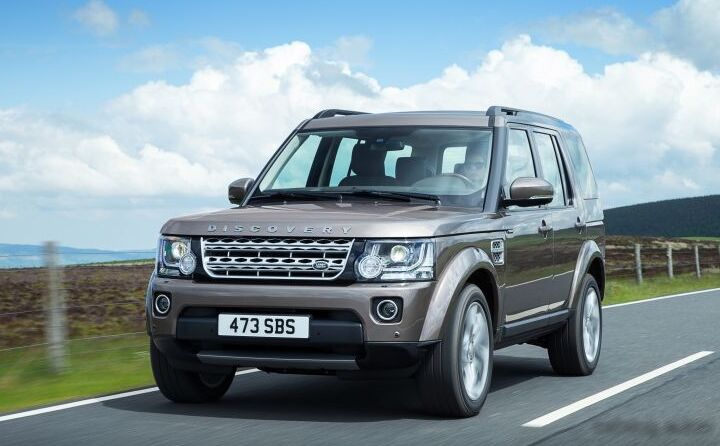
The Land Rover Discovery IV, specifically the 3.0 SD V6 (256 hp) AWD Automatic variant produced from 2013 to 2017, represents a significant mid-cycle refresh of the fourth-generation Discovery (designated L494). This facelift brought updated styling, improved efficiency, and enhanced technology to Land Rover’s seven-seat SUV. Positioned as a premium offering within the Discovery range, the 3.0 SD V6 Automatic served as a strong seller, balancing performance, capability, and luxury for buyers seeking a versatile family vehicle. It built upon the foundation of the original Discovery IV, which debuted in 2009, addressing some criticisms of the earlier models while maintaining the core values of off-road prowess and practicality.
Technical Specifications
| Brand | Land Rover |
| Model | Discovery |
| Generation | Discovery IV (facelift 2013) |
| Type (Engine) | 3.0 SD V6 (256 Hp) AWD Automatic |
| Start of production | 2013 |
| End of production | 2017 |
| Powertrain Architecture | Internal Combustion engine |
| Body type | SUV |
| Seats | 5-7 |
| Doors | 5 |
| Fuel consumption (urban) | 8.7 l/100 km (27 US mpg, 32.5 UK mpg, 11.5 km/l) |
| Fuel consumption (extra urban) | 7.6 l/100 km (30.9 US mpg, 37.2 UK mpg, 13.2 km/l) |
| Fuel consumption (combined) | 8 l/100 km (29.4 US mpg, 35.3 UK mpg, 12.5 km/l) |
| CO2 emissions | 213 g/km |
| Fuel Type | Diesel |
| Acceleration 0 – 100 km/h | 9.3 sec |
| Acceleration 0 – 62 mph | 9.3 sec |
| Acceleration 0 – 60 mph | 8.8 sec |
| Maximum speed | 180 km/h (111.85 mph) |
| Emission standard | Euro 5 |
| Weight-to-power ratio | 10 kg/Hp, 99.6 Hp/tonne |
| Weight-to-torque ratio | 4.3 kg/Nm, 233.5 Nm/tonne |
| Power | 256 Hp @ 4000 rpm |
| Power per litre | 85.5 Hp/l |
| Torque | 600 Nm @ 2000 rpm (442.54 lb.-ft. @ 2000 rpm) |
| Engine layout | Front, Longitudinal |
| Engine Model/Code | 306DT |
| Engine displacement | 2993 cm3 (182.64 cu. in.) |
| Number of cylinders | 6 |
| Engine configuration | V-engine |
| Cylinder Bore | 84 mm (3.31 in.) |
| Piston Stroke | 90 mm (3.54 in.) |
| Compression ratio | 16.1:1 |
| Number of valves per cylinder | 4 |
| Fuel injection system | Diesel Commonrail |
| Engine aspiration | BiTurbo, Intercooler |
| Engine oil capacity | 5.9 l (6.23 US qt | 5.19 UK qt) |
| Coolant | 11.5 l (12.15 US qt | 10.12 UK qt) |
| Kerb Weight | 2570 kg (5665.88 lbs.) |
| Fuel tank capacity | 82.3 l (21.74 US gal | 18.1 UK gal) |
| Length | 4829 mm (190.12 in.) |
| Width | 1915 mm (75.39 in.) |
| Width with mirrors folded | 2053 mm (80.83 in.) |
| Height | 1887 mm (74.29 in.) |
| Wheelbase | 2885 mm (113.58 in.) |
| Drag coefficient (Cd) | 0.40 |
| Minimum turning circle | 11.8 m (38.71 ft.) |
| Approach angle | 36.2° |
| Departure angle | 29.6° |
| Drive wheel | All wheel drive (4×4) |
| Number of gears | 8 |
| Gearbox type | automatic transmission |
| Front suspension | Double wishbone |
| Rear suspension | Double wishbone |
| Front brakes | Ventilated discs |
| Rear brakes | Ventilated discs |
| Assisting systems | ABS (Anti-lock braking system) |
| Steering type | Steering rack and pinion |
| Power steering | Electric Steering |
Powertrain & Engine Architecture
At the heart of the Discovery IV 3.0 SD V6 was the 306DT engine, a 3.0-liter V6 turbodiesel. This engine utilized a sequential twin-turbocharger setup, combined with an intercooler, to deliver a robust 256 horsepower at 4000 rpm and a substantial 600 Nm (442 lb-ft) of torque from as low as 2000 rpm. The engine employed a direct injection common rail system, ensuring precise fuel delivery for optimal combustion and efficiency. The 306DT featured a 16.1:1 compression ratio and four valves per cylinder. The eight-speed ZF 8HP70 automatic transmission was standard, offering smooth and efficient gear changes. This transmission was known for its responsiveness and ability to adapt to various driving conditions. The longitudinal engine layout and all-wheel-drive system contributed to the Discovery’s renowned off-road capability.
Driving Characteristics
The 3.0 SD V6 Automatic provided a compelling blend of performance and refinement. While not as overtly sporty as some competitors, the engine’s ample torque allowed for effortless acceleration and strong pulling power, particularly useful when towing. The eight-speed automatic transmission contributed to relaxed highway cruising, with well-chosen gear ratios keeping the engine within its optimal power band. Compared to the 2.0-liter Ingenium diesel variants, the 3.0 SD V6 offered significantly more power and a more refined driving experience. It wasn’t as fuel-efficient as the smaller engine, but the trade-off in performance was often considered worthwhile by owners. Compared to the petrol variants, the diesel offered superior fuel economy and torque, making it a more practical choice for long-distance driving and towing.
Equipment & Trim Levels
The 3.0 SD V6 Automatic typically came equipped with a generous level of standard features. These included leather upholstery, heated front seats, dual-zone climate control, a touchscreen infotainment system with navigation, and parking sensors. Higher trim levels, such as the HSE, added features like premium audio systems, panoramic sunroofs, adaptive cruise control, and upgraded interior trim materials. Optional extras included a rear entertainment system, upgraded leather options, and various off-road packages designed to enhance the vehicle’s all-terrain capabilities.
Chassis & Braking
The Discovery IV utilized a robust body-on-frame construction, providing a solid foundation for both on-road comfort and off-road durability. The suspension system consisted of double wishbones at both the front and rear, offering a comfortable ride quality. Ventilated disc brakes were fitted on all four wheels, providing ample stopping power. The electronic air suspension system, often included as standard or an option, allowed for adjustable ride height, further enhancing both comfort and off-road capability. Stabilizer bars were fitted front and rear to reduce body roll during cornering.
Market Reception & Comparison
The Land Rover Discovery IV 3.0 SD V6 Automatic was generally well-received by automotive critics. It was praised for its spacious interior, comfortable ride, and impressive off-road capabilities. The engine was lauded for its strong performance and refined character. However, some critics noted the vehicle’s relatively high price and complex electronics. Compared to rivals like the BMW X5 and Audi Q7, the Discovery offered a more rugged and utilitarian character, appealing to buyers who prioritized practicality and off-road ability over outright sportiness. Fuel economy was competitive for its class, and reliability was generally considered acceptable, although some owners reported issues with the air suspension system and electronic components.
Legacy
The Land Rover Discovery IV 3.0 SD V6 Automatic remains a popular choice in the used car market. The 306DT engine is generally considered to be a reliable unit, provided it has been properly maintained. Regular servicing, including oil changes and filter replacements, is crucial for ensuring long-term durability. While the air suspension system can be prone to issues, preventative maintenance and timely repairs can mitigate these risks. The Discovery IV’s blend of luxury, practicality, and off-road capability continues to appeal to a wide range of buyers, making it a sought-after vehicle in the premium SUV segment.