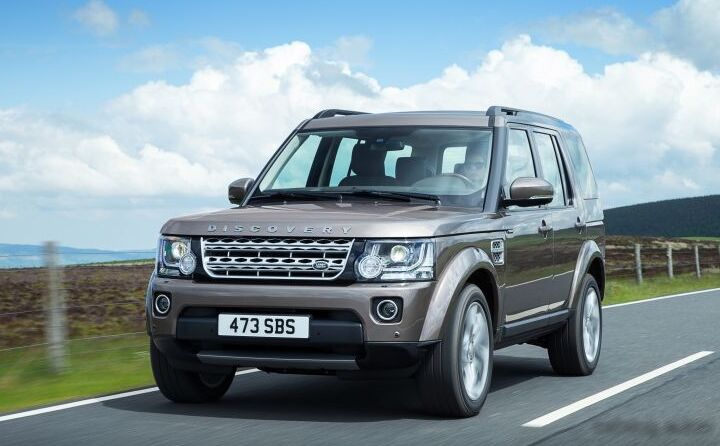
The Land Rover Discovery IV, specifically the facelifted version produced from 2013 to 2017, represented a significant evolution of the popular luxury SUV. This iteration, built on the LX platform (shared with the Range Rover Sport), aimed to blend off-road capability with on-road refinement and practicality. Among the engine options available, the 3.0-liter V6 supercharged variant producing 340 horsepower and paired with an eight-speed automatic transmission occupied a sweet spot in the lineup, offering a compelling balance of performance and efficiency for the North American market and beyond. This configuration was positioned as a mid-to-high range offering, appealing to buyers seeking a powerful and capable SUV without the ultimate price tag of the higher-spec supercharged models.
Technical Specifications
| Brand | Land Rover |
| Model | Discovery |
| Generation | Discovery IV (facelift 2013) |
| Type (Engine) | 3.0 V6 (340 Hp) AWD Automatic |
| Start of production | 2013 |
| End of production | 2017 |
| Powertrain Architecture | Internal Combustion engine |
| Body type | SUV |
| Seats | 5-7 |
| Doors | 5 |
| Fuel consumption (urban) | 14.4 l/100 km (16.3 US mpg, 19.6 UK mpg, 6.9 km/l) |
| Fuel consumption (extra urban) | 9.9 l/100 km (23.8 US mpg, 28.5 UK mpg, 10.1 km/l) |
| Fuel consumption (combined) | 11.5 l/100 km (20.5 US mpg, 24.6 UK mpg, 8.7 km/l) |
| CO2 emissions | 269 g/km |
| Fuel Type | Petrol (Gasoline) |
| Acceleration 0 – 100 km/h | 8.1 sec |
| Acceleration 0 – 62 mph | 8.1 sec |
| Acceleration 0 – 60 mph | 7.7 sec |
| Maximum speed | 195 km/h (121.17 mph) |
| Emission standard | Euro 5 |
| Weight-to-power ratio | 7.5 kg/Hp, 132.6 Hp/tonne |
| Weight-to-torque ratio | 5.7 kg/Nm, 175.4 Nm/tonne |
| Power | 340 Hp @ 6500 rpm |
| Power per litre | 113.5 Hp/l |
| Torque | 450 Nm @ 3500-5000 rpm (331.9 lb.-ft. @ 3500-5000 rpm) |
| Engine layout | Front, Longitudinal |
| Engine Model/Code | AJ126 |
| Engine displacement | 2995 cm3 (182.77 cu. in.) |
| Number of cylinders | 6 |
| Engine configuration | V-engine |
| Cylinder Bore | 84.5 mm (3.33 in.) |
| Piston Stroke | 89 mm (3.5 in.) |
| Compression ratio | 10.5:1 |
| Number of valves per cylinder | 4 |
| Engine aspiration | Supercharger, Intercooler |
| Valvetrain | DIVCT |
| Kerb Weight | 2565 kg (5654.86 lbs.) |
| Fuel tank capacity | 86.3 l (22.8 US gal, 18.98 UK gal) |
| Length | 4829 mm (190.12 in.) |
| Width | 1915 mm (75.39 in.) |
| Width with mirrors folded | 2053 mm (80.83 in.) |
| Height | 1887 mm (74.29 in.) |
| Wheelbase | 2885 mm (113.58 in.) |
| Drag coefficient (Cd) | 0.40 |
| Minimum turning circle | 11.8 m (38.71 ft.) |
| Approach angle | 36.2° |
| Departure angle | 29.6° |
| Drive wheel | All wheel drive (4×4) |
| Number of gears | 8 |
| Gearbox type | automatic transmission |
| Front suspension | Double wishbone |
| Rear suspension | Double wishbone |
| Front brakes | Ventilated discs |
| Rear brakes | Ventilated discs |
| Assisting systems | ABS (Anti-lock braking system) |
| Steering type | Steering rack and pinion |
| Power steering | Electric Steering |
Powertrain & Engine Architecture
At the heart of this Discovery variant lies the 3.0-liter AJ126 V6 engine. This engine, developed by Jaguar Land Rover, utilizes a roots-type supercharger to deliver instant torque and a broad powerband. The supercharger, coupled with direct fuel injection and variable valve timing (DIVCT – Dual Independent Variable Camshaft Timing), contributes to both performance and efficiency. The engine’s architecture is a 60-degree V6, providing a compact layout for installation in the Discovery’s chassis. The eight-speed automatic transmission, sourced from ZF, is a crucial component of this powertrain. Its wide gear ratio spread allows for both strong acceleration and relaxed highway cruising. The transmission features a torque converter lock-up clutch for improved efficiency at steady speeds. This combination of engine and transmission was designed to provide smooth, responsive performance in a variety of driving conditions.
Driving Characteristics
The 340 hp V6 automatic Discovery IV offers a noticeably different driving experience compared to the lower-powered four-cylinder models or the diesel variants. The supercharged engine delivers strong acceleration, with the 0-60 mph sprint achievable in around 7.7 seconds. The eight-speed transmission shifts smoothly and intelligently, keeping the engine in its optimal powerband. While not as overtly sporty as some competitors, the Discovery provides ample power for overtaking and towing. The automatic transmission, while convenient, doesn’t offer the same level of driver engagement as the six-speed manual available on some models. The all-wheel-drive system provides excellent traction in various conditions, making it a capable off-roader as well as a comfortable on-road cruiser. The gear ratios are tuned for a balance between acceleration and fuel economy, with higher gears designed for efficient highway driving.
Equipment & Trim Levels
The 3.0 V6 automatic Discovery IV typically came equipped with a generous level of standard features. These included leather upholstery, heated front seats, a touchscreen infotainment system with navigation, automatic climate control, and parking sensors. Higher trim levels added features such as panoramic sunroof, premium audio systems, adaptive cruise control, and upgraded interior trim materials. Optional extras included a rear entertainment system, self-leveling air suspension, and various off-road packages. The interior design was functional and luxurious, with a focus on practicality and durability. The Discovery IV offered seating for up to seven passengers, with a flexible seating configuration to accommodate varying cargo and passenger needs.
Chassis & Braking
The Discovery IV’s chassis features a robust construction with a fully independent suspension system. Both the front and rear suspensions utilize double wishbones, providing a comfortable ride and good handling characteristics. The suspension is tuned to balance on-road comfort with off-road capability. Braking duties are handled by ventilated discs on all four wheels, providing ample stopping power. An anti-lock braking system (ABS) is standard, along with electronic brake-force distribution and emergency brake assist. The Discovery IV’s steering is power-assisted, providing a light and responsive feel. The vehicle’s weight, around 5655 lbs, is well-managed by the suspension and braking systems, resulting in a stable and controlled driving experience.
Market Reception & Comparison
The 3.0 V6 automatic Discovery IV was generally well-received by automotive critics. It was praised for its strong performance, comfortable ride, and spacious interior. Fuel economy, however, was a common criticism, with the combined fuel consumption of around 20.5 US mpg being considered relatively high for its class. Compared to the 2.0-liter four-cylinder models, the V6 offered a significant performance upgrade, but at the cost of increased fuel consumption. The diesel variants, while offering better fuel economy, lacked the V6’s immediate throttle response and refined power delivery. The Discovery IV competed with other luxury SUVs such as the BMW X5, Audi Q7, and Mercedes-Benz M-Class.
Legacy
The 3.0-liter V6 supercharged engine in the Discovery IV has proven to be a relatively reliable powertrain. While some owners have reported minor issues with the supercharger or fuel injectors, these are generally not major concerns. The ZF eight-speed automatic transmission is known for its durability and smooth operation. In the used car market, the 3.0 V6 automatic Discovery IV remains a popular choice, offering a good balance of performance, luxury, and capability. Regular maintenance, including oil changes and fluid flushes, is essential to ensure the long-term reliability of this powertrain. The Discovery IV, and particularly this variant, has cemented its reputation as a versatile and capable luxury SUV, appealing to buyers who demand both on-road comfort and off-road prowess.