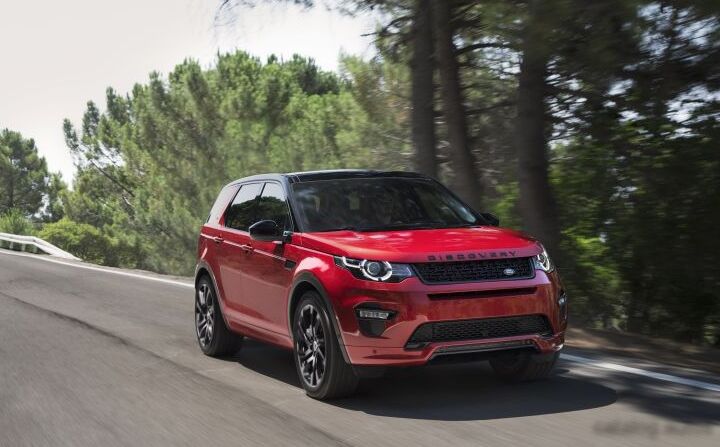
The Land Rover Discovery Sport 2.0 Si4, produced from 2014 to 2018, marked a significant entry point into the premium compact SUV segment for the British manufacturer. This variant, equipped with a 2.0-liter turbocharged four-cylinder engine producing 240 horsepower and paired with a nine-speed automatic transmission, was notable for offering standard all-wheel drive and optional seven-passenger seating. It was positioned as a mid-to-high trim level within the Discovery Sport range, appealing to buyers seeking a blend of luxury, practicality, and off-road capability. The 2.0 Si4 played a crucial role in establishing the Discovery Sport as a successful model, particularly in markets like North America and Europe, where demand for compact luxury SUVs was rapidly growing.
Technical Specifications
| Brand | Land Rover |
| Model | Discovery Sport |
| Type | 2.0 Si4 (240 Hp) AWD Automatic 7 Seat |
| Start of production | 2014 |
| End of production | 2018 |
| Fuel consumption (combined) | 8.3 l/100 km (28.3 US mpg, 34 UK mpg, 12 km/l) |
| CO2 emissions | 197 g/km |
| Fuel Type | Petrol (Gasoline) |
| Acceleration 0 – 100 km/h | 8.2 sec |
| Acceleration 0 – 62 mph | 8.2 sec |
| Acceleration 0 – 60 mph | 7.8 sec |
| Maximum speed | 200 km/h (124.27 mph) |
| Emission standard | Euro 5 |
| Weight-to-power ratio | 7.8 kg/Hp, 127.5 Hp/tonne |
| Weight-to-torque ratio | 5.5 kg/Nm, 180.6 Nm/tonne |
| Power | 240 Hp @ 5800 rpm |
| Power per litre | 120.1 Hp/l |
| Torque | 340 Nm @ 1750 rpm (250.77 lb.-ft. @ 1750 rpm) |
| Engine layout | Front, Transverse |
| Engine Model/Code | EcoBoost / 204PT |
| Engine displacement | 1999 cm3 (121.99 cu. in.) |
| Number of cylinders | 4 |
| Engine configuration | Inline |
| Cylinder Bore | 87.5 mm (3.44 in.) |
| Piston Stroke | 83.1 mm (3.27 in.) |
| Compression ratio | 10:1 |
| Number of valves per cylinder | 4 |
| Fuel injection system | Direct injection |
| Engine aspiration | Turbocharger, Intercooler |
| Engine oil capacity | 5.4 l (5.71 US qt | 4.75 UK qt) |
| Coolant | 4.4 l (4.65 US qt | 3.87 UK qt) |
| Kerb Weight | 1883 kg (4151.3 lbs.) |
| Max. weight | 2660 kg (5864.3 lbs.) |
| Max load | 777 kg (1712.99 lbs.) |
| Fuel tank capacity | 68.5 l (18.1 US gal | 15.07 UK gal) |
| Max. roof load | 75 kg (165.35 lbs.) |
| Permitted trailer load with brakes (12%) | 2000 kg (4409.25 lbs.) |
| Permitted trailer load without brakes | 750 kg (1653.47 lbs.) |
| Permitted towbar download | 100 kg (220.46 lbs.) |
| Length | 4599 mm (181.06 in.) |
| Width with mirrors folded | 2069 mm (81.46 in.) |
| Width including mirrors | 2173 mm (85.55 in.) |
| Height | 1724 mm (67.87 in.) |
| Wheelbase | 2741 mm (107.91 in.) |
| Front track | 1621 mm (63.82 in.) |
| Rear track | 1630 mm (64.17 in.) |
| Ride height (ground clearance) | 211 mm (8.31 in.) |
| Drag coefficient (Cd) | 0.36 |
| Minimum turning circle | 11.6 m (38.06 ft.) |
| Approach angle | 23.4° |
| Departure angle | 31° |
| Ramp-over angle | 20° |
| Wading depth | 600 mm (23.62 in.) |
| Drive wheel | All wheel drive (4×4) |
| Number of gears | 9 |
| Gearbox type | Automatic transmission |
| Front suspension | Independent coil spring |
| Rear suspension | Independent multi-link suspension |
| Front brakes | Ventilated discs, 325 mm |
| Rear brakes | Disc, 300 mm |
Powertrain & Engine Architecture
The heart of the Discovery Sport 2.0 Si4 is the 2.0-liter EcoBoost inline-four cylinder engine, part of Ford’s (at the time, Land Rover was owned by Tata Motors but still utilized Ford engine technology) global engine family. This engine, designated as the 204PT, features direct fuel injection and a single twin-scroll turbocharger with an intercooler. The direct injection system allows for precise fuel delivery, enhancing both power and efficiency. The turbocharger boosts power output by forcing more air into the cylinders, minimizing turbo lag thanks to the twin-scroll design. The engine’s aluminum block and head contribute to weight reduction. The nine-speed automatic transmission, sourced from ZF, was a key technological feature. Its wide gear ratio spread aimed to optimize both fuel economy and performance. The transmission offered smooth shifts and adaptive learning capabilities, adjusting shift points based on driving style. It also featured a dynamic shift program that could be selected for more aggressive driving.
Driving Characteristics
The 240 horsepower and 340 Nm (250 lb-ft) of torque provided by the 2.0 Si4 engine delivered respectable performance for a compact SUV. Acceleration from 0 to 60 mph took approximately 7.8 seconds, making it adequately quick for everyday driving and highway merging. The nine-speed transmission, while generally smooth, could occasionally exhibit some hesitation during downshifts, particularly at lower speeds. Compared to the lower-powered 2.0 Si4 variants (typically around 180-200 hp), the 240 hp version offered a noticeably more responsive driving experience. It also felt more capable when fully loaded with passengers and cargo. The all-wheel-drive system provided confident traction in various conditions. Compared to diesel variants, the 2.0 Si4 offered a more spirited engine character but generally lower fuel economy. The steering was light and precise, making it easy to maneuver in urban environments.
Equipment & Trim Levels
The 2.0 Si4 typically came standard with features such as leather upholstery, dual-zone climate control, a touchscreen infotainment system (often with navigation), and a suite of safety technologies including autonomous emergency braking and lane departure warning. Optional extras included a panoramic sunroof, premium Meridian audio system, adaptive cruise control, a powered tailgate, and heated seats. The seven-seat configuration, while available, reduced cargo space when all seats were in use, making it more suitable for occasional use. Trim levels varied by market, but generally included SE, HSE, and HSE Luxury, with each successive trim adding more luxury features and technology. HSE Luxury trims often included upgraded interior materials and advanced driver-assistance systems.
Chassis & Braking
The Discovery Sport utilized a robust monocoque chassis with independent suspension all around – coil springs at the front and a multi-link setup at the rear. This suspension configuration provided a comfortable ride quality while maintaining good handling characteristics. Front brakes were ventilated discs measuring 325mm, while rear brakes were solid discs measuring 300mm. The all-wheel-drive system, Terrain Response, allowed drivers to select different driving modes optimized for various surfaces, including grass, gravel, snow, mud, and sand. This system enhanced the vehicle’s off-road capability by adjusting the vehicle’s settings for optimal traction. The electronic stability control system also played a crucial role in maintaining control in challenging conditions.
Market Reception & Comparison
The Discovery Sport 2.0 Si4 received generally positive reviews from automotive critics. It was praised for its stylish design, spacious interior, and capable all-wheel-drive system. However, some reviewers noted the occasionally hesitant behavior of the nine-speed transmission and the relatively high price compared to some competitors, such as the BMW X3 and Audi Q5. Fuel economy was considered average for the class, falling slightly behind some of the more efficient diesel-powered rivals. Compared to the 2.0 Si4 with lower horsepower, the 240 hp version was seen as a worthwhile upgrade for drivers prioritizing performance and a more engaging driving experience. It offered a compelling alternative to the diesel models for those seeking a gasoline-powered option.
Legacy
The Land Rover Discovery Sport 2.0 Si4 remains a popular choice in the used car market. The EcoBoost engine, while generally reliable, requires regular maintenance, including oil changes and spark plug replacements. The timing chain is a known potential issue on some EcoBoost engines, and should be monitored. The nine-speed transmission has been known to experience occasional issues, such as software glitches or valve body failures, but these are not widespread and often addressed with software updates. Overall, the 2.0 Si4 offers a good balance of luxury, performance, and practicality, making it a compelling option for buyers seeking a premium compact SUV. Its role in establishing the Discovery Sport as a successful model within the Land Rover lineup is undeniable, and it continues to be a sought-after vehicle in the used car market.