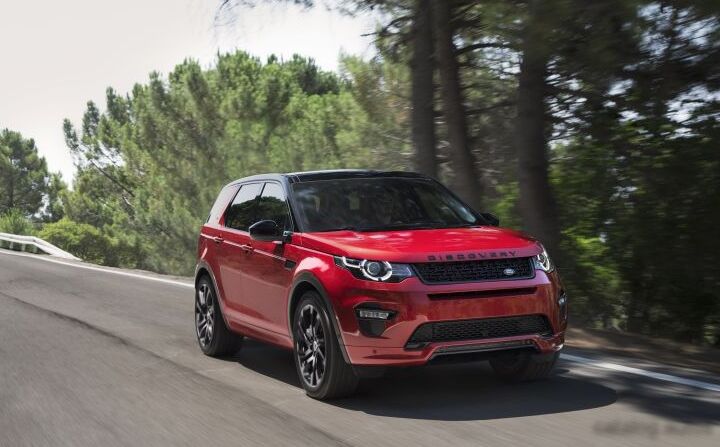
The Land Rover Discovery Sport 2.0 Si4 (290 Hp) AWD Automatic 7 Seat represents a significant iteration of the first-generation Discovery Sport (L550), produced from 2017 to 2018. Introduced as a premium subcompact luxury SUV, the Discovery Sport aimed to bridge the gap between the Range Rover Evoque and the larger Land Rover Discovery. This particular variant, equipped with the Ingenium 2.0-liter turbocharged four-cylinder engine and a nine-speed automatic transmission, offered a compelling blend of performance, practicality, and off-road capability, positioning itself as a mid-to-high trim level within the Discovery Sport lineup. The seven-seat configuration, while reducing cargo space, expanded the vehicle’s appeal to families.
Technical Specifications
| Brand | Land Rover |
| Model | Discovery Sport |
| Type (Engine) | 2.0 Si4 (290 Hp) AWD Automatic 7 Seat |
| Start of production | 2017 |
| End of production | 2018 |
| Powertrain Architecture | Internal Combustion engine |
| Body type | SUV |
| Seats | 7 |
| Doors | 5 |
| Fuel consumption (economy) – urban | 9.8 l/100 km (24 US mpg, 28.8 UK mpg, 10.2 km/l) |
| Fuel consumption (economy) – extra urban | 7.3 l/100 km (32.2 US mpg, 38.7 UK mpg, 13.7 km/l) |
| Fuel consumption (economy) – combined | 8.4 l/100 km (28 US mpg, 33.6 UK mpg, 11.9 km/l) |
| CO2 emissions | 190 g/km |
| Fuel Type | Petrol (Gasoline) |
| Acceleration 0 – 100 km/h | 6.7 sec |
| Acceleration 0 – 62 mph | 6.7 sec |
| Acceleration 0 – 60 mph | 6.4 sec |
| Maximum speed | 228 km/h (141.67 mph) |
| Emission standard | Euro 6 |
| Weight-to-power ratio | 6.7 kg/Hp, 148.9 Hp/tonne |
| Weight-to-torque ratio | 4.9 kg/Nm, 205.4 Nm/tonne |
| Power | 290 Hp @ 5800 rpm |
| Power per litre | 145.2 Hp/l |
| Torque | 400 Nm @ 1500 rpm (295.02 lb.-ft. @ 1500 rpm) |
| Engine layout | Front, Transverse |
| Engine Model/Code | Ingenium / PT204 |
| Engine displacement | 1997 cm3 (121.86 cu. in.) |
| Number of cylinders | 4 |
| Engine configuration | Inline |
| Cylinder Bore | 83 mm (3.27 in.) |
| Piston Stroke | 92.3 mm (3.63 in.) |
| Compression ratio | 10.5:1 |
| Number of valves per cylinder | 4 |
| Fuel injection system | Direct injection |
| Engine aspiration | BiTurbo, Intercooler |
| Valvetrain | DOHC |
| Engine oil capacity | 7 l (7.4 US qt | 6.16 UK qt) |
| Coolant | 11.2 l (11.83 US qt | 9.85 UK qt) |
| Kerb Weight | 1947 kg (4292.4 lbs.) |
| Max. weight | 2710 kg (5974.53 lbs.) |
| Max load | 763 kg (1682.13 lbs.) |
| Fuel tank capacity | 68.5 l (18.1 US gal | 15.07 UK gal) |
| Max. roof load | 75 kg (165.35 lbs.) |
| Permitted trailer load with brakes (12%) | 2000 kg (4409.25 lbs.) |
| Permitted trailer load without brakes | 750 kg (1653.47 lbs.) |
| Permitted towbar download | 150 kg (330.69 lbs.) |
| Length | 4599 mm (181.06 in.) |
| Width with mirrors folded | 2069 mm (81.46 in.) |
| Width including mirrors | 2173 mm (85.55 in.) |
| Height | 1724 mm (67.87 in.) |
| Wheelbase | 2741 mm (107.91 in.) |
| Front track | 1621 mm (63.82 in.) |
| Rear (Back) track | 1630 mm (64.17 in.) |
| Ride height (ground clearance) | 221 mm (8.7 in.) |
| Drag coefficient (Cd) | 0.38 |
| Minimum turning circle (turning diameter) | 11.86 m (38.91 ft.) |
| Approach angle | 23.4° |
| Departure angle | 31° |
| Ramp-over (brakeover) angle | 20° |
| Wading depth | 600 mm (23.62 in.) |
| Drive wheel | All wheel drive (4×4) |
| Number of gears and type of gearbox | 9 gears, automatic transmission |
| Front suspension | Independent coil spring |
| Rear suspension | Independent multi-link suspension |
| Front brakes | Ventilated discs |
| Rear brakes | Disc |
| Assisting systems | ABS (Anti-lock braking system) |
| Steering type | Steering rack and pinion |
| Power steering | Electric Steering |
| Tires size | 235/60 R18 |
| Wheel rims size | 18 |
INTRODUCTION
The Land Rover Discovery Sport 2.0 Si4 (290 Hp) AWD Automatic 7 Seat, built on the LR-MS (Land Rover Modular System) platform, also known as the 1HX0/A3 platform, was a key model in Land Rover’s expansion into the compact SUV segment. Production spanned from 2017 to 2018, representing a refinement of the initial Discovery Sport launch. This variant aimed to deliver a more spirited driving experience than the lower-powered diesel options, while still providing the practicality and all-weather capability expected of a Land Rover. The availability of a seven-seat configuration, though impacting cargo volume, broadened its appeal to larger families.
Powertrain & Engine Architecture
At the heart of the 2.0 Si4 lies the Ingenium engine family, specifically the PT204 code. This 1997cc inline-four cylinder engine utilizes direct injection and a twin-turbocharger setup. The twin-scroll turbochargers are designed to minimize turbo lag and provide a broad torque curve. The engine boasts a compression ratio of 10.5:1 and a DOHC (Dual Overhead Camshaft) valvetrain with four valves per cylinder. The Ingenium engine was a significant step forward for Land Rover, designed for modularity and efficiency. Paired with the engine is a ZF 9HP48 nine-speed automatic transmission. This transmission is known for its smooth shifts and wide gear ratio spread, contributing to both fuel efficiency and performance. The transmission is electronically controlled and features adaptive learning to optimize shift points based on driving style.
Driving Characteristics
The 290 hp and 400 Nm (295 lb-ft) of torque delivered by the 2.0 Si4 powertrain provide a noticeable performance upgrade over the lower-powered variants. Acceleration from 0-60 mph is achieved in approximately 6.4 seconds, making it one of the quicker options in the Discovery Sport range. The nine-speed automatic transmission allows the engine to operate efficiently at cruising speeds, while providing quick downshifts for overtaking maneuvers. The all-wheel-drive system, featuring Terrain Response technology, enhances traction in various conditions, making it capable both on and off-road. Compared to the manual transmission options, the automatic offers greater convenience, particularly in urban driving. However, some enthusiasts noted that the automatic transmission could occasionally feel hesitant during quick acceleration.
Equipment & Trim Levels
The 2.0 Si4 typically came equipped with a generous level of standard features. These included leather upholstery, heated front seats, a touchscreen infotainment system with navigation, automatic climate control, and a suite of safety features such as autonomous emergency braking and lane departure warning. Optional extras included a panoramic sunroof, premium audio system, adaptive cruise control, and a rear-view camera. The seven-seat configuration featured a folding third-row bench, which could be stowed to increase cargo capacity. Interior trim options varied, with choices in wood veneer, aluminum, and piano black finishes.
Chassis & Braking
The Discovery Sport features a robust chassis designed to handle both on-road and off-road driving. The front suspension utilizes independent coil springs, while the rear employs an independent multi-link setup. This configuration provides a comfortable ride and good handling characteristics. Braking duties are handled by ventilated discs at the front and solid discs at the rear. The vehicle is equipped with ABS (Anti-lock Braking System) and electronic stability control. The steering is electrically assisted, providing a light and precise feel.
Market Reception & Comparison
The Discovery Sport 2.0 Si4 was generally well-received by automotive critics. It was praised for its stylish design, spacious interior, and capable all-wheel-drive system. The 290 hp engine was considered a significant improvement over the lower-powered options, providing ample performance for everyday driving. Fuel economy, however, was a common criticism, with the combined fuel consumption of 8.4 l/100 km (28 US mpg) being somewhat higher than some competitors. Compared to the diesel variants, the 2.0 Si4 offered a more refined driving experience but at the cost of fuel efficiency. Against rivals like the Audi Q3 and BMW X1, the Discovery Sport offered a unique blend of luxury, off-road capability, and practicality.
Legacy
The Ingenium engine family has proven to be relatively reliable, although some owners have reported issues with the timing chain tensioners. The nine-speed automatic transmission has also experienced occasional software glitches, but these have generally been addressed through software updates. In the used car market, the Discovery Sport 2.0 Si4 (290 Hp) AWD Automatic 7 Seat holds its value reasonably well, particularly well-maintained examples with a full service history. Its combination of performance, practicality, and brand appeal continues to make it a desirable option for buyers seeking a compact luxury SUV.