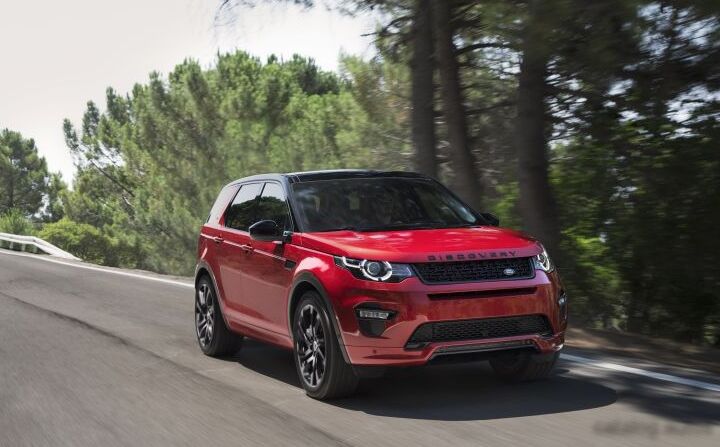
The Land Rover Discovery Sport 2.0 TD4, producing 180 horsepower, with all-wheel drive and seven-seat configuration, was a key variant in the first generation (L550) of the Discovery Sport model line, produced from 2018 to 2019. Positioned as a mid-range offering, it aimed to balance fuel efficiency, practicality, and a relatively accessible price point within the Discovery Sport range. This model played a significant role in establishing the Discovery Sport as a popular premium compact SUV, particularly in European and Asian markets, offering a blend of Land Rover capability with a more economical diesel powertrain.
Technical Specifications
| Brand | Land Rover |
| Model | Discovery Sport |
| Generation | Discovery Sport |
| Type (Engine) | 2.0 TD4 (180 Hp) AWD 7 Seat |
| Start of production | 2018 |
| End of production | 2019 |
| Powertrain Architecture | Internal Combustion engine |
| Body type | SUV |
| Seats | 7 |
| Doors | 5 |
| Fuel consumption (combined) | 6.5 l/100 km (36.2 US mpg, 43.5 UK mpg, 15.4 km/l) |
| CO2 emissions | 171 g/km |
| Fuel Type | Diesel |
| Acceleration 0 – 100 km/h | 10.3 sec |
| Acceleration 0 – 62 mph | 10.3 sec |
| Acceleration 0 – 60 mph | 9.8 sec |
| Maximum speed | 188 km/h (116.82 mph) |
| Weight-to-power ratio | 10.4 kg/Hp, 96.1 Hp/tonne |
| Weight-to-torque ratio | 4.4 kg/Nm, 229.5 Nm/tonne |
| Power | 180 Hp |
| Power per litre | 90 Hp/l |
| Torque | 430 Nm @ 1750 rpm (317.15 lb.-ft. @ 1750 rpm) |
| Engine layout | Front, Transverse |
| Engine Model/Code | Ingenium / 204DTD |
| Engine displacement | 1999 cm3 (121.99 cu. in.) |
| Number of cylinders | 4 |
| Engine configuration | Inline |
| Cylinder Bore | 83 mm (3.27 in.) |
| Piston Stroke | 92.35 mm (3.64 in.) |
| Compression ratio | 15.5:1 |
| Number of valves per cylinder | 4 |
| Fuel injection system | Diesel Commonrail |
| Engine aspiration | Turbocharger, Intercooler |
| Engine oil capacity | 6.5 l (6.87 US qt | 5.72 UK qt) |
| Coolant | 7.4 l (7.82 US qt | 6.51 UK qt) |
| Kerb Weight | 1874 kg (4131.46 lbs.) |
| Max. weight | 2660 kg (5864.3 lbs.) |
| Max load | 786 kg (1732.83 lbs.) |
| Fuel tank capacity | 54 l (14.27 US gal | 11.88 UK gal) |
| Max. roof load | 75 kg (165.35 lbs.) |
| Permitted trailer load with brakes (12%) | 2000 kg (4409.25 lbs.) |
| Permitted trailer load without brakes | 750 kg (1653.47 lbs.) |
| Permitted towbar download | 100 kg (220.46 lbs.) |
| Length | 4599 mm (181.06 in.) |
| Width with mirrors folded | 2069 mm (81.46 in.) |
| Width including mirrors | 2173 mm (85.55 in.) |
| Height | 1724 mm (67.87 in.) |
| Wheelbase | 2741 mm (107.91 in.) |
| Front track | 1621 mm (63.82 in.) |
| Rear (Back) track | 1630 mm (64.17 in.) |
| Ride height (ground clearance) | 211 mm (8.31 in.) |
| Minimum turning circle | 11.86 m (38.91 ft.) |
| Approach angle | 23.4° |
| Departure angle | 31° |
| Ramp-over angle | 20° |
| Wading depth | 600 mm (23.62 in.) |
| Drive wheel | All wheel drive (4×4) |
| Number of gears and type of gearbox | 6 gears, manual transmission |
| Rear suspension | Independent multi-link suspension |
| Front brakes | Disc, 325 mm |
| Rear brakes | Disc, 300 mm |
| Assisting systems | ABS (Anti-lock braking system) |
| Steering type | Steering rack and pinion |
| Power steering | Electric Steering |
| Wheel rims size | 17; 18; 19 |
Powertrain & Engine Architecture
The 2.0 TD4 variant utilizes Land Rover’s Ingenium engine family, specifically the 204DTD code. This is a four-cylinder, turbocharged diesel engine featuring direct injection and a variable geometry turbocharger. The Ingenium engines were designed for modularity and efficiency, allowing for a range of power outputs and configurations. The 204DTD boasts a relatively high compression ratio of 15.5:1, contributing to its thermal efficiency. The engine employs a common rail direct injection system, delivering fuel at extremely high pressures for optimized combustion. The six-speed manual transmission was standard on this model, offering a balance between fuel economy and driver engagement. While an automatic transmission was available on other Discovery Sport trims, the 180 hp version was primarily offered with the manual gearbox.
Driving Characteristics
The 180 horsepower 2.0 TD4, paired with the six-speed manual transmission, provided adequate performance for everyday driving. Acceleration from 0-60 mph took approximately 9.8 seconds, and top speed was around 116.82 mph. Compared to higher-output versions of the Ingenium engine (like the 240 hp variant), this model felt less urgent in its acceleration. The gear ratios were tuned for fuel efficiency rather than outright performance, meaning the engine needed to be revved to access its peak power. However, the 430 Nm of torque available from 1750 rpm provided good mid-range grunt, making it suitable for overtaking and towing. The all-wheel-drive system provided confident traction in various conditions, a hallmark of the Land Rover brand.
Equipment & Trim Levels
The 2.0 TD4 7-seat model typically came equipped with features such as alloy wheels (sizes varying between 17, 18, and 19 inches), automatic headlights, rain-sensing wipers, and a leather-wrapped steering wheel. Interior upholstery was generally cloth, though leather options were available as upgrades. The infotainment system included a touchscreen display with navigation and Bluetooth connectivity. Optional extras included a panoramic sunroof, heated seats, and a premium sound system. The seven-seat configuration added versatility, though the third-row seats were best suited for children or occasional use.
Chassis & Braking
The Discovery Sport features a robust chassis designed for both on-road comfort and off-road capability. The suspension consists of independent multi-link setups at both the front and rear. Braking duties are handled by disc brakes on all four wheels, with front discs measuring 325mm and rear discs at 300mm. An Anti-lock Braking System (ABS) is standard. The 7-seat variant, due to its increased weight, may have featured slightly stiffer spring rates compared to the five-seat models to maintain handling stability.
Market Reception & Comparison
The 2.0 TD4 7-seat variant was generally well-received by critics as a practical and fuel-efficient option within the Discovery Sport lineup. It offered a compelling alternative to competitors like the Audi Q3, BMW X1, and Mercedes-Benz GLA. Fuel economy was a strong point, with combined figures around 36.2 US mpg. Compared to the higher-powered versions, the 180 hp model was considered more affordable and accessible, appealing to buyers prioritizing economy and practicality over outright performance. However, some reviewers noted that the manual transmission felt slightly notchy compared to the smoother automatics available on other trims.
Legacy
The Ingenium engine family has proven to be relatively reliable, though some early models experienced issues with oil leaks and timing chain tensioners. Regular maintenance, including oil changes and timing chain inspections, is crucial for long-term reliability. On the used car market, the 2.0 TD4 7-seat variant represents a good value proposition, offering a blend of Land Rover prestige, practicality, and fuel efficiency. Its relatively simple mechanicals (compared to later, more complex models) make it a potentially attractive option for buyers seeking a dependable and affordable premium SUV.