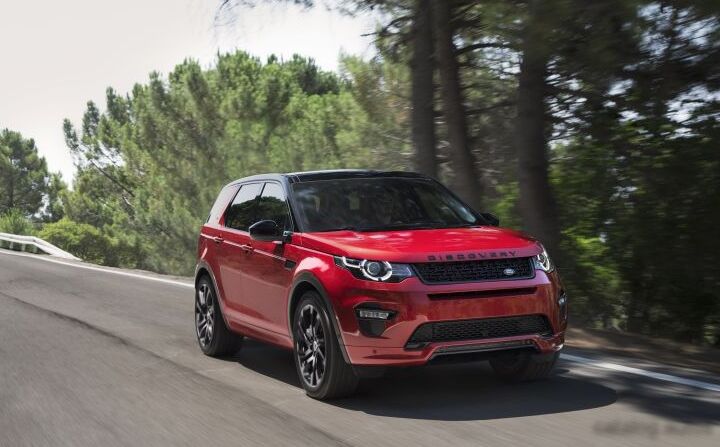
The Land Rover Discovery Sport 2.0 TD4, producing 180 horsepower, with all-wheel drive and an automatic transmission, and offered with optional seven-seat configuration, was a key variant in the first generation (L550) of the Discovery Sport model line. Introduced for the 2018 and 2019 model years, this version aimed to balance fuel efficiency, practicality, and Land Rover’s renowned off-road capability within a relatively accessible price point. It occupied a mid-range position in the Discovery Sport lineup, slotting between the lower-powered diesel options and the more potent gasoline variants.
Technical Specifications
| Brand | Land Rover |
| Model | Discovery Sport |
| Type | 2.0 TD4 (180 Hp) AWD Automatic 7 Seat |
| Start of production | 2018 |
| End of production | 2019 |
| Powertrain Architecture | Internal Combustion engine |
| Body type | SUV |
| Seats | 7 |
| Doors | 5 |
| Fuel consumption (combined) | 6.6 l/100 km (35.6 US mpg, 42.8 UK mpg, 15.2 km/l) |
| CO2 emissions | 174 g/km |
| Fuel Type | Diesel |
| Acceleration 0 – 100 km/h | 9.9 sec |
| Acceleration 0 – 62 mph | 9.9 sec |
| Acceleration 0 – 60 mph | 9.4 sec |
| Maximum speed | 188 km/h (116.82 mph) |
| Weight-to-power ratio | 10.5 kg/Hp, 95.5 Hp/tonne |
| Weight-to-torque ratio | 4.4 kg/Nm, 228.2 Nm/tonne |
| Power | 180 Hp |
| Power per litre | 90 Hp/l |
| Torque | 430 Nm @ 1750 rpm (317.15 lb.-ft. @ 1750 rpm) |
| Engine layout | Front, Transverse |
| Engine Model/Code | Ingenium / 204DTD |
| Engine displacement | 1999 cm3 (121.99 cu. in.) |
| Number of cylinders | 4 |
| Engine configuration | Inline |
| Cylinder Bore | 83 mm (3.27 in.) |
| Piston Stroke | 92.35 mm (3.64 in.) |
| Compression ratio | 15.5:1 |
| Number of valves per cylinder | 4 |
| Fuel injection system | Diesel Commonrail |
| Engine aspiration | Turbocharger, Intercooler |
| Engine oil capacity | 6.5 l (6.87 US qt | 5.72 UK qt) |
| Coolant | 7.4 l (7.82 US qt | 6.51 UK qt) |
| Kerb Weight | 1884 kg (4153.51 lbs.) |
| Max. weight | 2660 kg (5864.3 lbs.) |
| Max load | 776 kg (1710.79 lbs.) |
| Fuel tank capacity | 54 l (14.27 US gal | 11.88 UK gal) |
| Max. roof load | 75 kg (165.35 lbs.) |
| Permitted trailer load with brakes (12%) | 2000 kg (4409.25 lbs.) |
| Permitted trailer load without brakes | 750 kg (1653.47 lbs.) |
| Permitted towbar download | 100 kg (220.46 lbs.) |
| Length | 4599 mm (181.06 in.) |
| Width with mirrors folded | 2069 mm (81.46 in.) |
| Width including mirrors | 2173 mm (85.55 in.) |
| Height | 1724 mm (67.87 in.) |
| Wheelbase | 2741 mm (107.91 in.) |
| Front track | 1621 mm (63.82 in.) |
| Rear track | 1630 mm (64.17 in.) |
| Ride height (ground clearance) | 211 mm (8.31 in.) |
| Minimum turning circle | 11.86 m (38.91 ft.) |
| Approach angle | 23.4° |
| Departure angle | 31° |
| Ramp-over angle | 20° |
| Wading depth | 600 mm (23.62 in.) |
| Drive wheel | All wheel drive (4×4) |
| Number of gears | 9 |
| Gearbox type | automatic transmission |
| Rear suspension | Independent multi-link suspension |
| Front brakes | Disc, 325 mm |
| Rear brakes | Disc, 300 mm |
| Steering type | Steering rack and pinion |
| Power steering | Electric Steering |
| Wheel rims size | 17; 18; 19 |
INTRODUCTION
The Land Rover Discovery Sport 2.0 TD4 180, launched in 2018, represented a significant step forward for the brand, offering a more compact and affordable entry point into the Land Rover family. Built on the LR-MS (Land Rover Multi-Structure) platform, later known as the 1HX0/A3 platform, it aimed to appeal to a broader audience seeking a premium SUV with genuine off-road credentials. The 2.0 TD4 variant, with its 180 horsepower output and standard all-wheel drive, was positioned as a versatile option for both urban commuting and adventurous weekend trips. The availability of a seven-seat configuration further enhanced its practicality, making it a compelling choice for families.
Powertrain & Engine Architecture
At the heart of the 2.0 TD4 lies Land Rover’s Ingenium engine family. Specifically, the 204DTD engine is a 2.0-liter inline-four cylinder diesel engine. This engine utilizes a sophisticated diesel commonrail fuel injection system, delivering fuel at extremely high pressures for optimized combustion. The engine also features a turbocharger with an intercooler, boosting power and torque. The Ingenium engines were designed for modularity and efficiency, allowing for easy upgrades and variations. The 180 horsepower version produces 430 Nm (317 lb-ft) of torque at 1750 rpm, providing ample pulling power. Paired with this engine is a ZF 9-speed automatic transmission. This transmission is known for its smooth shifting and wide gear ratio spread, contributing to both fuel efficiency and performance. The transmission is electronically controlled and adapts to driving conditions and driver input.
Driving Characteristics
The 2.0 TD4 180 Automatic offers a comfortable and refined driving experience. While not overtly sporty, the engine provides sufficient power for everyday driving and overtaking maneuvers. The nine-speed automatic transmission contributes to smooth gear changes, although some drivers have noted occasional hesitancy at lower speeds. Acceleration from 0-60 mph takes around 9.4 seconds, which is respectable for a vehicle of this size and weight. The all-wheel-drive system provides excellent traction in various conditions, making it capable on both paved and unpaved surfaces. The gear ratios are tuned for efficiency, with higher gears designed for relaxed cruising on the highway. Compared to the higher-output diesel variants, the 180 horsepower version feels less urgent in its acceleration, but it offers a more balanced combination of performance and fuel economy.
Equipment & Trim Levels
The Discovery Sport 2.0 TD4 180 typically came equipped with a generous level of standard features. These included leather upholstery, automatic climate control, an 8-inch touchscreen infotainment system with navigation, and a suite of safety features such as autonomous emergency braking and lane departure warning. Optional extras included a panoramic sunroof, premium audio system, adaptive cruise control, and a powered tailgate. Trim levels varied depending on the market, but generally included SE, HSE, and HSE Luxury. The seven-seat option added a third row of seats, suitable for children or occasional passengers. Interior materials were generally of high quality, reflecting Land Rover’s commitment to luxury and refinement.
Chassis & Braking
The Discovery Sport features a robust chassis designed to handle both on-road and off-road driving. The suspension consists of MacPherson struts at the front and a multi-link setup at the rear. The 2.0 TD4 variant typically came with disc brakes on all four wheels, providing ample stopping power. Front brake discs measured 325mm, while rear discs were 300mm. Anti-lock braking system (ABS) and electronic stability control (ESC) were standard features. The suspension tuning prioritized comfort and ride quality, but also provided good body control in corners. Stabilizer bars were fitted to both the front and rear axles to reduce body roll.
Market Reception & Comparison
The Discovery Sport 2.0 TD4 180 was generally well-received by automotive critics. It was praised for its stylish design, spacious interior, and capable all-wheel-drive system. However, some reviewers noted that the 180 horsepower engine could feel underpowered when fully loaded or tackling steep inclines. Compared to the 150 horsepower diesel variant, the 180 horsepower version offered a noticeable improvement in performance. Fuel economy was a strong point, with combined figures averaging around 35.6 US mpg. Reliability was generally good, although some owners have reported minor issues with the infotainment system.
Legacy
The Land Rover Discovery Sport 2.0 TD4 180 has proven to be a popular choice in the used car market. Its combination of practicality, luxury, and off-road capability continues to appeal to buyers. The Ingenium engine has generally proven to be reliable, although regular maintenance is essential. The ZF 9-speed automatic transmission is also known for its durability. As a result, well-maintained examples of this variant command reasonable prices on the used car market. It remains a compelling option for those seeking a versatile and capable SUV with the Land Rover badge.