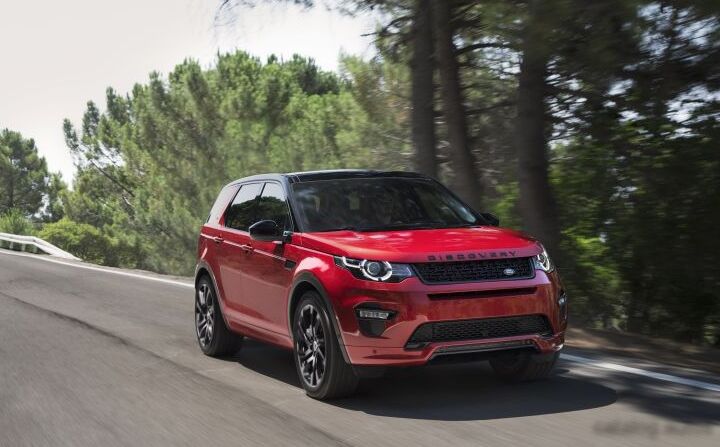
The Land Rover Discovery Sport 2.2 SD4, produced from 2014 to 2015, represented a crucial entry point into the premium compact SUV segment for the British manufacturer. This variant, equipped with the 2.2-liter Duratorq diesel engine producing 190 horsepower and paired with a 9-speed automatic transmission, offered all-wheel drive and the option of seven-seat configuration. It was positioned as a mid-range offering within the initial Discovery Sport lineup, balancing performance, fuel efficiency, and practicality for families. The Discovery Sport itself was the first member of the new Discovery family, aiming to bridge the gap between the more rugged, off-road focused Land Rover models and the more luxurious Range Rover line.
Technical Specifications
| Brand | Land Rover |
| Model | Discovery Sport |
| Type (Engine) | 2.2 SD4 (190 Hp) AWD Automatic 7 Seat |
| Start of production | 2014 |
| End of production | 2015 |
| Powertrain Architecture | Internal Combustion engine |
| Body type | SUV |
| Seats | 7 |
| Doors | 5 |
| Fuel consumption (combined) | 6.3 l/100 km (37.3 US mpg, 44.8 UK mpg, 15.9 km/l) |
| CO2 emissions | 166 g/km |
| Fuel Type | Diesel |
| Acceleration 0 – 100 km/h | 8.9 sec |
| Acceleration 0 – 62 mph | 8.9 sec |
| Acceleration 0 – 60 mph | 8.5 sec |
| Maximum speed | 188 km/h (116.82 mph) |
| Emission standard | Euro 5 |
| Weight-to-power ratio | 9.8 kg/Hp, 102 Hp/tonne |
| Weight-to-torque ratio | 4.4 kg/Nm, 225.4 Nm/tonne |
| Power | 190 Hp @ 3500 rpm |
| Power per litre | 87.2 Hp/l |
| Torque | 420 Nm @ 1750 rpm (309.78 lb.-ft. @ 1750 rpm) |
| Engine layout | Front, Transverse |
| Engine Model/Code | Duratorq / 224DT |
| Engine displacement | 2179 cm3 (132.97 cu. in.) |
| Number of cylinders | 4 |
| Engine configuration | Inline |
| Cylinder Bore | 85 mm (3.35 in.) |
| Piston Stroke | 96 mm (3.78 in.) |
| Compression ratio | 15.8:1 |
| Number of valves per cylinder | 4 |
| Fuel injection system | Diesel Commonrail |
| Engine aspiration | Turbocharger, Intercooler |
| Valvetrain | DOHC |
| Engine oil capacity | 5.9 l (6.23 US qt | 5.19 UK qt) |
| Coolant | 5.7 l (6.02 US qt | 5.02 UK qt) |
| Kerb Weight | 1863 kg (4107.21 lbs.) |
| Max. weight | 2600 kg (5732.02 lbs.) |
| Max load | 737 kg (1624.81 lbs.) |
| Fuel tank capacity | 65 l (17.17 US gal | 14.3 UK gal) |
| Max. roof load | 75 kg (165.35 lbs.) |
| Permitted trailer load with brakes (12%) | 2200 kg (4850.17 lbs.) |
| Permitted trailer load without brakes | 750 kg (1653.47 lbs.) |
| Permitted towbar download | 100 kg (220.46 lbs.) |
| Length | 4599 mm (181.06 in.) |
| Width with mirrors folded | 2069 mm (81.46 in.) |
| Width including mirrors | 2173 mm (85.55 in.) |
| Height | 1724 mm (67.87 in.) |
| Wheelbase | 2741 mm (107.91 in.) |
| Front track | 1621 mm (63.82 in.) |
| Rear track | 1630 mm (64.17 in.) |
| Ride height (ground clearance) | 212 mm (8.35 in.) |
| Drag coefficient (Cd) | 0.36 |
| Minimum turning circle | 11.6 m (38.06 ft.) |
| Approach angle | 25° |
| Departure angle | 31° |
| Ramp-over angle | 20° |
| Wading depth | 600 mm (23.62 in.) |
| Drive wheel | All wheel drive (4×4) |
| Number of gears | 9 |
| Gearbox type | automatic transmission |
| Front suspension | Independent coil spring |
| Rear suspension | Independent multi-link suspension |
| Front brakes | Ventilated discs, 325 mm |
| Rear brakes | Disc, 300 mm |
| Assisting systems | ABS (Anti-lock braking system) |
| Steering type | Steering rack and pinion |
| Power steering | Electric Steering |
Powertrain & Engine Architecture
The heart of the Discovery Sport 2.2 SD4 is the 2.2-liter Duratorq diesel engine, internally designated as the 224DT. This engine is part of the Ford/PSA joint venture’s DW family of diesels, and Land Rover utilized it extensively in various models. The 190 horsepower variant featured a turbocharger with variable geometry, an intercooler, and a high-pressure common rail direct fuel injection system. The engine employed a double overhead camshaft (DOHC) valvetrain with four valves per cylinder, contributing to its relatively high power output for its size. The 9-speed automatic transmission, sourced from ZF, was a key technological feature. It offered a wide range of gear ratios, aimed at optimizing both fuel economy and performance. This transmission was known for its smooth shifts, but early iterations sometimes experienced software glitches.
Driving Characteristics
The 190 horsepower and 420 Nm (309.78 lb-ft) of torque provided by the 2.2 SD4 engine delivered adequate performance for everyday driving. Acceleration from 0-60 mph took around 8.5 seconds, which was competitive within its class. The 9-speed automatic transmission, while offering a wide range, could sometimes feel hesitant or ‘hunt’ for the right gear, particularly during overtaking maneuvers. Compared to the higher-output 240 horsepower version of the same engine, the 190 hp variant felt less responsive, especially at higher speeds. However, it offered better fuel economy and a more relaxed driving experience. The all-wheel-drive system provided good traction in various conditions, making it a capable vehicle for both on-road and light off-road use.
Equipment & Trim Levels
The 2.2 SD4 typically came equipped with features such as automatic climate control, a touchscreen infotainment system, alloy wheels, and parking sensors. Seven-seat configurations included a folding third-row bench, offering increased passenger capacity. Optional extras included leather upholstery, a panoramic sunroof, and advanced driver-assistance systems like adaptive cruise control and lane departure warning. The trim levels varied depending on the market, but generally included SE, HSE, and Prestige options, with increasing levels of luxury and equipment.
Chassis & Braking
The Discovery Sport utilized a monocoque chassis construction for improved rigidity and weight reduction. The suspension consisted of independent coil springs at the front and an independent multi-link setup at the rear. Front brakes were ventilated discs measuring 325mm, while the rear brakes were solid discs measuring 300mm. Anti-lock Braking System (ABS) was standard. The suspension tuning was geared towards providing a comfortable ride, although it could feel slightly firm on rough surfaces. Stabilizer bars were fitted front and rear to reduce body roll during cornering.
Market Reception & Comparison
The Discovery Sport 2.2 SD4 was generally well-received by automotive critics. It was praised for its stylish design, spacious interior, and capable all-wheel-drive system. However, some reviewers noted the occasional hesitation of the 9-speed automatic transmission and the relatively high price point. Compared to competitors like the Audi Q3 and BMW X1, the Discovery Sport offered a more rugged aesthetic and a greater emphasis on off-road capability. The 190 hp variant offered a good balance between performance and fuel economy, making it an attractive option for buyers prioritizing practicality and running costs over outright speed.
Legacy
The Land Rover Discovery Sport 2.2 SD4 has proven to be a relatively reliable vehicle, although owners have reported occasional issues with the 9-speed automatic transmission, particularly in early production models. Regular maintenance, including oil changes and transmission servicing, is crucial for ensuring long-term reliability. On the used car market, these models remain popular due to their combination of practicality, style, and brand appeal. The Duratorq engine, while not the most refined diesel, is known for its durability and relatively low running costs. The Discovery Sport established itself as a key model for Land Rover, paving the way for further expansion of the Discovery family.