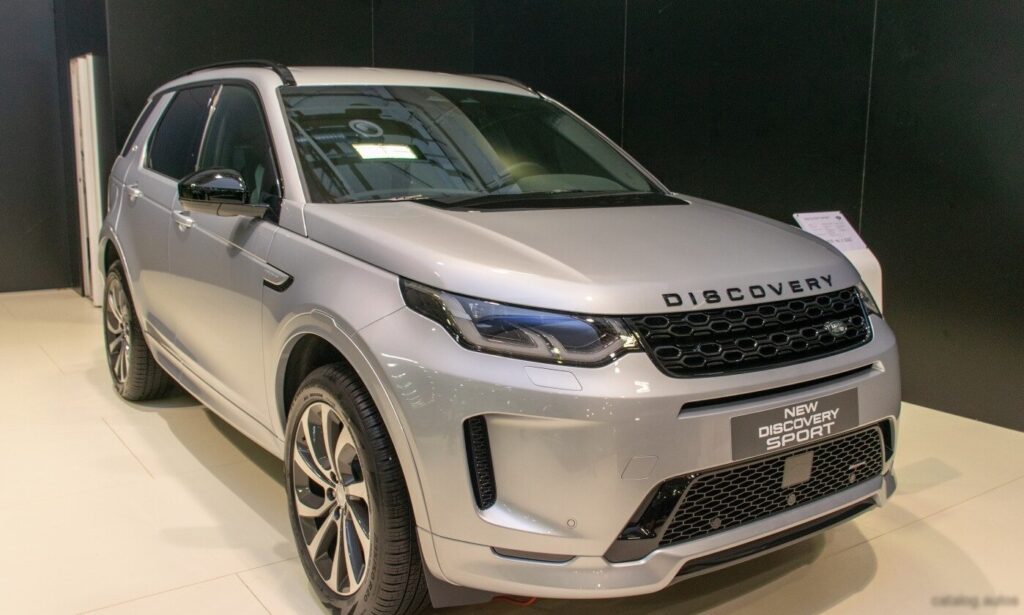
The Land Rover Discovery Sport 2.0 D150, introduced with the facelift in May 2019, represents a key variant within the second-generation Discovery Sport (L550) lineup. Positioned as a mid-range offering, this model combined a 2.0-liter turbocharged diesel engine with a mild-hybrid system, an all-wheel-drive (AWD) drivetrain, and a nine-speed automatic transmission. Notably, it was offered with the option of five or seven-passenger seating, catering to families seeking both versatility and efficiency. This variant played a significant role in bolstering the Discovery Sport’s appeal in European and global markets, offering a balance between performance, fuel economy, and practicality.
Technical Specifications
| Brand | Land Rover |
| Model | Discovery Sport |
| Generation | Discovery Sport (facelift 2019) |
| Type | 2.0 D150 (150 Hp) Mild Hybrid AWD Automatic 5+2 Seating |
| Start of production | May, 2019 |
| Powertrain Architecture | MHEV (Mild Hybrid Electric Vehicle) |
| Body type | SUV |
| Seats | 7 |
| Doors | 5 |
| Fuel consumption at Low speed (WLTP) | 9.4-9.7 l/100 km (25 – 24.2 US mpg) |
| Fuel consumption at Medium speed (WLTP) | 7.0-7.4 l/100 km (33.6 – 31.8 US mpg) |
| Fuel consumption at high speed (WLTP) | 6.0-6.5 l/100 km (39.2 – 36.2 US mpg) |
| Fuel consumption at very high speed (WLTP) | 7.2-7.7 l/100 km (32.7 – 30.5 US mpg) |
| Combined fuel consumption (WLTP) | 7.1-7.5 l/100 km (33.1 – 31.4 US mpg) |
| CO2 emissions (WLTP) | 185-198 g/km |
| Fuel consumption (urban – NEDC) | 6.5-6.6 l/100 km (36.2 – 35.6 US mpg) |
| Fuel consumption (extra urban – NEDC) | 5.1-5.3 l/100 km (46.1 – 44.4 US mpg) |
| Fuel consumption (combined – NEDC) | 5.6-5.8 l/100 km (42 – 40.6 US mpg) |
| CO2 emissions (NEDC) | 147-152 g/km |
| Fuel Type | Diesel |
| Acceleration 0 – 100 km/h | 11.8 sec |
| Acceleration 0 – 62 mph | 11.8 sec |
| Acceleration 0 – 60 mph | 11.1 sec |
| Maximum speed | 188 km/h (116.82 mph) |
| Emission standard | Euro 6d-TEMP-EVAP-ISC |
| Weight-to-power ratio | 13 kg/Hp |
| Weight-to-torque ratio | 5.1 kg/Nm |
| Power | 150 Hp @ 4000 rpm |
| Torque | 380 Nm @ 1750-2500 rpm (280.27 lb.-ft.) |
| Engine layout | Front, Transverse |
| Engine Model/Code | Ingenium / 204DTD |
| Engine displacement | 1999 cm3 (121.99 cu. in.) |
| Number of cylinders | 4 |
| Engine configuration | Inline |
| Cylinder Bore | 83 mm (3.27 in.) |
| Piston Stroke | 92.35 mm (3.64 in.) |
| Compression ratio | 15.5:1 |
| Number of valves per cylinder | 4 |
| Fuel injection system | Diesel Commonrail |
| Engine aspiration | Turbocharger, Intercooler |
| Valvetrain | DOHC |
| Engine oil capacity | 6.5 l (6.87 US qt | 5.72 UK qt) |
| Kerb Weight | 1953 kg (4305.63 lbs.) |
| Max. weight | 2750 kg (6062.71 lbs.) |
| Max load | 797 kg (1757.08 lbs.) |
| Trunk (boot) space – minimum | 157 l (5.54 cu. ft.) |
| Trunk (boot) space – maximum | 1651 l (58.3 cu. ft.) |
| Fuel tank capacity | 65 l (17.17 US gal | 14.3 UK gal) |
| AdBlue tank | 17 l (4.49 US gal | 3.74 UK gal) |
| Max. roof load | 75 kg (165.35 lbs.) |
| Permitted trailer load with brakes (12%) | 2200 kg (4850.17 lbs.) |
| Permitted trailer load without brakes | 750 kg (1653.47 lbs.) |
| Permitted towbar download | 100 kg (220.46 lbs.) |
| Length | 4597 mm (180.98 in.) |
| Width with mirrors folded | 2069 mm (81.46 in.) |
| Width including mirrors | 2173 mm (85.55 in.) |
| Height | 1727 mm (67.99 in.) |
| Wheelbase | 2741 mm (107.91 in.) |
| Front track | 1625-1636 mm (63.98 – 64.41 in.) |
| Rear track | 1623-1642 mm (63.9 – 64.65 in.) |
| Front overhang | 901 mm (35.47 in.) |
| Rear overhang | 955 mm (37.6 in.) |
| Ride height (ground clearance) | 212 mm (8.35 in.) |
| Drag coefficient (Cd) | 0.33 |
| Minimum turning circle | 12.14 m (39.83 ft.) |
| Approach angle | 22.8-25.0° |
| Departure angle | 28.2-30.2° |
| Ramp-over angle | 20.6° |
| Wading depth | 600 mm (23.62 in.) |
| Drivetrain Architecture | ICE and electric motor drive front wheels, rear drive via clutch |
| Drive wheel | All wheel drive (4×4) |
| Number of gears | 9 |
| Gearbox type | Automatic transmission |
| Front suspension | Independent McPherson |
| Rear suspension | Independent multi-link |
| Front brakes | Ventilated discs, 325-349 mm |
| Rear brakes | Disc, 325 mm |
| Steering type | Steering rack and pinion |
| Power steering | Electric |
| Tires size | 225/65 R17; 235/65 R17; 235/60 R18; 235/55 R19; 235/50 R20; 245/45 R21 |
| Wheel rims size | 7.0J x 17; 8.0J x 18; 8.0J x 19; 8.0J x 20; 8.0J x 21 |
INTRODUCTION
The Land Rover Discovery Sport 2.0 D150 Mild Hybrid, launched in 2019 as part of the model’s facelift, aimed to broaden the appeal of the compact luxury SUV. Built on the Land Rover-Geely L550 platform (shared with the Range Rover Evoque), this variant offered a compelling blend of fuel efficiency, all-weather capability, and family-friendly practicality. The inclusion of mild-hybrid technology, a first for the Discovery Sport, signaled Land Rover’s commitment to improving fuel economy and reducing emissions. The 5+2 seating configuration, offering an optional third row of seats, further enhanced its versatility, making it a popular choice for larger families. This trim level sat in the middle of the Discovery Sport range, offering a step up from the base models in terms of refinement and features, while remaining more accessible than the higher-powered variants.
Powertrain & Engine Architecture
At the heart of the 2.0 D150 lies Land Rover’s Ingenium engine family, specifically the 204DTD four-cylinder diesel. This 1999cc engine utilizes a turbocharger and intercooler to produce 150 horsepower at 4000 rpm and 380 Nm (280.27 lb.-ft.) of torque between 1750 and 2500 rpm. The engine features a diesel commonrail fuel injection system and a double overhead camshaft (DOHC) valvetrain with four valves per cylinder. The mild-hybrid system incorporates a 48V belt-integrated starter generator (BiSG) which assists the engine during acceleration and enables smoother start-stop functionality, improving fuel economy. The engine’s transverse mounting and front-wheel-bias AWD system contribute to efficient packaging. The nine-speed automatic transmission, sourced from ZF, provides a wide range of gear ratios to optimize both fuel efficiency and performance. The transmission is known for its smooth shifts and responsiveness, although some earlier units experienced software glitches.
Driving Characteristics
The 2.0 D150 Automatic delivers a comfortable and composed driving experience. While not overtly sporty, the engine provides adequate power for everyday driving and highway cruising. Acceleration from 0-60 mph takes around 11.1 seconds, and the top speed is 116.82 mph. The nine-speed transmission helps keep the engine in its optimal power band, minimizing turbo lag and providing smooth gear changes. Compared to the higher-output 180 hp and 200 hp diesel variants, the D150 feels less urgent in its acceleration, but the difference is often negligible in real-world driving conditions. The automatic transmission, while generally smooth, can occasionally exhibit hesitant shifts, particularly at lower speeds. The AWD system provides excellent traction in adverse weather conditions, enhancing stability and confidence.
Equipment & Trim Levels
The Discovery Sport 2.0 D150 typically came equipped with a generous array of standard features. These included leather upholstery, a touchscreen infotainment system with Apple CarPlay and Android Auto compatibility, automatic climate control, and a suite of safety features such as autonomous emergency braking and lane departure warning. Optional extras included a panoramic sunroof, premium audio system, heated seats, and adaptive cruise control. The 5+2 seating option added a third row of seats, suitable for children or occasional passengers, but at the expense of some cargo space. Trim levels varied by market, but generally offered progressive upgrades in terms of interior finishes and exterior styling.
Chassis & Braking
The Discovery Sport’s chassis features independent suspension all around, with McPherson struts at the front and a multi-link setup at the rear. This configuration provides a comfortable ride quality and good handling characteristics. The steering is electrically assisted, offering a light and precise feel. Braking duties are handled by ventilated discs at the front and solid discs at the rear. Anti-lock braking system (ABS) and electronic stability control (ESC) are standard features, enhancing safety and control. The suspension tuning is geared towards comfort rather than outright sportiness, prioritizing ride quality over sharp handling.
Market Reception & Comparison
The Discovery Sport 2.0 D150 was generally well-received by automotive critics. It was praised for its stylish design, spacious interior, and comfortable ride. The mild-hybrid system was seen as a positive step towards improving fuel efficiency, although the gains were relatively modest. Compared to the higher-powered diesel variants, the D150 offered a more affordable entry point into the Discovery Sport range, making it attractive to budget-conscious buyers. Fuel economy figures of around 33 mpg (combined WLTP) were competitive for its class. Reliability has been generally good, although some owners have reported minor issues with the infotainment system and the automatic transmission.
Legacy
The Land Rover Discovery Sport 2.0 D150 Mild Hybrid has established itself as a popular choice in the used car market. Its combination of practicality, fuel efficiency, and all-weather capability continues to appeal to buyers. The Ingenium engine has proven to be relatively reliable, although regular maintenance is essential. The mild-hybrid system has also demonstrated good durability. As a result, well-maintained examples of this variant command reasonable prices in the used car market, making it a viable option for those seeking a compact luxury SUV with a proven track record.