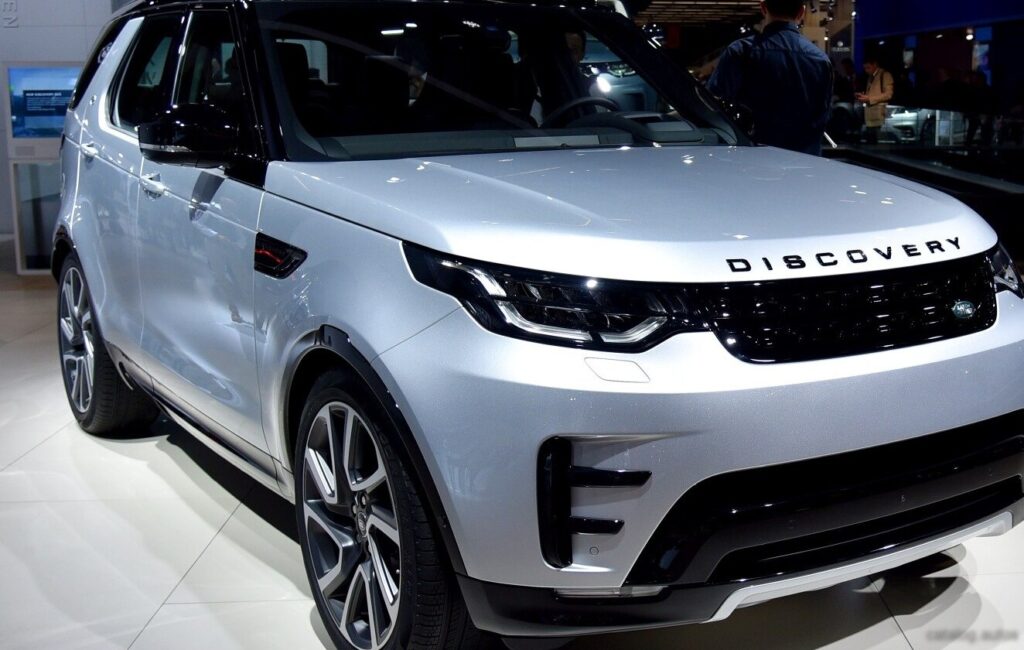
The Land Rover Discovery V 2.0 Si4, produced from 2017 to 2018, represents a significant shift in the Discovery lineage. Part of the fifth-generation (Discovery V, internally designated as L462) introduced in 2017, this variant offered a more accessible entry point into the luxury SUV market while retaining the core capabilities expected of a Land Rover. Positioned as a mid-range offering, it slotted below the higher-powered six-cylinder and diesel options, appealing to buyers prioritizing fuel efficiency and a smoother driving experience over outright performance. The 2.0 Si4 utilized Land Rover’s Ingenium engine family and was primarily sold in European and Asian markets, with limited availability in North America where larger engines were favored.
Technical Specifications
| Brand | Land Rover |
| Model | Discovery |
| Generation | Discovery V |
| Type | 2.0 Si4 (300 Hp) 4WD Automatic 7 Seat |
| Start of production | 2017 |
| End of production | 2018 |
| Powertrain Architecture | Internal Combustion engine |
| Body type | SUV |
| Seats | 7 |
| Doors | 5 |
| Fuel consumption (urban) | 11.6 l/100 km (20.3 US mpg, 24.4 UK mpg, 8.6 km/l) |
| Fuel consumption (extra urban) | 8.4 l/100 km (28 US mpg, 33.6 UK mpg, 11.9 km/l) |
| Fuel consumption (combined) | 9.6 l/100 km (24.5 US mpg, 29.4 UK mpg, 10.4 km/l) |
| CO2 emissions | 222 g/km |
| Fuel Type | Petrol (Gasoline) |
| Acceleration 0 – 100 km/h | 7.7 sec |
| Acceleration 0 – 62 mph | 7.7 sec |
| Acceleration 0 – 60 mph | 7.3 sec |
| Maximum speed | 201 km/h (124.9 mph) |
| Emission standard | Euro 6 |
| Weight-to-power ratio | 7.2 kg/Hp, 138.8 Hp/tonne |
| Weight-to-torque ratio | 5.4 kg/Nm, 185 Nm/tonne |
| Power | 300 Hp @ 5500 rpm |
| Power per litre | 150.2 Hp/l |
| Torque | 400 Nm @ 1500-4000 rpm (295.02 lb.-ft. @ 1500-4000 rpm) |
| Engine layout | Front, Longitudinal |
| Engine Model/Code | Ingenium / PT204 |
| Engine displacement | 1997 cm3 (121.86 cu. in.) |
| Number of cylinders | 4 |
| Engine configuration | Inline |
| Cylinder Bore | 83 mm (3.27 in.) |
| Piston Stroke | 92.3 mm (3.63 in.) |
| Compression ratio | 9.5:1 |
| Number of valves per cylinder | 4 |
| Fuel injection system | Direct injection |
| Engine aspiration | Turbocharger, Intercooler |
| Engine oil capacity | 7 l (7.4 US qt | 6.16 UK qt) |
| Coolant | 11.2 l (11.83 US qt | 9.85 UK qt) |
| Kerb Weight | 2162 kg (4766.39 lbs.) |
| Max. weight | 3070 kg (6768.19 lbs.) |
| Max load | 908 kg (2001.8 lbs.) |
| Trunk (boot) space – minimum | 258 l (9.11 cu. ft.) |
| Trunk (boot) space – maximum | 2406 l (84.97 cu. ft.) |
| Fuel tank capacity | 90 l (23.78 US gal | 19.8 UK gal) |
| Max. roof load | 80 kg (176.37 lbs.) |
| Permitted trailer load with brakes (12%) | 3000 kg (6613.87 lbs.) |
| Permitted trailer load without brakes | 750 kg (1653.47 lbs.) |
| Permitted towbar download | 150 kg (330.69 lbs.) |
| Length | 4970 mm (195.67 in.) |
| Width with mirrors folded | 2073 mm (81.61 in.) |
| Width including mirrors | 2220 mm (87.4 in.) |
| Height | 1888 mm (74.33 in.) |
| Wheelbase | 2923 mm (115.08 in.) |
| Front track | 1692 mm (66.61 in.) |
| Rear (Back) track | 1687 mm (66.42 in.) |
| Ride height (ground clearance) | 283 mm (11.14 in.) |
| Drag coefficient (Cd) | 0.33 |
| Minimum turning circle (turning diameter) | 12.4 m (40.68 ft.) |
| Approach angle | 26.3-34.0° |
| Departure angle | 25.9-30.0° |
| Ramp-over (brakeover) angle | 22.2-27.5° |
| Climb angle | 45° |
| Wading depth | 900 mm (35.43 in.) |
| Drivetrain Architecture | The Internal combustion engine (ICE) drives permanently the four wheels of the vehicle. |
| Drive wheel | All wheel drive (4×4) |
| Number of gears and type of gearbox | 8 gears, automatic transmission |
| Front suspension | Double wishbone, Independent coil spring |
| Rear suspension | Independent multi-link suspension |
| Front brakes | Ventilated discs, 360 mm |
| Rear brakes | Ventilated discs, 350 mm |
| Assisting systems | ABS (Anti-lock braking system) |
| Steering type | Steering rack and pinion |
| Power steering | Electric Steering |
| Tires size | 235/65 R19; 255/60 R19; 255/55 R20; 275/45 R21; 285/40 R22 |
| Wheel rims size | 7.5J x 19; 8.5J x 20; 9.5J x 21; 9.5J x 22 |
INTRODUCTION
The Land Rover Discovery V 2.0 Si4, launched in 2017, marked a departure from the traditionally larger-engined Discoverys. Built on the Premium Lightweight Architecture (PLA) platform, also used for the Range Rover Velar, it aimed to broaden the Discovery’s appeal by offering a more economical and refined driving experience. This variant was characterized by its 2.0-liter turbocharged four-cylinder Ingenium engine, paired exclusively with an eight-speed automatic transmission and four-wheel drive. The 7-seat configuration was standard, emphasizing the Discovery’s family-oriented practicality. This model year represented the initial phase of the fifth-generation Discovery, with subsequent years seeing refinements and the introduction of additional engine options.
Powertrain & Engine Architecture
At the heart of the 2.0 Si4 lies Land Rover’s Ingenium engine family, specifically the PT204 code. This 1997cc inline-four cylinder engine utilizes direct injection and a single twin-scroll turbocharger with an intercooler. The engine produces 300 horsepower at 5500 rpm and 400 Nm (295 lb-ft) of torque between 1500 and 4000 rpm. The Ingenium engine is notable for its lightweight construction, utilizing aluminum components to reduce overall weight. The eight-speed automatic transmission, sourced from ZF, is a key component of the powertrain, offering smooth and efficient gear changes. It’s programmed for comfort and refinement, prioritizing seamless acceleration over aggressive shifts. The transmission features selectable driving modes, allowing the driver to tailor the response to suit different conditions.
Driving Characteristics
The 2.0 Si4 Discovery offers a comfortable and composed driving experience. While not as overtly powerful as the six-cylinder variants, the 300 hp engine provides adequate performance for everyday driving and highway cruising. Acceleration from 0-60 mph takes around 7.3 seconds. The eight-speed automatic transmission contributes to relaxed cruising, keeping engine speeds low at highway speeds. The four-wheel-drive system provides excellent traction in various conditions, making it capable both on and off-road, though it’s not geared towards extreme off-roading like some other Land Rover models. The steering is light and precise, and the suspension effectively absorbs bumps and imperfections in the road surface. Compared to the higher-powered versions, the 2.0 Si4 feels less urgent in its acceleration, but the trade-off is improved fuel economy and a more refined overall driving experience.
Equipment & Trim Levels
The 2.0 Si4 typically came well-equipped, reflecting the Discovery’s positioning as a premium SUV. Standard features included leather upholstery, a touchscreen infotainment system with navigation, climate control, parking sensors, and a suite of safety features such as autonomous emergency braking and lane departure warning. Higher trim levels offered additional features like a panoramic sunroof, premium audio system, adaptive cruise control, and heated seats. Interior trim options varied, with choices in wood veneer, aluminum, and leather finishes. The 7-seat configuration was standard, with the rear seats folding flat to maximize cargo space.
Chassis & Braking
The Discovery V utilizes an aluminum-intensive monocoque chassis, contributing to its relatively low weight for a vehicle of its size. The suspension consists of a double wishbone setup at the front and an independent multi-link system at the rear, providing a comfortable and controlled ride. Ventilated disc brakes are fitted to all four wheels, providing ample stopping power. The braking system is assisted by ABS, electronic brakeforce distribution, and emergency brake assist. The vehicle’s electronic air suspension system, standard on many trims, allows for adjustable ride height and further enhances ride comfort and off-road capability.
Market Reception & Comparison
The 2.0 Si4 Discovery received mixed reviews. Critics praised its comfortable ride, spacious interior, and refined powertrain. However, some found the engine to be underpowered for a vehicle of its size, particularly when fully loaded or towing. Fuel economy was generally considered good for a luxury SUV, averaging around 24.5 US mpg in combined driving. Compared to the 3.0-liter V6 variants, the 2.0 Si4 offered lower running costs but sacrificed some performance. Against competitors like the Audi Q7 and BMW X5, the Discovery V 2.0 Si4 offered a unique blend of luxury, practicality, and off-road capability.
Legacy
The Land Rover Discovery V 2.0 Si4 represents an important step in the evolution of the Discovery model. While not the most popular variant, it broadened the appeal of the Discovery to a wider audience. The Ingenium engine proved to be a reliable and efficient powerplant, and the eight-speed automatic transmission continues to be highly regarded. On the used car market, these models offer a relatively affordable entry point into Land Rover ownership, but potential buyers should be aware of the potential for electronic system issues and the importance of regular maintenance. Overall, the 2.0 Si4 Discovery V remains a capable and comfortable SUV, offering a compelling combination of luxury, practicality, and off-road ability.