
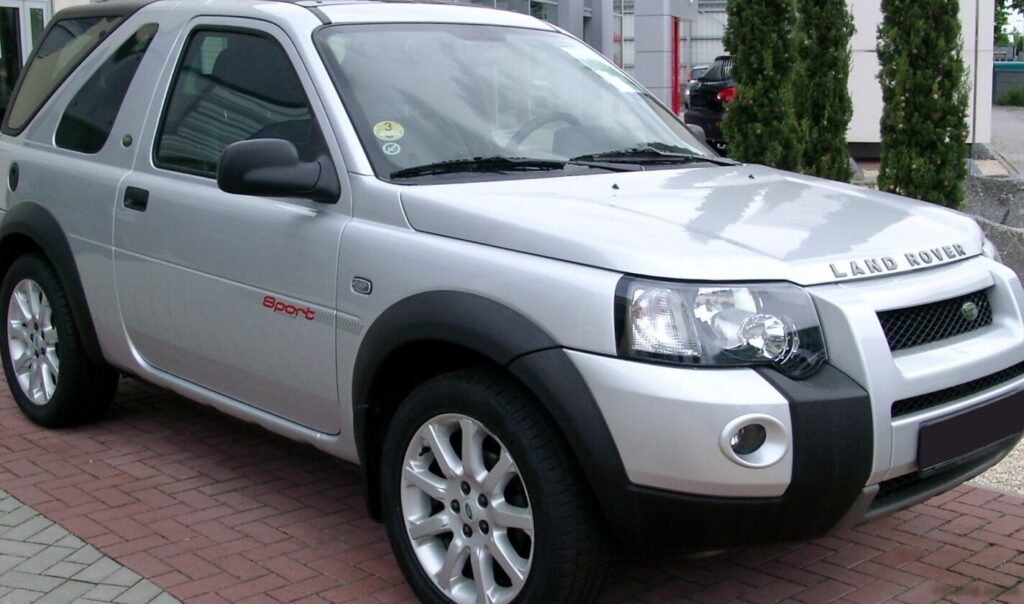
The Land Rover Freelander I Hard Top 1.8 i 16V, produced from 1998 to 2006, represented an entry point into the Freelander range, offering a more affordable and fuel-conscious alternative to the more powerful V6 models. Positioned as a practical and capable compact SUV, the Hard Top – distinguished by its fixed steel roof and lack of sunroof – aimed to provide a robust vehicle for both on-road and light off-road use. This variant was primarily sold in European and select international markets, offering a blend of Land Rover’s off-road heritage with a more accessible price tag. It was built on the 1HX0/A3 platform, shared with other Rover Group products of the era.
Technical Specifications
| Brand | Land Rover |
| Model | Freelander |
| Generation | Freelander I Hard Top |
| Type (Engine) | 1.8 i 16V (117 Hp) |
| Start of production | 1998 |
| End of production | 2006 |
| Powertrain Architecture | Internal Combustion engine |
| Body type | SUV |
| Seats | 5 |
| Doors | 3 |
| Fuel consumption (urban) | 12.9 l/100 km (18.2 US mpg, 21.9 UK mpg) |
| Fuel consumption (extra urban) | 8.1 l/100 km (29 US mpg, 34.9 UK mpg) |
| Fuel Type | Petrol (Gasoline) |
| Acceleration 0 – 100 km/h | 12.6 sec |
| Acceleration 0 – 62 mph | 12.6 sec |
| Acceleration 0 – 60 mph | 12 sec |
| Maximum speed | 165 km/h (102.53 mph) |
| Weight-to-power ratio | 12.2 kg/Hp |
| Weight-to-torque ratio | 8.9 kg/Nm |
| Power | 117 Hp @ 5500 rpm |
| Power per litre | 65.1 Hp/l |
| Torque | 160 Nm @ 2750 rpm (118.01 lb.-ft. @ 2750 rpm) |
| Engine layout | Front, Transverse |
| Engine Model/Code | 18K4F |
| Engine displacement | 1796 cm3 (109.6 cu. in.) |
| Number of cylinders | 4 |
| Engine configuration | Inline |
| Cylinder Bore | 80 mm (3.15 in.) |
| Piston Stroke | 89.3 mm (3.52 in.) |
| Compression ratio | 10.5:1 |
| Number of valves per cylinder | 4 |
| Fuel injection system | Multi-port manifold injection |
| Engine aspiration | Naturally aspirated engine |
| Valvetrain | DOHC |
| Engine oil capacity | 4.5 l (4.76 US qt | 3.96 UK qt) |
| Coolant capacity | 4.8 l (5.07 US qt | 4.22 UK qt) |
| Kerb Weight | 1430 kg (3152.61 lbs.) |
| Max. weight | 2040 kg (4497.43 lbs.) |
| Max load | 610 kg (1344.82 lbs.) |
| Trunk (boot) space – minimum | 311 l (10.98 cu. ft.) |
| Trunk (boot) space – maximum | 1194 l (42.17 cu. ft.) |
| Fuel tank capacity | 60 l (15.85 US gal | 13.2 UK gal) |
| Length | 4368 mm (171.97 in.) |
| Width | 1809 mm (71.22 in.) |
| Height | 1708 mm (67.24 in.) |
| Wheelbase | 2557 mm (100.67 in.) |
| Front track | 1534 mm (60.39 in.) |
| Rear (Back) track | 1545 mm (60.83 in.) |
| Drive wheel | All wheel drive (4×4) |
| Number of gears and type of gearbox | 5 gears, manual transmission |
| Front suspension | Coil spring |
| Rear suspension | Coil spring |
| Front brakes | Ventilated discs |
| Rear brakes | Disc |
| Assisting systems | ABS (Anti-lock braking system) |
| Steering type | Steering rack and pinion |
| Power steering | Hydraulic Steering |
| Tires size | 195/80 R15 |
Powertrain & Engine Architecture
The 1.8-liter, 16-valve engine, designated as the 18K4F, was a naturally aspirated inline-four cylinder unit. It featured a multi-port fuel injection system and a double overhead camshaft (DOHC) valvetrain. This engine was part of the K-series family developed by Rover Group, and while generally reliable, it was known to require regular maintenance, particularly regarding head gasket integrity. The 117 horsepower output at 5500 rpm and 160 Nm (118 lb-ft) of torque at 2750 rpm were delivered through a five-speed manual transmission. An optional automatic transmission was also available, though it further reduced acceleration performance. The engine’s transverse mounting and all-wheel-drive system contributed to the Freelander’s compact footprint and all-weather capability.
Driving Characteristics
The 1.8L Freelander Hard Top offered a noticeably different driving experience compared to its V6 siblings. Acceleration was modest, taking around 12.6 seconds to reach 62 mph. The engine felt strained when pushed hard, particularly when fully loaded or tackling steep inclines. The manual transmission helped to maximize the available power, allowing drivers to keep the engine in its optimal rev range. The automatic transmission, while offering convenience, further diminished performance. However, the 1.8L engine provided adequate power for everyday driving and commuting, and its lighter weight compared to the V6 models contributed to slightly improved handling and fuel economy. The permanent four-wheel drive system provided good traction on slippery surfaces, making it a capable vehicle in adverse weather conditions.
Equipment & Trim Levels
The 1.8 i 16V Hard Top typically came with a relatively basic level of equipment, reflecting its position as the entry-level model. Standard features included power steering, ABS brakes, and a basic audio system. Interior upholstery was typically cloth, and the dashboard featured a functional, if somewhat utilitarian, design. Optional extras included air conditioning, alloy wheels, and upgraded audio systems. The Hard Top’s fixed steel roof and lack of sunroof distinguished it from the more luxurious Freelander models. The interior space was reasonable for a compact SUV, offering comfortable seating for five passengers, although rear legroom could be limited.
Chassis & Braking
The Freelander I utilized a monocoque chassis construction, providing a good balance of strength and weight. Suspension consisted of coil springs all around, with independent suspension at the front and a multi-link setup at the rear. The braking system featured ventilated discs at the front and solid discs at the rear. The Hard Top variant, due to its lower weight compared to the V6 models, generally offered adequate braking performance for everyday use. Stabilizer bars were fitted front and rear to reduce body roll during cornering.
Market Reception & Comparison
The 1.8L Freelander Hard Top was generally well-received as a practical and affordable entry into the compact SUV segment. Critics praised its off-road capability and rugged styling, but noted its modest performance and somewhat basic interior. Compared to the V6 models, the 1.8L offered significantly better fuel economy, making it a more attractive option for drivers prioritizing running costs. However, the V6 models provided a more refined driving experience and superior performance. Against competitors like the Honda CR-V and Toyota RAV4, the Freelander offered a more distinctive and rugged character, but often lacked the Japanese brands’ reputation for reliability.
Legacy
The Land Rover Freelander I, including the 1.8 i 16V Hard Top variant, played a significant role in expanding the Land Rover brand’s appeal to a wider audience. While the K-series engine is known for potential head gasket issues, regular maintenance can mitigate these problems. Today, well-maintained examples of the 1.8L Freelander Hard Top are sought after by enthusiasts and those looking for a classic Land Rover with reasonable running costs. The vehicle’s robust construction and all-wheel-drive system continue to make it a capable and versatile vehicle, particularly for those seeking a practical and affordable off-road vehicle. Parts availability can be a challenge, but a dedicated community of owners and specialists helps to keep these vehicles on the road.


