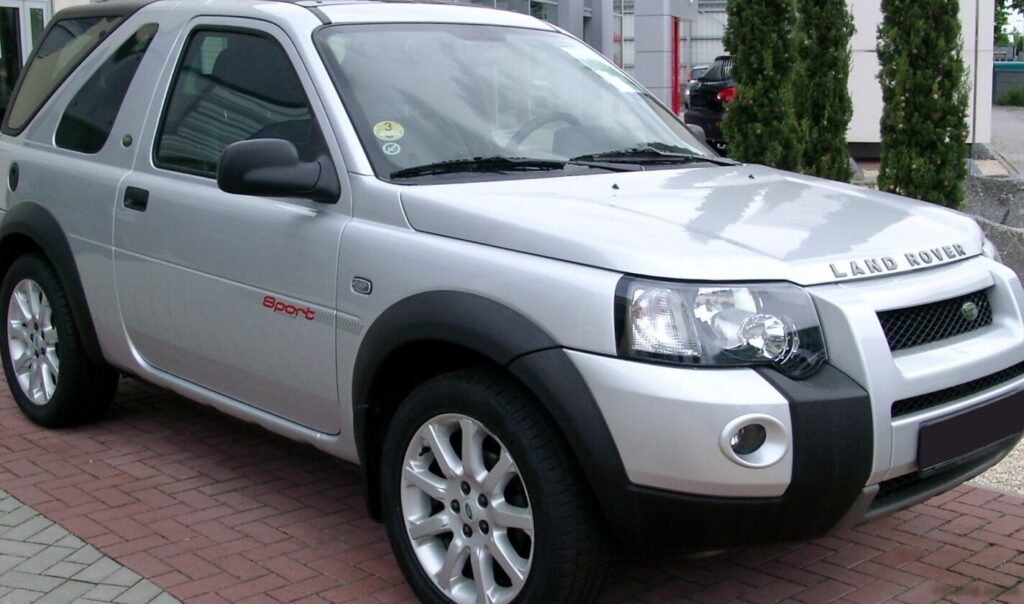
The Land Rover Freelander I Hard Top 2.0 TD, produced from 1998 to 2006, represented a significant step for Land Rover into the more accessible compact SUV market. This three-door variant, distinguished by its fixed hard top rather than the standard model’s canvas soft top, was primarily aimed at buyers seeking a utilitarian yet capable vehicle. It slotted into the Freelander range as a more practical, work-oriented alternative to the five-door lifestyle model, offering a blend of off-road ability and cargo space. The 2.0 TD engine, delivering 112 horsepower, was a key component of the Freelander’s appeal in European markets where diesel engines were favored for their fuel efficiency and torque.
Technical Specifications
| Brand | Land Rover |
| Model | Freelander |
| Generation | Freelander I Hard Top |
| Type (Engine) | 2.0 TD (112 Hp) |
| Start of production | 1998 |
| End of production | 2006 |
| Powertrain Architecture | Internal Combustion engine |
| Body type | SUV |
| Seats | 5 |
| Doors | 3 |
| Fuel consumption (urban) | 9.1 l/100 km (25.8 US mpg, 31 UK mpg, 11 km/l) |
| Fuel consumption (extra urban) | 6.7 l/100 km (35.1 US mpg, 42.2 UK mpg, 14.9 km/l) |
| Fuel Type | Diesel |
| Acceleration 0 – 100 km/h | 14.4 sec |
| Acceleration 0 – 62 mph | 14.4 sec |
| Acceleration 0 – 60 mph | 13.7 sec |
| Maximum speed | 159 km/h (98.8 mph) |
| Weight-to-power ratio | 14 kg/Hp, 71.6 Hp/tonne |
| Weight-to-torque ratio | 6 kg/Nm, 166.1 Nm/tonne |
| Power | 112 Hp @ 4000 rpm |
| Power per litre | 57.4 Hp/l |
| Torque | 260 Nm @ 1750 rpm (191.77 lb.-ft. @ 1750 rpm) |
| Engine layout | Front, Transverse |
| Engine Model/Code | 204D3 |
| Engine displacement | 1950 cm3 (119 cu. in.) |
| Number of cylinders | 4 |
| Engine configuration | Inline |
| Cylinder Bore | 84 mm (3.31 in.) |
| Piston Stroke | 88 mm (3.46 in.) |
| Compression ratio | 18:1 |
| Number of valves per cylinder | 4 |
| Fuel injection system | Diesel Commonrail |
| Engine aspiration | Turbocharger |
| Valvetrain | DOHC |
| Engine oil capacity | 6.8 l (7.19 US qt | 5.98 UK qt) |
| Coolant capacity | 7.25 l (7.66 US qt | 6.38 UK qt) |
| Kerb Weight | 1565 kg (3450.23 lbs.) |
| Max. weight | 2080 kg (4585.62 lbs.) |
| Max load | 515 kg (1135.38 lbs.) |
| Trunk (boot) space – minimum | 311 l (10.98 cu. ft.) |
| Trunk (boot) space – maximum | 1194 l (42.17 cu. ft.) |
| Fuel tank capacity | 60 l (15.85 US gal | 13.2 UK gal) |
| Length | 4368 mm (171.97 in.) |
| Width | 1809 mm (71.22 in.) |
| Height | 1708 mm (67.24 in.) |
| Wheelbase | 2557 mm (100.67 in.) |
| Front track | 1534 mm (60.39 in.) |
| Rear track | 1545 mm (60.83 in.) |
| Drive wheel | All wheel drive (4×4) |
| Number of gears | 5 |
| Gearbox type | Manual transmission |
| Front suspension | Coil spring |
| Rear suspension | Coil spring |
| Front brakes | Ventilated discs |
| Rear brakes | Disc |
| Assisting systems | ABS (Anti-lock braking system) |
| Steering type | Steering rack and pinion |
| Power steering | Hydraulic Steering |
| Tires size | 195/80 R15 |
Powertrain & Engine Architecture
The heart of the Freelander I Hard Top 2.0 TD was the 204D3 engine, a 1950cc inline four-cylinder diesel. This engine was a product of collaboration between Land Rover and BMW (who owned Land Rover at the time), utilizing BMW’s diesel technology. It featured a turbocharger and a diesel common rail fuel injection system, which allowed for precise fuel delivery and improved combustion efficiency. The engine employed a double overhead camshaft (DOHC) valvetrain with four valves per cylinder, contributing to its relatively high power output for its displacement. The 204D3 engine was known for its robust construction and ability to produce a substantial amount of torque at low engine speeds – 260 Nm (191.77 lb-ft) at just 1750 rpm. This made it well-suited for off-road driving and towing. The five-speed manual transmission was the only gearbox option available with this engine configuration, providing a balance between fuel economy and performance.
Driving Characteristics
The 2.0 TD engine, paired with the five-speed manual transmission, delivered a driving experience focused on practicality and capability rather than outright speed. Acceleration from 0-60 mph took around 13.7 seconds, and the top speed was approximately 98.8 mph. While not particularly quick, the engine’s strong low-end torque made it feel more responsive in everyday driving situations. The gear ratios were well-chosen to maximize fuel efficiency and provide adequate pulling power for off-road excursions. Compared to the more powerful V6 petrol versions of the Freelander, the 2.0 TD offered significantly better fuel economy, making it a more economical choice for those covering long distances. However, it lacked the V6’s refinement and brisk acceleration. The three-door Hard Top configuration, while offering increased cargo security, also meant reduced rear passenger space compared to the five-door model.
Equipment & Trim Levels
The Freelander I Hard Top 2.0 TD typically came with a fairly basic level of equipment, reflecting its utilitarian focus. Standard features included power steering, ABS brakes, and a driver’s airbag. Interior upholstery was typically cloth, and the dashboard featured a functional, if somewhat dated, design. Optional extras included air conditioning, electric windows, and a CD player. The Hard Top variant often appealed to buyers who prioritized practicality over luxury, such as farmers, tradespeople, or those involved in outdoor pursuits. Trim levels were relatively limited, with most examples being fairly consistently equipped.
Chassis & Braking
The Freelander I Hard Top utilized a robust chassis and suspension system designed to handle both on-road and off-road conditions. It featured coil spring suspension at both the front and rear, providing a comfortable ride and good articulation for off-road use. The front brakes were ventilated discs, offering good stopping power, while the rear brakes were solid discs. The vehicle’s all-wheel-drive system, featuring traction control, provided excellent grip on a variety of surfaces. The steering was a hydraulic rack and pinion system, offering precise control and a reasonable turning circle.
Market Reception & Comparison
The Freelander I Hard Top 2.0 TD was generally well-received in European markets, particularly by those seeking a versatile and economical SUV. Critics praised its off-road capability, fuel efficiency, and robust construction. However, some criticized its relatively slow acceleration and somewhat dated interior. Compared to other trims in the Freelander lineup, the 2.0 TD offered the best fuel economy and was the most affordable option. It was a popular choice for those who needed a practical and reliable vehicle for work or leisure. Against competitors like the Suzuki Grand Vitara and the early RAV4 models, the Freelander offered a more premium feel and superior off-road credentials, though often at a higher price point.
Legacy
The Land Rover Freelander I Hard Top 2.0 TD has proven to be a relatively reliable vehicle, particularly the engine itself. While some components, such as the cooling system and electrical components, can be prone to failure with age, the 204D3 diesel engine is generally considered to be durable and long-lasting. Today, the Freelander I Hard Top 2.0 TD is a popular choice among enthusiasts and those seeking a classic Land Rover at an affordable price. Its combination of practicality, capability, and relatively low running costs makes it a compelling option in the used car market. However, potential buyers should be aware of the need for regular maintenance and the possibility of age-related issues.