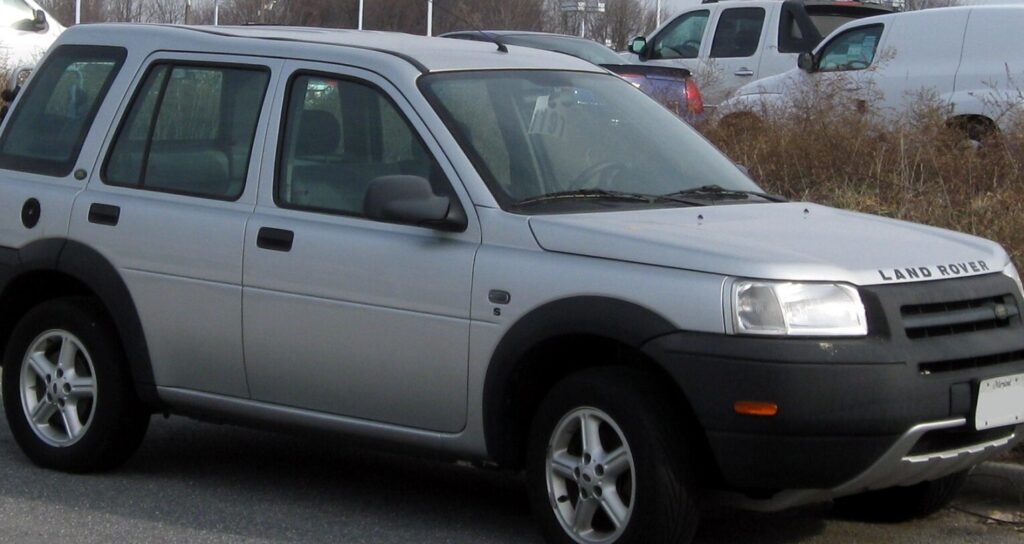
The Land Rover Freelander I, specifically the 2.0 DI variant producing 98 horsepower, was a key model in establishing Land Rover’s presence in the compact SUV segment. Introduced in 1998 and continuing through 2001, this version of the Freelander (chassis code LN) represented an entry point into the Land Rover brand, offering all-wheel drive capability and a degree of luxury at a more accessible price point than the larger Discovery. It was positioned as a lifestyle vehicle, appealing to buyers seeking a capable and comfortable vehicle for both on-road and light off-road adventures. The 2.0 DI model occupied the lower end of the Freelander range, below the more powerful petrol variants, and aimed at buyers prioritizing fuel economy and practicality.
Technical Specifications
| Brand | Land Rover |
| Model | Freelander |
| Generation | Freelander I (LN) |
| Type (Engine) | 2.0 DI (98 Hp) |
| Start of production | 1998 |
| End of production | 2001 |
| Powertrain Architecture | Internal Combustion engine |
| Body type | SUV |
| Seats | 5 |
| Doors | 5 |
| Fuel consumption (urban) | 9.6 l/100 km (24.5 US mpg) |
| Fuel consumption (extra urban) | 6.7 l/100 km (35.1 US mpg) |
| Fuel Type | Diesel |
| Acceleration 0 – 100 km/h | 15.2 sec |
| Acceleration 0 – 62 mph | 15.2 sec |
| Acceleration 0 – 60 mph | 14.4 sec |
| Maximum speed | 155 km/h (96.31 mph) |
| Weight-to-power ratio | 14.3 kg/Hp |
| Weight-to-torque ratio | 6.7 kg/Nm |
| Power | 98 Hp @ 4200 rpm |
| Power per litre | 49.1 Hp/l |
| Torque | 210 Nm @ 2000 rpm (154.89 lb.-ft. @ 2000 rpm) |
| Engine layout | Front, Transverse |
| Engine Model/Code | L / 20T2N |
| Engine displacement | 1994 cm3 (121.68 cu. in.) |
| Number of cylinders | 4 |
| Engine configuration | Inline |
| Cylinder Bore | 84.5 mm (3.33 in.) |
| Piston Stroke | 88.9 mm (3.5 in.) |
| Compression ratio | 19.5:1 |
| Number of valves per cylinder | 2 |
| Fuel injection system | Diesel Commonrail |
| Engine aspiration | Turbocharger |
| Valvetrain | OHC |
| Engine oil capacity | 4.9 l (5.18 US qt | 4.31 UK qt) |
| Coolant | 7.2 l (7.61 US qt | 6.34 UK qt) |
| Kerb Weight | 1405 kg (3097.49 lbs.) |
| Max. weight | 2050 kg (4519.48 lbs.) |
| Max load | 645 kg (1421.98 lbs.) |
| Trunk (boot) space – minimum | 370 l (13.07 cu. ft.) |
| Trunk (boot) space – maximum | 1315 l (46.44 cu. ft.) |
| Fuel tank capacity | 59 l (15.59 US gal | 12.98 UK gal) |
| Length | 4380 mm (172.44 in.) |
| Width | 1805 mm (71.06 in.) |
| Height | 1760 mm (69.29 in.) |
| Wheelbase | 2560 mm (100.79 in.) |
| Front track | 1535 mm (60.43 in.) |
| Rear (Back) track | 1545 mm (60.83 in.) |
| Drive wheel | All wheel drive (4×4) |
| Number of gears and type of gearbox | 5 gears, manual transmission |
| Front suspension | Coil spring |
| Rear suspension | Coil spring |
| Front brakes | Disc |
| Rear brakes | Drum |
| Assisting systems | ABS (Anti-lock braking system) |
| Steering type | Steering rack and pinion |
| Power steering | Hydraulic Steering |
| Tires size | 195/80 R15 |
INTRODUCTION
The Land Rover Freelander I 2.0 DI, launched in 1998, was a significant departure for the brand, representing its first foray into the increasingly popular compact SUV market. Built on the 1HX0/A3 platform (shared with the Rover 75 and MG ZT), the Freelander aimed to broaden Land Rover’s appeal beyond its traditional, more rugged offerings. The 2.0 DI model, powered by a turbocharged diesel engine, was intended to provide a balance of fuel efficiency, reasonable performance, and all-weather capability. It served as the entry-level option, appealing to buyers who didn’t require the higher performance of the V6 petrol engines but still desired the prestige and off-road credentials associated with the Land Rover name.
Powertrain & Engine Architecture
The heart of the Freelander 2.0 DI is the M47R four-cylinder diesel engine, designated as the ‘L’ series by Land Rover and carrying the engine code 20T2N. This engine, developed in collaboration with BMW (who also used similar engines in their 3-Series range), featured a 1994cc displacement and utilized a turbocharger to boost power output to 98 horsepower. The engine employed a diesel common rail fuel injection system, which improved fuel atomization and combustion efficiency compared to older mechanical injection systems. The engine featured a single overhead camshaft (OHC) valvetrain with two valves per cylinder. The 2.0 DI was exclusively offered with a 5-speed manual transmission, designed to maximize fuel economy and provide adequate performance for everyday driving. The transmission was a conventional setup, sending power to all four wheels via Land Rover’s New Generation Electronic Traction Control (ETC) system.
Driving Characteristics
The 2.0 DI Freelander offered a distinctly different driving experience compared to its petrol-powered siblings. While the V6 models prioritized acceleration and refinement, the 2.0 DI focused on fuel economy and torque. The 98 horsepower output, while adequate for on-road driving, resulted in a 0-60 mph time of around 14.4 seconds. The engine’s 210 Nm (154.89 lb-ft) of torque, available from 2000 rpm, provided sufficient pulling power for everyday driving and light off-road work. The manual transmission, while not particularly sporty, offered precise shifts and allowed the driver to make the most of the available power. Compared to the automatic transmissions offered with other Freelander variants, the manual gearbox in the 2.0 DI provided a more engaging driving experience and contributed to improved fuel efficiency. The Freelander’s all-wheel-drive system provided confident traction on slippery surfaces, making it a capable vehicle in inclement weather.
Equipment & Trim Levels
The 2.0 DI Freelander typically came equipped with a reasonable level of standard equipment, though it was less lavishly appointed than the higher-spec models. Standard features generally included air conditioning, power steering, central locking, and an AM/FM radio. Interior upholstery was typically cloth, and the dashboard featured a functional, if somewhat utilitarian, design. Optional extras included alloy wheels, a sunroof, leather upholstery, and upgraded audio systems. The trim level often dictated the availability of these options, with higher trims offering more standard features and a wider range of customization possibilities. The 2.0 DI was often seen as a practical choice, with buyers prioritizing functionality over luxury.
Chassis & Braking
The Freelander I utilized a monocoque chassis construction, providing a good balance of strength and weight. Suspension consisted of coil springs all around, with independent suspension at the front and a multi-link setup at the rear. The 2.0 DI model, being the entry-level variant, typically featured disc brakes at the front and drum brakes at the rear. ABS (Anti-lock Braking System) was standard, enhancing braking performance and stability. The steering system employed a rack and pinion setup with hydraulic power assistance, providing precise and responsive steering feel. The tires were typically 195/80 R15, offering a good compromise between comfort and durability.
Market Reception & Comparison
The Freelander 2.0 DI received mixed reviews from automotive critics. While praised for its fuel efficiency and all-wheel-drive capability, it was often criticized for its relatively slow acceleration and somewhat basic interior. Compared to the V6 petrol models, the 2.0 DI offered significantly better fuel economy, making it a more attractive option for buyers covering long distances. However, the V6 models provided a more refined and powerful driving experience. Against competitors like the Honda CR-V and Toyota RAV4, the Freelander 2.0 DI offered a more premium image and superior off-road capability, but often at a higher price point.
Legacy
The Land Rover Freelander I 2.0 DI, while not the fastest or most luxurious vehicle in its class, established a foothold for Land Rover in the compact SUV segment. The M47R diesel engine, while not without its quirks, proved to be relatively reliable when properly maintained. Today, the 2.0 DI Freelander can be found on the used car market at affordable prices. Common issues include turbocharger wear, fuel injector problems, and corrosion. However, with regular maintenance and careful ownership, these vehicles can provide years of reliable service. The 2.0 DI remains a popular choice for those seeking a capable and affordable all-wheel-drive vehicle with the prestige of the Land Rover brand.