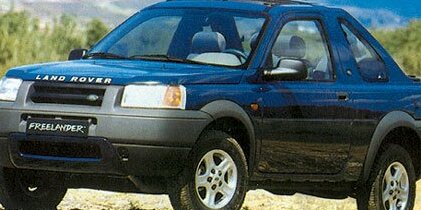
The Land Rover Freelander I Soft Top 2.5 V6 24V, produced between 2001 and 2006, represented a unique offering within the first generation Freelander lineup (LJ platform). Positioned as a more lifestyle-oriented variant, the Soft Top distinguished itself with a retractable soft roof, offering an open-air driving experience not typically associated with the Land Rover brand. While the standard Freelander aimed for a blend of on-road comfort and off-road capability, the Soft Top prioritized a more recreational appeal, targeting buyers seeking a distinctive and versatile SUV. This particular 2.5-liter V6 configuration, producing 177 horsepower, served as a mid-range option, offering a balance between performance and fuel economy within the Freelander range.
Technical Specifications
| Brand | Land Rover |
| Model | Freelander |
| Generation | Freelander I Soft Top |
| Type (Engine) | 2.5 V6 24V (177 Hp) |
| Start of production | 2001 |
| End of production | 2006 |
| Powertrain Architecture | Internal Combustion engine |
| Body type | SUV |
| Seats | 4 |
| Doors | 3 |
| Fuel consumption (urban) | 17.2 l/100 km (13.7 US mpg, 16.4 UK mpg, 5.8 km/l) |
| Fuel consumption (extra urban) | 9.7 l/100 km (24.2 US mpg, 29.1 UK mpg, 10.3 km/l) |
| Fuel consumption (combined) | 12.4 l/100 km (19 US mpg, 22.8 UK mpg, 8.1 km/l) |
| Fuel Type | Petrol (Gasoline) |
| Acceleration 0 – 100 km/h | 11.1 sec |
| Acceleration 0 – 62 mph | 11.1 sec |
| Acceleration 0 – 60 mph | 10.5 sec |
| Maximum speed | 182 km/h (113.09 mph) |
| Weight-to-power ratio | 9 kg/Hp, 110.6 Hp/tonne |
| Weight-to-torque ratio | 6.7 kg/Nm, 150 Nm/tonne |
| Power | 177 Hp @ 6500 rpm |
| Power per litre | 70.9 Hp/l |
| Torque | 240 Nm @ 4000 rpm (177.01 lb.-ft. @ 4000 rpm) |
| Engine layout | Front, Transverse |
| Engine Model/Code | 25K4F |
| Engine displacement | 2497 cm3 (152.38 cu. in.) |
| Number of cylinders | 6 |
| Engine configuration | V-engine |
| Cylinder Bore | 80 mm (3.15 in.) |
| Piston Stroke | 82.8 mm (3.26 in.) |
| Compression ratio | 10.5:1 |
| Number of valves per cylinder | 4 |
| Fuel injection system | Multi-port manifold injection |
| Engine aspiration | Naturally aspirated engine |
| Valvetrain | DOHC |
| Engine oil capacity | 5.2 l (5.49 US qt | 4.58 UK qt) |
| Coolant capacity | 7.8 l (8.24 US qt | 6.86 UK qt) |
| Kerb Weight | 1600 kg (3527.4 lbs.) |
| Max. weight | 2060 kg (4541.52 lbs.) |
| Max load | 460 kg (1014.13 lbs.) |
| Trunk (boot) space – minimum | 311 l (10.98 cu. ft.) |
| Trunk (boot) space – maximum | 1194 l (42.17 cu. ft.) |
| Fuel tank capacity | 60 l (15.85 US gal | 13.2 UK gal) |
| Length | 4433 mm (174.53 in.) |
| Width | 1809 mm (71.22 in.) |
| Height | 1708 mm (67.24 in.) |
| Wheelbase | 2557 mm (100.67 in.) |
| Front track | 1534 mm (60.39 in.) |
| Rear (Back) track | 1545 mm (60.83 in.) |
| Drive wheel | All wheel drive (4×4) |
| Number of gears | 4 |
| Gearbox type | Automatic transmission |
| Front suspension | Coil spring |
| Rear suspension | Coil spring |
| Front brakes | Ventilated discs |
| Rear brakes | Drum |
| Assisting systems | ABS (Anti-lock braking system) |
| Steering type | Steering rack and pinion |
| Power steering | Hydraulic Steering |
| Tires size | 195/80 R15 S |
Powertrain & Engine Architecture
The heart of the Freelander I Soft Top 2.5 V6 was the Rover 25K4F engine. This 2.5-liter, naturally aspirated V6 engine featured a 60-degree V-angle and a dual overhead camshaft (DOHC) valvetrain with four valves per cylinder. The engine utilized a multi-port fuel injection system, delivering fuel directly into the intake ports. The 25K4F was known for its relatively smooth operation, but it wasn’t particularly renowned for its efficiency. Paired with this engine was a four-speed automatic transmission, providing convenient shifting but lacking the efficiency and responsiveness of more modern gearboxes. This automatic transmission was a key characteristic of this trim level, aimed at buyers prioritizing ease of use over sporty driving dynamics.
Driving Characteristics
The 177 horsepower and 177 lb-ft of torque delivered by the 2.5 V6, when channeled through the four-speed automatic, resulted in adequate, but not exhilarating, performance. Acceleration from 0-60 mph took around 10.5 seconds, and the top speed was approximately 113 mph. Compared to the manual transmission versions of the same engine, the automatic suffered a slight performance penalty due to the transmission’s inherent inefficiencies. The gear ratios were tuned for comfortable cruising rather than aggressive acceleration. The automatic transmission also contributed to higher fuel consumption compared to the five-speed manual option. The Freelander’s permanent all-wheel-drive system provided good traction in various conditions, but the vehicle’s weight and the automatic transmission limited its off-road prowess compared to more focused off-road vehicles.
Equipment & Trim Levels
The Freelander I Soft Top 2.5 V6 typically came equipped with features such as air conditioning, power windows, power steering, and an AM/FM radio. Upholstery was generally cloth, although leather options were available. The Soft Top models often included unique interior trim elements to differentiate them from the hardtop versions. Optional extras included a sunroof (in addition to the retractable roof), upgraded audio systems, and alloy wheels. The Soft Top trim generally sat in the mid-range of the Freelander lineup, offering a step up in features and style compared to the base models but lacking the premium appointments of the higher-spec trims.
Chassis & Braking
The Freelander I utilized a monocoque chassis construction. Suspension consisted of coil springs all around, providing a reasonably comfortable ride. The front suspension featured independent double wishbones, while the rear employed a multi-link setup. Braking was handled by ventilated discs at the front and drum brakes at the rear. Anti-lock Braking System (ABS) was standard. The Soft Top models, due to the structural changes required for the retractable roof, often featured reinforced chassis components to maintain rigidity. Stabilizer bars were fitted front and rear to reduce body roll during cornering.
Market Reception & Comparison
The Freelander I Soft Top 2.5 V6 received mixed reviews. Critics praised its distinctive styling and the open-air driving experience offered by the retractable roof. However, the engine was often criticized for its relatively high fuel consumption and modest performance. The automatic transmission was also seen as a drawback by some reviewers, who preferred the more engaging experience of the manual gearbox. Compared to other SUVs in its class, the Freelander offered a unique combination of style, practicality, and off-road capability, but it often fell short in terms of outright performance and fuel efficiency. The 2.5 V6 automatic was generally considered a good choice for buyers prioritizing comfort and convenience over sporty driving dynamics.
Legacy
The Land Rover Freelander I, including the Soft Top 2.5 V6 variant, has developed a reputation for being a relatively reliable vehicle, although certain components, such as the cooling system and the automatic transmission, can be prone to issues if not properly maintained. Today, the Soft Top models are becoming increasingly sought after by enthusiasts and collectors due to their rarity and unique appeal. Parts availability can be a challenge, but a dedicated community of Freelander owners and specialists exists to provide support and assistance. The 2.5 V6 engine, while not the most technologically advanced, remains a relatively straightforward unit to work on, making it a popular choice for DIY mechanics.