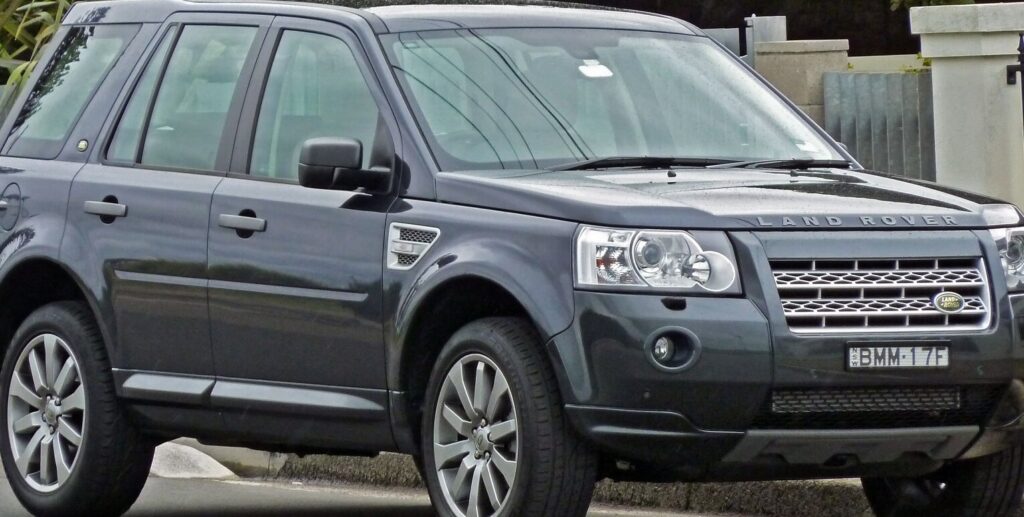
The Land Rover Freelander II 3.2 i 24V, produced from 2006 to 2010, represented a significant step forward for the Freelander line. Positioned as a premium compact SUV, it aimed to blend Land Rover’s off-road capability with on-road comfort and practicality. This variant, equipped with the 3.2-liter inline-six engine and a six-speed automatic transmission, was a mid-to-high range offering within the Freelander II lineup, appealing to buyers seeking a more powerful and refined experience than the four-cylinder diesel options available. It was a key model in Land Rover’s strategy to broaden the Freelander’s appeal beyond traditional off-road enthusiasts, targeting a wider audience in the burgeoning crossover SUV market.
Technical Specifications
| Brand | Land Rover |
| Model | Freelander |
| Generation | Freelander II |
| Type (Engine) | 3.2 i 24V (233 Hp) |
| Start of production | 2006 |
| End of production | 2010 |
| Powertrain Architecture | Internal Combustion engine |
| Body type | SUV |
| Seats | 5 |
| Doors | 5 |
| Fuel consumption (urban) | 15.8 l/100 km (14.9 US mpg, 17.9 UK mpg, 6.3 km/l) |
| Fuel consumption (extra urban) | 8.6 l/100 km (27.4 US mpg, 32.8 UK mpg, 11.6 km/l) |
| Fuel consumption (combined) | 11.2 l/100 km (21 US mpg, 25.2 UK mpg, 8.9 km/l) |
| Fuel Type | Petrol (Gasoline) |
| Acceleration 0 – 100 km/h | 8.9 sec |
| Acceleration 0 – 62 mph | 8.9 sec |
| Acceleration 0 – 60 mph | 8.5 sec |
| Maximum speed | 200 km/h (124.27 mph) |
| Weight-to-power ratio | 7.6 kg/Hp, 131.6 Hp/tonne |
| Weight-to-torque ratio | 5.6 kg/Nm, 179.1 Nm/tonne |
| Power | 233 Hp @ 6300 rpm |
| Power per litre | 73 Hp/l |
| Torque | 317 Nm @ 3200 rpm (233.81 lb.-ft. @ 3200 rpm) |
| Engine layout | Front, Transverse |
| Engine Model/Code | B6324S |
| Engine displacement | 3192 cm3 (194.79 cu. in.) |
| Number of cylinders | 6 |
| Engine configuration | Inline |
| Cylinder Bore | 84 mm (3.31 in.) |
| Piston Stroke | 96 mm (3.78 in.) |
| Compression ratio | 10.8:1 |
| Number of valves per cylinder | 4 |
| Fuel injection system | Multi-port manifold injection |
| Engine aspiration | Naturally aspirated engine |
| Valvetrain | DOHC |
| Engine oil capacity | 7.7 l (8.14 US qt | 6.78 UK qt) |
| Coolant capacity | 8 l (8.45 US qt | 7.04 UK qt) |
| Kerb Weight | 1770 kg (3902.18 lbs.) |
| Max. weight | 2505 kg (5522.58 lbs.) |
| Max load | 735 kg (1620.4 lbs.) |
| Trunk (boot) space – minimum | 755 l (26.66 cu. ft.) |
| Trunk (boot) space – maximum | 1670 l (58.98 cu. ft.) |
| Fuel tank capacity | 70 l (18.49 US gal | 15.4 UK gal) |
| Length | 4500 mm (177.17 in.) |
| Width | 1910 mm (75.2 in.) |
| Height | 1740 mm (68.5 in.) |
| Wheelbase | 2660 mm (104.72 in.) |
| Front track | 1611 mm (63.43 in.) |
| Rear track | 1624 mm (63.94 in.) |
| Minimum turning circle | 11.6 m (38.06 ft.) |
| Drive wheel | All wheel drive (4×4) |
| Number of gears | 6 |
| Gearbox type | Automatic transmission |
| Front suspension | Spring Strut |
| Rear suspension | Spring Strut |
| Front brakes | Ventilated discs |
| Rear brakes | Ventilated discs |
| Assisting systems | ABS (Anti-lock braking system) |
| Steering type | Steering rack and pinion |
| Tires size | 215/75 R16 |
Powertrain & Engine Architecture
The heart of the Freelander II 3.2 i is the B6324S engine, a 3.2-liter inline-six cylinder petrol engine. This engine, part of the Ford Duratec family (Land Rover was owned by Ford during this period), features a cast iron block and aluminum cylinder heads. It utilizes multi-port fuel injection and a double overhead camshaft (DOHC) valvetrain with four valves per cylinder. The engine produces 233 horsepower at 6,300 rpm and 317 Nm (233.81 lb-ft) of torque at 3,200 rpm. The six-speed automatic transmission, sourced from Aisin, was specifically chosen for its smoothness and ability to handle the engine’s torque output. This transmission featured a manual shift mode, offering drivers some control over gear selection. The engine’s transverse mounting and all-wheel-drive system contribute to the Freelander’s balanced handling characteristics.
Driving Characteristics
The 3.2-liter engine and automatic transmission combination provided a noticeably more responsive driving experience compared to the diesel variants. Acceleration from 0-60 mph took approximately 8.5 seconds, making it competitive within its class. The automatic transmission, while smooth, wasn’t particularly quick to downshift, which could be noticeable during overtaking maneuvers. The gear ratios were tuned for a balance between fuel economy and performance, prioritizing comfortable cruising over outright acceleration. Compared to a manual transmission equipped Freelander II, the automatic offered less driver engagement but greater ease of use, particularly in urban environments. The all-wheel-drive system provided excellent traction in various conditions, making it a capable vehicle both on and off-road.
Equipment & Trim Levels
The Freelander II 3.2 i typically came well-equipped, reflecting its position as a premium offering. Standard features included climate control, power windows and mirrors, a CD stereo system, and alloy wheels. Higher trim levels added features such as leather upholstery, heated seats, a sunroof, and a premium audio system. Optional extras included satellite navigation, parking sensors, and upgraded interior trim materials. The interior design was modern for its time, with a focus on practicality and comfort. The dashboard layout was relatively straightforward, with easy-to-use controls.
Chassis & Braking
The Freelander II utilized a monocoque chassis construction for improved rigidity and reduced weight. The suspension system consisted of MacPherson struts at the front and multi-link suspension at the rear, providing a comfortable ride quality. The braking system featured ventilated discs on all four wheels, coupled with an Anti-lock Braking System (ABS) for enhanced safety. The steering was rack and pinion, offering precise and responsive handling. The vehicle’s weight of approximately 1770 kg (3902.18 lbs) influenced its handling characteristics, requiring a well-tuned suspension system to maintain stability and control.
Market Reception & Comparison
The Freelander II 3.2 i received generally positive reviews from automotive critics. It was praised for its comfortable ride, spacious interior, and capable all-wheel-drive system. However, some critics noted the relatively high fuel consumption compared to the diesel models. Compared to competitors like the BMW X3 and Audi Q5, the Freelander II offered a more affordable price point and a greater emphasis on off-road capability. The 3.2-liter engine was considered a good balance between performance and refinement, although it lacked the fuel efficiency of the diesel alternatives. Reliability was generally good, although some owners reported minor issues with electrical components.
Legacy
The Land Rover Freelander II 3.2 i remains a popular choice in the used car market, particularly for those seeking a capable and comfortable SUV with a petrol engine. The B6324S engine, while not known for exceptional fuel economy, is generally considered reliable if properly maintained. Regular servicing, including oil changes and timing belt replacements, is crucial for ensuring long-term durability. The Freelander II’s blend of on-road comfort and off-road capability continues to appeal to a wide range of buyers, making it a well-regarded vehicle in its segment. Its relatively affordable price point compared to newer models further enhances its appeal in the used car market.