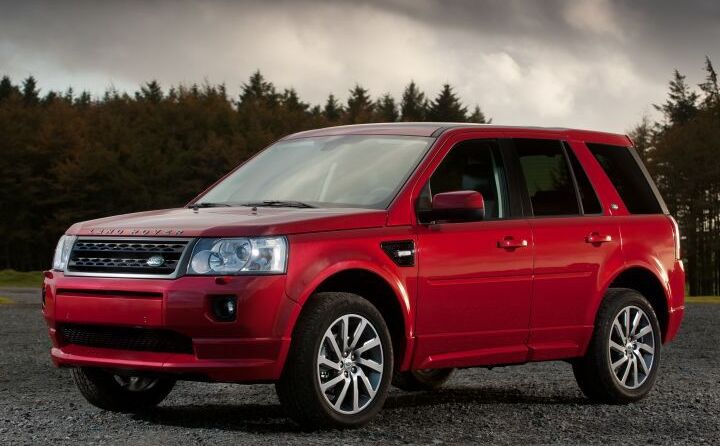
The Land Rover Freelander II (facelift 2010) 2.2 eD4, producing 150 horsepower, represents a key variant within the second generation of the Freelander line. Introduced with the 2010 facelift, this model aimed to broaden the Freelander’s appeal by offering a more economical and accessible entry point into the Land Rover brand. Production of this specific configuration ran from 2010 to 2012, positioned within the broader L359 chassis code series. The eD4 distinguished itself through its front-wheel-drive configuration and a focus on fuel efficiency, targeting buyers who prioritized practicality and lower running costs over outright off-road capability. It served as a counterpoint to the more expensive and capable four-wheel-drive models within the Freelander II range.
Technical Specifications
| Brand | Land Rover |
| Model | Freelander |
| Generation | Freelander II (facelift 2010) |
| Type (Engine) | 2.2 eD4 (150 Hp) |
| Start of production | 2010 |
| End of production | 2012 |
| Powertrain Architecture | Internal Combustion engine |
| Body type | SUV |
| Seats | 5 |
| Doors | 5 |
| Fuel consumption (urban) | 7.1 l/100 km (33.1 US mpg, 39.8 UK mpg, 14.1 km/l) |
| Fuel consumption (extra urban) | 5.4 l/100 km (43.6 US mpg, 52.3 UK mpg, 18.5 km/l) |
| Fuel consumption (combined) | 6 l/100 km (39.2 US mpg, 47.1 UK mpg, 16.7 km/l) |
| CO2 emissions | 158 g/km |
| Fuel Type | Diesel |
| Acceleration 0 – 100 km/h | 11.7 sec |
| Acceleration 0 – 62 mph | 11.7 sec |
| Acceleration 0 – 60 mph | 11.1 sec |
| Maximum speed | 181 km/h (112.47 mph) |
| Emission standard | Euro 5 |
| Weight-to-power ratio | 11.4 kg/Hp, 87.7 Hp/tonne |
| Weight-to-torque ratio | 4.1 kg/Nm, 245.6 Nm/tonne |
| Power | 150 Hp |
| Power per litre | 68.8 Hp/l |
| Torque | 420 Nm (309.78 lb.-ft.) |
| Engine layout | Front, Transverse |
| Engine Model/Code | 224DT |
| Engine displacement | 2179 cm3 (132.97 cu. in.) |
| Number of cylinders | 4 |
| Engine configuration | Inline |
| Cylinder Bore | 85 mm (3.35 in.) |
| Piston Stroke | 96 mm (3.78 in.) |
| Compression ratio | 15.8:1 |
| Number of valves per cylinder | 4 |
| Fuel injection system | Diesel Commonrail |
| Engine aspiration | Turbocharger, Intercooler |
| Engine oil capacity | 5.9 l (6.23 US qt | 5.19 UK qt) |
| Coolant | 8 l (8.45 US qt | 7.04 UK qt) |
| Kerb Weight | 1710 kg (3769.9 lbs.) |
| Fuel tank capacity | 68 l (17.96 US gal | 14.96 UK gal) |
| Length | 4500 mm (177.17 in.) |
| Width including mirrors | 2195 mm (86.42 in.) |
| Height | 1740 mm (68.5 in.) |
| Wheelbase | 2660 mm (104.72 in.) |
| Minimum turning circle | 11.3 m (37.07 ft.) |
| Drivetrain Architecture | Front wheel drive |
| Number of gears | 6 |
| Gearbox type | Manual transmission |
| Front suspension | Independent, type McPherson with coil spring and anti-roll bar |
| Rear suspension | Independent coil spring |
| Front brakes | Ventilated discs |
| Rear brakes | Disc |
| Assisting systems | ABS (Anti-lock braking system) |
| Steering type | Steering rack and pinion |
Powertrain & Engine Architecture
The heart of the Freelander 2.2 eD4 is the 224DT engine, a 2.2-liter four-cylinder diesel. This engine is part of the PSA-Ford DV12TED4 family, a collaboration between Peugeot-Citroën and Ford. It utilizes a common rail direct injection system, delivering fuel at high pressure for optimized combustion. The engine is turbocharged and intercooled, enhancing power output and efficiency. The 150 horsepower version was specifically tuned for economy, with a focus on maximizing torque at lower RPMs. The engine’s valvetrain features four valves per cylinder, contributing to its breathing efficiency. Paired with this engine is a six-speed manual transmission, chosen to balance fuel economy and driver engagement. The front-wheel-drive configuration, unique to the eD4, simplified the drivetrain and reduced weight compared to the all-wheel-drive Freelander models.
Driving Characteristics
The 2.2 eD4, with its 150 hp and 309.78 lb-ft of torque, offered a respectable, if not exhilarating, driving experience. Acceleration from 0-60 mph took around 11.1 seconds, making it competitive with other compact SUVs of the time. The front-wheel-drive setup resulted in a noticeable difference in handling compared to the four-wheel-drive Freelander variants. While offering good grip on paved surfaces, it lacked the off-road prowess of its siblings. The six-speed manual transmission provided precise gear changes, and the engine’s torque delivery made it relatively easy to drive in everyday conditions. Gear ratios were optimized for fuel efficiency, meaning the engine didn’t feel particularly stressed at highway speeds. Compared to the higher-output 190 hp versions, the eD4 felt less responsive, particularly during overtaking maneuvers. However, the trade-off was significantly improved fuel economy.
Equipment & Trim Levels
The Freelander 2.2 eD4 typically came with a reasonable level of standard equipment. This included air conditioning, alloy wheels, a CD player with auxiliary input, and electric windows. Safety features such as ABS, electronic stability control, and multiple airbags were also standard. Interior upholstery was typically cloth, with options for leather upgrades. Dashboard configuration was consistent across the Freelander II range, featuring a user-friendly layout with intuitive controls. Optional extras included a panoramic sunroof, satellite navigation, and upgraded audio systems. The eD4 trim generally sat as the entry-level offering, making it an attractive option for budget-conscious buyers.
Chassis & Braking
The Freelander II utilized a monocoque chassis construction, providing a good balance of strength and weight. The front suspension employed McPherson struts with coil springs and an anti-roll bar, while the rear suspension featured independent coil springs. The eD4 model typically featured ventilated discs on the front wheels and solid discs on the rear. The braking system was adequate for the vehicle’s weight and performance, with ABS providing enhanced stopping power and stability. Stabilizer bar thickness was standard across the Freelander II range, contributing to reduced body roll during cornering.
Market Reception & Comparison
The Freelander 2.2 eD4 was generally well-received by critics as a practical and economical SUV. Its fuel economy of around 39.2 US mpg combined was a significant selling point, particularly in Europe where fuel prices were high. However, some reviewers criticized its lack of all-wheel drive and its relatively modest performance. Compared to the 190 hp versions, the eD4 offered lower running costs but sacrificed some driving excitement. Against competitors like the Nissan Qashqai and Kia Sportage, the Freelander eD4 offered a more premium feel and a more established brand reputation, but often at a higher price point.
Legacy
The 2.2 eD4 powertrain has proven to be relatively reliable, although like any diesel engine, it’s susceptible to issues related to the diesel particulate filter (DPF) if not properly maintained. Regular servicing and the use of high-quality diesel fuel are crucial for long-term reliability. In the used car market, the Freelander 2.2 eD4 represents a relatively affordable entry point into Land Rover ownership. Its fuel efficiency and practicality continue to appeal to buyers seeking a versatile and dependable SUV. While not as sought-after as the four-wheel-drive models, the eD4 remains a viable option for those prioritizing economy and everyday usability.