
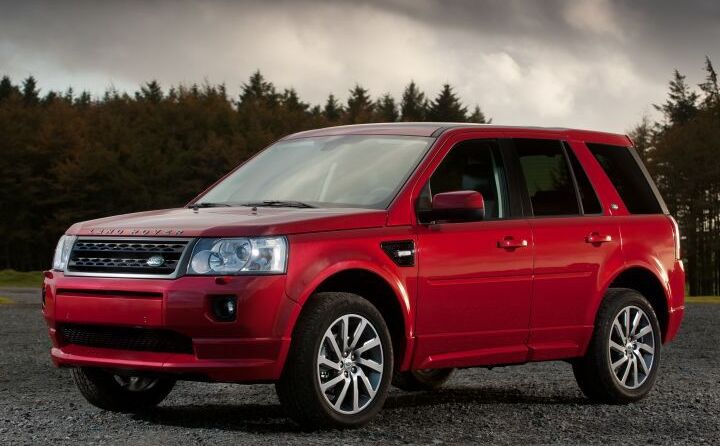
The Land Rover Freelander II, specifically the 2.2 TD4 variant with 150 horsepower and all-wheel drive (AWD), represents a significant evolution in the Freelander lineage. Introduced with the facelift in 2010 and continuing through 2012, this model aimed to balance Land Rover’s off-road capability with improved fuel efficiency and on-road refinement. It occupied a mid-range position within the Freelander II lineup, offering a compelling alternative to the more powerful SD4 diesel and petrol options. This version was primarily marketed in Europe and other international markets, where diesel engines were favored for their economy and torque.
Technical Specifications
| Brand | Land Rover |
| Model | Freelander |
| Generation | Freelander II (facelift 2010) |
| Type (Engine) | 2.2 TD4 (150 Hp) AWD |
| Start of production | 2010 |
| End of production | 2012 |
| Powertrain Architecture | Internal Combustion engine |
| Body type | SUV |
| Seats | 5 |
| Doors | 5 |
| Fuel consumption (urban) | 7.4 l/100 km (31.8 US mpg) |
| Fuel consumption (extra urban) | 5.6 l/100 km (42 US mpg) |
| Fuel consumption (combined) | 6.2 l/100 km (37.9 US mpg) |
| CO2 emissions | 165 g/km |
| Fuel Type | Diesel |
| Acceleration 0 – 100 km/h | 11.7 sec |
| Acceleration 0 – 62 mph | 11.7 sec |
| Acceleration 0 – 60 mph | 11.1 sec |
| Maximum speed | 181 km/h (112.47 mph) |
| Emission standard | Euro 5 |
| Weight-to-power ratio | 11.9 kg/Hp |
| Weight-to-torque ratio | 4.3 kg/Nm |
| Power | 150 Hp |
| Torque | 420 Nm (309.78 lb.-ft.) |
| Engine layout | Front, Transverse |
| Engine Model/Code | 224DT |
| Engine displacement | 2179 cm3 (132.97 cu. in.) |
| Number of cylinders | 4 |
| Engine configuration | Inline |
| Cylinder Bore | 85 mm (3.35 in.) |
| Piston Stroke | 96 mm (3.78 in.) |
| Compression ratio | 15.8:1 |
| Number of valves per cylinder | 4 |
| Fuel injection system | Diesel Commonrail |
| Engine aspiration | Turbocharger, Intercooler |
| Engine oil capacity | 5.9 l (6.23 US qt | 5.19 UK qt) |
| Coolant | 8 l (8.45 US qt | 7.04 UK qt) |
| Kerb Weight | 1785 kg (3935.25 lbs.) |
| Fuel tank capacity | 68 l (17.96 US gal | 14.96 UK gal) |
| Length | 4500 mm (177.17 in.) |
| Width including mirrors | 2195 mm (86.42 in.) |
| Height | 1740 mm (68.5 in.) |
| Wheelbase | 2660 mm (104.72 in.) |
| Minimum turning circle | 11.3 m (37.07 ft.) |
| Drive wheel | All wheel drive (4×4) |
| Number of gears | 6 |
| Gearbox type | Manual transmission |
| Front suspension | Independent, type McPherson with coil spring and anti-roll bar |
| Rear suspension | Independent coil spring |
| Front brakes | Ventilated discs |
| Rear brakes | Disc |
Powertrain & Engine Architecture
The heart of the Freelander II TD4 is the 2.2-liter four-cylinder diesel engine, designated as the 224DT. This engine is part of the PSA-Ford DV6 engine family, a collaboration between Peugeot, Citroën, and Ford. Land Rover utilized this engine extensively, tuning it to meet their specific performance and refinement standards. The 150 horsepower output was achieved through a turbocharger with an intercooler, coupled with a common rail direct injection system. This system allowed for precise fuel delivery, optimizing combustion and reducing emissions. The engine features a cast iron block and aluminum cylinder head, contributing to its durability. The six-speed manual transmission was the standard offering for this variant, providing a balance between fuel economy and driver control. The transmission’s gear ratios were tuned to maximize the engine’s torque output, particularly at lower speeds, which was beneficial for both on-road driving and off-road crawling.
Driving Characteristics
The 150 hp TD4 Freelander II offered a comfortable and capable driving experience, though it wasn’t designed for outright speed. Acceleration from 0-60 mph took around 11.1 seconds, making it competitive with other similarly sized SUVs of the time. The engine delivered a respectable amount of torque – 309.78 lb.-ft. – which was readily available from low engine speeds. This made it easy to navigate city streets and handle moderate inclines. Compared to the higher-output SD4 diesel, the TD4 felt less urgent in its acceleration, but it offered a more relaxed and fuel-efficient driving experience. The manual transmission provided a more engaging driving experience than the optional automatic, allowing drivers to better control the engine’s power band. The all-wheel-drive system provided excellent traction in various conditions, making it a capable vehicle for light off-roading.
Equipment & Trim Levels
The 2.2 TD4 typically came with a reasonable level of standard equipment. This included air conditioning, alloy wheels, a CD player with auxiliary input, and electric windows. Higher trim levels, such as the XS and HSE, added features like leather upholstery, heated seats, a sunroof, and a more advanced audio system. Optional extras included satellite navigation, parking sensors, and upgraded interior trim materials. The interior design was generally functional and well-built, reflecting Land Rover’s focus on practicality and durability. The dashboard layout was straightforward, with easy-to-use controls.
Chassis & Braking
The Freelander II utilized a robust chassis construction, featuring a monocoque body with integrated subframes. The suspension system consisted of independent McPherson struts at the front and independent coil springs at the rear. This setup provided a comfortable ride quality, while also offering good handling characteristics. The braking system featured ventilated discs at the front and solid discs at the rear, providing adequate stopping power for the vehicle’s weight. Anti-lock braking system (ABS) was standard, enhancing safety and control during emergency braking situations.
Market Reception & Comparison
The Freelander II 2.2 TD4 was generally well-received by automotive critics. It was praised for its fuel efficiency, comfortable ride, and off-road capability. However, some critics noted that the engine could feel underpowered when fully loaded or when tackling steep hills. Compared to the more powerful SD4 diesel, the TD4 offered a more affordable entry point into the Freelander II range. It also provided better fuel economy than the petrol variants. In terms of reliability, the 224DT engine proved to be generally dependable, although some owners reported issues with the diesel particulate filter (DPF) and the turbocharger.
Legacy
The Land Rover Freelander II 2.2 TD4 remains a popular choice in the used car market. Its combination of practicality, capability, and fuel efficiency makes it an attractive option for buyers seeking a versatile SUV. The 224DT engine, while not without its potential issues, is generally considered to be a robust and reliable unit. Regular maintenance, including timely DPF regeneration and oil changes, is crucial for ensuring its longevity. The Freelander II, in general, helped solidify Land Rover’s position as a leading manufacturer of premium SUVs, bridging the gap between the more luxurious Range Rover models and the more utilitarian Defender.


