
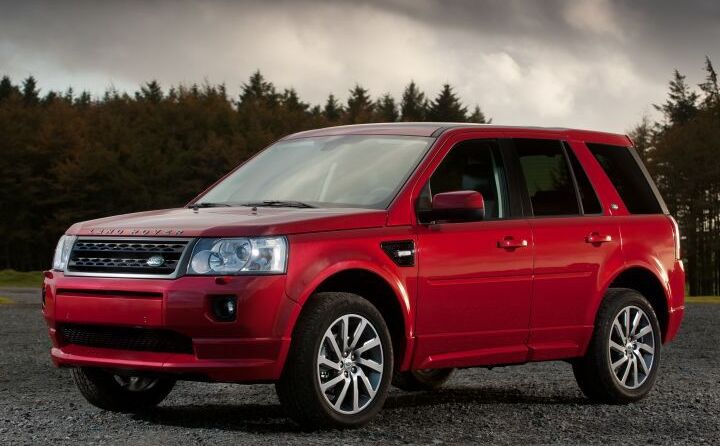
The Land Rover Freelander II (facelift 2010) 2.2 TD4, producing 150 horsepower and equipped with an automatic transmission and all-wheel drive (AWD), represents a significant iteration within the second-generation Freelander lineup (designated L359). Introduced in 2010 as part of a mid-cycle refresh, this variant aimed to balance fuel efficiency, practicality, and Land Rover’s renowned off-road capability. It occupied a mid-range position in the Freelander II portfolio, slotting between the entry-level manual transmission models and the more powerful SD4 diesel variants. Production of this specific configuration continued through 2012, making it a relatively common sight in the used car market.
Technical Specifications
| Brand | Land Rover |
| Model | Freelander |
| Generation | Freelander II (facelift 2010) |
| Type (Engine) | 2.2 TD4 (150 Hp) AWD Automatic |
| Start of production | 2010 |
| End of production | 2012 |
| Powertrain Architecture | Internal Combustion engine |
| Body type | SUV |
| Seats | 5 |
| Doors | 5 |
| Fuel consumption (urban) | 8.7 l/100 km (27 US mpg, 32.5 UK mpg, 11.5 km/l) |
| Fuel consumption (extra urban) | 5.7 l/100 km (41.3 US mpg, 49.6 UK mpg, 17.5 km/l) |
| Fuel consumption (combined) | 7 l/100 km (33.6 US mpg, 40.4 UK mpg, 14.3 km/l) |
| CO2 emissions | 185 g/km |
| Fuel Type | Diesel |
| Acceleration 0 – 100 km/h | 11.2 sec |
| Acceleration 0 – 62 mph | 11.2 sec |
| Acceleration 0 – 60 mph | 10.6 sec |
| Maximum speed | 181 km/h (112.47 mph) |
| Emission standard | Euro 5 |
| Weight-to-power ratio | 12 kg/Hp, 83.1 Hp/tonne |
| Weight-to-torque ratio | 4.3 kg/Nm, 232.7 Nm/tonne |
| Power | 150 Hp |
| Power per litre | 68.8 Hp/l |
| Torque | 420 Nm (309.78 lb.-ft.) |
| Engine layout | Front, Transverse |
| Engine Model/Code | 224DT |
| Engine displacement | 2179 cm3 (132.97 cu. in.) |
| Number of cylinders | 4 |
| Engine configuration | Inline |
| Cylinder Bore | 85 mm (3.35 in.) |
| Piston Stroke | 96 mm (3.78 in.) |
| Compression ratio | 15.8:1 |
| Number of valves per cylinder | 4 |
| Fuel injection system | Diesel Commonrail |
| Engine aspiration | Turbocharger, Intercooler |
| Engine oil capacity | 5.9 l (6.23 US qt | 5.19 UK qt) |
| Coolant | 8.2 l (8.66 US qt | 7.21 UK qt) |
| Kerb Weight | 1805 kg (3979.34 lbs.) |
| Fuel tank capacity | 68 l (17.96 US gal | 14.96 UK gal) |
| Length | 4500 mm (177.17 in.) |
| Width including mirrors | 2195 mm (86.42 in.) |
| Height | 1740 mm (68.5 in.) |
| Wheelbase | 2660 mm (104.72 in.) |
| Minimum turning circle | 11.3 m (37.07 ft.) |
| Drive wheel | All wheel drive (4×4) |
| Number of gears | 6 |
| Gearbox type | automatic transmission |
| Front suspension | Independent, type McPherson with coil spring and anti-roll bar |
| Rear suspension | Independent coil spring |
| Front brakes | Ventilated discs |
| Rear brakes | Disc |
Powertrain & Engine Architecture
The heart of the Freelander II 2.2 TD4 is the 224DT engine, a four-cylinder diesel powerplant. This engine is part of the PSA-Ford DV6 engine family, a collaboration between Peugeot-Citroën and Ford. The 2.2-liter displacement is achieved with a bore of 85mm and a stroke of 96mm, operating with a relatively high compression ratio of 15.8:1. The engine utilizes a common rail direct injection system, delivering fuel at extremely high pressures for optimized combustion. A turbocharger with an intercooler is employed to boost power output and improve efficiency. The 150 horsepower variant differs from the 190 horsepower SD4 primarily through different engine mapping and turbocharger specifications. The six-speed automatic transmission, sourced from Aisin, was a key component of this package. It’s known for its relatively smooth shifts, although it isn’t as sporty or responsive as some dual-clutch transmissions found in competitors.
Driving Characteristics
The 150 hp TD4 automatic offers a comfortable and capable driving experience, prioritizing usability over outright performance. Acceleration from 0-60 mph takes around 10.6 seconds, which is adequate for everyday driving but noticeably slower than the SD4 models. The automatic transmission provides smooth gear changes, but can sometimes feel hesitant during quick overtaking maneuvers. The AWD system provides excellent traction in various conditions, making it a competent off-roader, albeit not as extreme as some dedicated off-road vehicles. The gear ratios are tuned for fuel efficiency and relaxed cruising, rather than aggressive acceleration. The torque output of 420 Nm (309.78 lb-ft) is available from relatively low engine speeds, providing sufficient pulling power for towing and navigating challenging terrain.
Equipment & Trim Levels
The 2.2 TD4 Automatic typically came equipped with a reasonable level of standard features. These included climate control, alloy wheels, a CD/radio system with auxiliary input, and electric windows. Higher trim levels, such as the HSE, added features like leather upholstery, heated seats, a sunroof, and upgraded audio systems. Optional extras included satellite navigation, parking sensors, and a tow pack. Interior upholstery was generally cloth on the base models, with leather available as an upgrade. The dashboard layout was functional and relatively straightforward, typical of Land Rover’s design philosophy at the time.
Chassis & Braking
The Freelander II utilizes a monocoque chassis construction, providing a good balance of strength and weight. The front suspension employs McPherson struts with coil springs and an anti-roll bar, while the rear suspension features independent coil springs. This setup delivers a comfortable ride quality, both on and off-road. Braking duties are handled by ventilated discs at the front and solid discs at the rear. Anti-lock Braking System (ABS) is standard, providing enhanced stopping power and stability. The steering is rack and pinion, offering precise control and a reasonable turning circle.
Market Reception & Comparison
The Freelander II 2.2 TD4 Automatic was generally well-received by automotive critics. It was praised for its comfortable ride, capable AWD system, and relatively fuel-efficient engine. However, some reviewers noted the lack of outright performance compared to the SD4 models and the occasionally sluggish response of the automatic transmission. Compared to rivals like the BMW X3 and Audi Q5, the Freelander II offered a more affordable price point and a greater emphasis on off-road capability. Fuel economy figures of around 33.6 US mpg combined were competitive for its class. Reliability was generally good, although some owners reported issues with the electronic parking brake and the diesel particulate filter (DPF).
Legacy
The Land Rover Freelander II 2.2 TD4 Automatic has proven to be a relatively reliable and durable vehicle in the used car market. The 224DT engine, while not without its quirks, is generally considered robust when properly maintained. Regular servicing, including oil changes and DPF regeneration, is crucial for long-term reliability. Today, these Freelanders represent a good value proposition for buyers seeking a capable and comfortable SUV with genuine off-road credentials. The combination of all-wheel drive, a reasonably efficient diesel engine, and a comfortable interior makes it a practical choice for a variety of driving needs. However, potential buyers should be aware of the potential for DPF issues and the importance of a thorough pre-purchase inspection.


