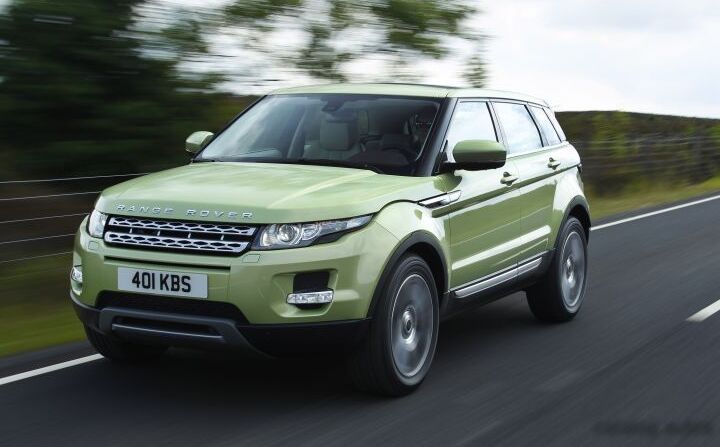
The Land Rover Range Rover Evoque I 2.2 eD4, produced from 2012 to 2015, represented an entry point into the desirable Range Rover brand. Positioned as a more accessible option within the first generation Evoque (L538) lineup, which utilized the Land Rover-Ford developed 24HX platform, the eD4 offered a blend of style, capability, and relatively improved fuel economy compared to its more powerful siblings. This variant was primarily aimed at buyers seeking the Evoque’s distinctive design and elevated driving position without the higher price tag and running costs associated with the larger engines. It was a key model in establishing the Evoque as a successful and popular compact luxury SUV, particularly in European and Asian markets, though it did see sales in the United States.
Technical Specifications
| Brand | Land Rover |
| Model | Range Rover Evoque |
| Generation | Range Rover Evoque I |
| Type (Engine) | 2.2 eD4 (150 Hp) |
| Start of production | 2012 |
| End of production | 2015 |
| Powertrain Architecture | Internal Combustion engine |
| Body type | SUV |
| Seats | 5 |
| Doors | 5 |
| Fuel consumption (urban) | 6 l/100 km (39.2 US mpg, 47.1 UK mpg, 16.7 km/l) |
| Fuel consumption (extra urban) | 4.5 l/100 km (52.3 US mpg, 62.8 UK mpg, 22.2 km/l) |
| Fuel consumption (combined) | 5 l/100 km (47 US mpg, 56.5 UK mpg, 20 km/l) |
| CO2 emissions | 133 g/km |
| Fuel Type | Diesel |
| Acceleration 0 – 100 km/h | 11.2 sec |
| Acceleration 0 – 62 mph | 11.2 sec |
| Acceleration 0 – 60 mph | 10.6 sec |
| Maximum speed | 180 km/h (111.85 mph) |
| Emission standard | Euro 5 |
| Weight-to-power ratio | 10.8 kg/Hp, 92.3 Hp/tonne |
| Weight-to-torque ratio | 4.3 kg/Nm, 233.8 Nm/tonne |
| Power | 150 Hp |
| Power per litre | 68.8 Hp/l |
| Torque | 380 Nm (280.27 lb.-ft.) |
| Engine layout | Front, Transverse |
| Engine Model/Code | 224DT |
| Engine displacement | 2179 cm3 (132.97 cu. in.) |
| Number of cylinders | 4 |
| Engine configuration | Inline |
| Cylinder Bore | 85 mm (3.35 in.) |
| Piston Stroke | 96 mm (3.78 in.) |
| Compression ratio | 15.8:1 |
| Number of valves per cylinder | 4 |
| Fuel injection system | Diesel Commonrail |
| Engine aspiration | Turbocharger, Intercooler |
| Engine oil capacity | 5.9 l (6.23 US qt | 5.19 UK qt) |
| Coolant | 8 l (8.45 US qt | 7.04 UK qt) |
| Kerb Weight | 1625 kg (3582.51 lbs.) |
| Fuel tank capacity | 60 l (15.85 US gal | 13.2 UK gal) |
| Length | 4355 mm (171.46 in.) |
| Width | 1965 mm (77.36 in.) |
| Height | 1635 mm (64.37 in.) |
| Wheelbase | 2660 mm (104.72 in.) |
| Drag coefficient (Cd) | 0.35 |
| Minimum turning circle | 11.3 m (37.07 ft.) |
| Drivetrain Architecture | Front wheel drive |
| Number of gears | 6 |
| Gearbox type | Manual transmission |
| Front suspension | Independent, type McPherson with coil spring and anti-roll bar |
| Rear suspension | Independent multi-link suspension |
| Front brakes | Ventilated discs |
| Rear brakes | Disc |
| Assisting systems | ABS (Anti-lock braking system) |
| Steering type | Steering rack and pinion |
| Power steering | Electric Steering |
Powertrain & Engine Architecture
The heart of the Evoque eD4 is the 2.2-liter four-cylinder diesel engine, designated as the 224DT. This engine, a product of the joint development between Ford and PSA Peugeot Citroën (later acquired by Jaguar Land Rover), was a common sight in various European vehicles of the era. The eD4 variant produced 150 horsepower and 380 Nm (280 lb-ft) of torque. It featured a common-rail direct injection system, delivering fuel at extremely high pressures for optimized combustion. A turbocharger with an intercooler further enhanced performance, providing increased air intake to the engine. The engine’s architecture included four valves per cylinder and a compression ratio of 15.8:1. The engine was transversely mounted in the front of the vehicle. The six-speed manual transmission was the standard offering for this trim, providing a balance between fuel efficiency and driver engagement.
Driving Characteristics
The 150 hp eD4, paired with the manual transmission, offered a respectable, though not exhilarating, driving experience. Acceleration from 0 to 60 mph took around 10.6 seconds, making it adequate for everyday driving but noticeably slower than the higher-powered Evoque variants like the Si4 petrol models. The torque delivery was relatively linear, providing sufficient pulling power for overtaking maneuvers, but it lacked the punch of the more powerful engines. The manual gearbox was well-matched to the engine’s characteristics, offering precise shifts and allowing drivers to maintain control over the power delivery. Fuel economy was a key strength, with combined figures around 47 US mpg, making it an attractive option for those prioritizing efficiency. The front-wheel-drive configuration contributed to slightly reduced traction compared to the all-wheel-drive models, particularly in adverse weather conditions.
Equipment & Trim Levels
The eD4 trim typically served as the entry-level Evoque, offering a solid base level of equipment. Standard features generally included air conditioning, a basic audio system with USB connectivity, alloy wheels, and electrically adjustable door mirrors. Interior upholstery was typically cloth, though leather options were available as upgrades. Higher trim levels, such as the Prestige, added features like leather seats, a more advanced infotainment system with navigation, parking sensors, and climate control. Optional extras included a panoramic sunroof, premium audio systems, and various styling enhancements.
Chassis & Braking
The Evoque I utilized a McPherson strut front suspension and a multi-link rear suspension, providing a comfortable ride quality and decent handling characteristics. The eD4 variant, being lighter than its all-wheel-drive counterparts, benefited from slightly improved agility. Front brakes were ventilated discs, providing ample stopping power, while rear brakes were solid discs. Anti-lock Braking System (ABS) was standard. Stabilizer bars were fitted to both the front and rear axles to reduce body roll during cornering. The suspension tuning was geared towards comfort rather than outright sportiness, prioritizing a smooth ride over sharp handling.
Market Reception & Comparison
The Range Rover Evoque I 2.2 eD4 was generally well-received by automotive critics. It was praised for its stylish design, comfortable interior, and relatively good fuel economy. However, some reviewers noted that the 150 hp engine felt underpowered, particularly when fully loaded or tackling steep inclines. Compared to the higher-output petrol and diesel variants, the eD4 offered a more affordable entry point into the Range Rover brand, but at the expense of performance. The manual transmission was appreciated by driving enthusiasts, but some buyers preferred the convenience of an automatic gearbox. In terms of reliability, the 224DT engine proved to be generally robust, though regular maintenance was crucial to prevent issues with the diesel particulate filter (DPF).
Legacy
The Range Rover Evoque I 2.2 eD4 played a significant role in establishing the Evoque as a successful model for Land Rover. Its combination of style, practicality, and affordability appealed to a wide range of buyers. On the used car market today, these models represent a relatively affordable way to experience Range Rover ownership. While the 224DT engine is generally reliable, potential buyers should be aware of the potential for DPF issues and ensure that the vehicle has been properly maintained. The eD4’s enduring appeal lies in its distinctive design and the prestige associated with the Range Rover brand, making it a popular choice for those seeking a stylish and capable compact SUV.