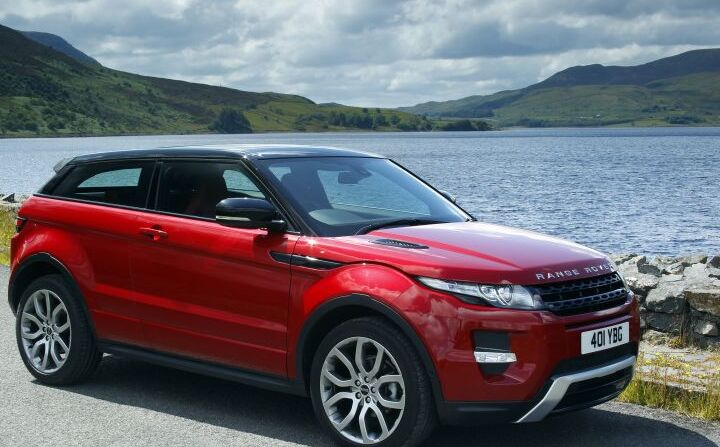
The Land Rover Range Rover Evoque I coupe 2.2 eD4 (150 hp) was a front-wheel-drive variant of the first-generation Evoque, produced between 2012 and 2015. Positioned as an entry-level option within the Evoque lineup, it aimed to offer a more fuel-efficient and accessible pathway into the Range Rover brand. This model was primarily sold in European and Asian markets, where demand for smaller, more economical luxury SUVs was strong. It represented Land Rover’s attempt to broaden the Evoque’s appeal beyond the higher-trim, all-wheel-drive models.
Technical Specifications
| Brand | Land Rover |
| Model | Range Rover Evoque |
| Generation | Range Rover Evoque I coupe |
| Type (Engine) | 2.2 eD4 (150 Hp) |
| Start of production | 2012 |
| End of production | 2015 |
| Powertrain Architecture | Internal Combustion engine |
| Body type | Coupe, SUV |
| Seats | 5 |
| Doors | 3 |
| Fuel consumption (urban) | 5.9 l/100 km (39.9 US mpg, 47.9 UK mpg, 16.9 km/l) |
| Fuel consumption (extra urban) | 4.5 l/100 km (52.3 US mpg, 62.8 UK mpg, 22.2 km/l) |
| Fuel consumption (combined) | 4.9 l/100 km (48 US mpg, 57.6 UK mpg, 20.4 km/l) |
| CO2 emissions | 129 g/km |
| Fuel Type | Diesel |
| Acceleration 0 – 100 km/h | 10.8 sec |
| Acceleration 0 – 62 mph | 10.8 sec |
| Acceleration 0 – 60 mph | 10.3 sec |
| Maximum speed | 180 km/h (111.85 mph) |
| Emission standard | Euro 5 |
| Weight-to-power ratio | 10.6 kg/Hp, 94 Hp/tonne |
| Weight-to-torque ratio | 4.2 kg/Nm, 238.2 Nm/tonne |
| Power | 150 Hp |
| Power per litre | 68.8 Hp/l |
| Torque | 380 Nm (280.27 lb.-ft.) |
| Engine layout | Front, Transverse |
| Engine Model/Code | 224DT |
| Engine displacement | 2179 cm3 (132.97 cu. in.) |
| Number of cylinders | 4 |
| Engine configuration | Inline |
| Cylinder Bore | 85 mm (3.35 in.) |
| Piston Stroke | 96 mm (3.78 in.) |
| Compression ratio | 15.8:1 |
| Number of valves per cylinder | 4 |
| Fuel injection system | Diesel Commonrail |
| Engine aspiration | Turbocharger, Intercooler |
| Engine oil capacity | 5.9 l (6.23 US qt | 5.19 UK qt) |
| Coolant | 8 l (8.45 US qt | 7.04 UK qt) |
| Kerb Weight | 1595 kg (3516.37 lbs.) |
| Fuel tank capacity | 60 l (15.85 US gal | 13.2 UK gal) |
| Length | 4355 mm (171.46 in.) |
| Width | 1965 mm (77.36 in.) |
| Height | 1605 mm (63.19 in.) |
| Wheelbase | 2660 mm (104.72 in.) |
| Drag coefficient (Cd) | 0.36 |
| Minimum turning circle | 11.3 m (37.07 ft.) |
| Drivetrain Architecture | The Internal combustion engine (ICE) drives the front wheels of the vehicle. |
| Drive wheel | Front wheel drive |
| Number of gears | 6 |
| Type of gearbox | Manual transmission |
| Front suspension | Independent, type McPherson with coil spring and anti-roll bar |
| Rear suspension | Independent multi-link suspension |
| Front brakes | Ventilated discs |
| Rear brakes | Disc |
| Assisting systems | ABS (Anti-lock braking system) |
| Steering type | Steering rack and pinion |
| Power steering | Electric Steering |
INTRODUCTION
The Range Rover Evoque I coupe 2.2 eD4 (150 hp) debuted in 2012 as part of the Evoque’s initial launch. Built on the Land Rover LX platform (shared with the Freelander 2), the Evoque aimed to bring a more compact and stylish offering to the Range Rover family. The “eD4” designation signified a fuel-efficient diesel engine with front-wheel drive. This configuration was specifically tailored for markets prioritizing lower running costs and emissions, offering a more accessible price point compared to the all-wheel-drive variants. The coupe body style, with its sloping roofline, further emphasized the Evoque’s design-focused approach.
Powertrain & Engine Architecture
At the heart of the Evoque eD4 was the 2.2-liter four-cylinder diesel engine, Land Rover’s 224DT engine code. This engine utilized a common-rail direct injection system, delivering fuel at high pressure for improved combustion efficiency. A turbocharger with an intercooler boosted power output to 150 horsepower and 380 Nm (280 lb-ft) of torque. The engine featured four valves per cylinder and a compression ratio of 15.8:1. The eD4 was exclusively paired with a six-speed manual transmission, optimized for fuel economy rather than outright performance. This transmission featured relatively long gear ratios, prioritizing efficiency over rapid acceleration. The engine also incorporated a diesel particulate filter (DPF) to meet stringent Euro 5 emission standards.
Driving Characteristics
The 150 hp eD4 offered a comfortable, if not particularly exhilarating, driving experience. Acceleration from 0 to 60 mph took around 10.3 seconds, and top speed was limited to 111.85 mph. The front-wheel-drive configuration meant that traction was less assured than in the all-wheel-drive models, particularly on slippery surfaces. The long gear ratios of the manual transmission required frequent shifting to maintain momentum, especially when overtaking. However, this also contributed to the car’s impressive fuel economy, with combined figures reaching around 48 US mpg. Compared to the higher-output 190 hp versions, the eD4 felt noticeably slower, but it provided a more relaxed and economical driving experience.
Equipment & Trim Levels
The eD4 trim level typically included standard features such as air conditioning, alloy wheels, a leather-wrapped steering wheel, and a basic audio system. Higher trim levels added features like leather upholstery, heated seats, a touchscreen infotainment system, and parking sensors. Optional extras included a panoramic sunroof, upgraded audio systems, and various styling enhancements. The interior design was generally modern and well-appointed, reflecting the Evoque’s premium positioning. The coupe body style, however, resulted in slightly less rear passenger headroom compared to the five-door version.
Chassis & Braking
The Evoque eD4 utilized an independent suspension system all around, with McPherson struts at the front and a multi-link setup at the rear. This provided a comfortable ride quality, although the suspension was tuned more for on-road comfort than off-road capability. The front brakes were ventilated discs, while the rear brakes were solid discs. Anti-lock braking system (ABS) was standard. Due to the lower weight over the front axle compared to the all-wheel-drive models, the eD4’s steering felt slightly lighter and more responsive. However, the absence of all-wheel drive limited its off-road potential.
Market Reception & Comparison
The Range Rover Evoque eD4 was generally well-received by critics, who praised its stylish design, comfortable ride, and impressive fuel economy. However, some reviewers noted the lack of all-wheel drive and the relatively modest performance. Compared to the 190 hp Evoque models, the eD4 offered a lower price point and better fuel economy, but at the expense of performance. It also competed with other compact luxury SUVs, such as the BMW X1 and Audi Q3, which offered similar levels of refinement and efficiency. The eD4 appealed to buyers who prioritized style and fuel economy over outright performance and off-road capability.
Legacy
The Range Rover Evoque I coupe 2.2 eD4 remains a relatively common sight on the used car market. The 224DT engine is generally considered reliable, although regular maintenance is essential, particularly regarding the diesel particulate filter. Common issues include DPF blockages and injector problems. The six-speed manual transmission is also known to be durable. Overall, the eD4 represents a good value proposition for buyers seeking a stylish and economical luxury SUV. Its fuel efficiency and relatively low running costs continue to make it an attractive option in the used car market, though potential buyers should be aware of the maintenance requirements associated with diesel engines.