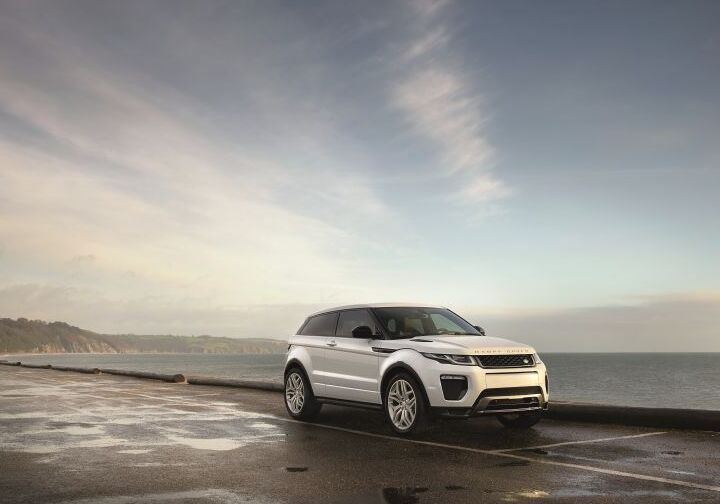
The Land Rover Range Rover Evoque I coupe (facelift 2015) 2.0 Si4, producing 290 horsepower, represents a significant iteration within the first generation Evoque lineup, manufactured from 2017 to 2018. Positioned as a premium offering, this variant combined the Evoque’s distinctive coupe styling with a potent, yet relatively efficient, four-cylinder engine and a sophisticated all-wheel-drive system. It sat towards the top end of the Evoque range, offering a balance of performance, luxury, and practicality within the compact SUV segment. The facelift brought styling updates and technological enhancements to the original Evoque design, solidifying its appeal in the luxury crossover market.
Technical Specifications
| Brand | Land Rover |
| Model | Range Rover Evoque |
| Generation | Range Rover Evoque I coupe (facelift 2015) |
| Type (Engine) | 2.0 Si4 (290 Hp) AWD Automatic |
| Start of production | 2017 |
| End of production | 2018 |
| Powertrain Architecture | Internal Combustion engine |
| Body type | Coupe, SUV |
| Seats | 5 |
| Doors | 3 |
| Fuel consumption (combined) | 7.6 l/100 km (30.9 US mpg, 37.2 UK mpg, 13.2 km/l) |
| CO2 emissions | 173 g/km |
| Fuel Type | Petrol (Gasoline) |
| Acceleration 0 – 100 km/h | 7.1 sec |
| Acceleration 0 – 62 mph | 7.1 sec |
| Acceleration 0 – 60 mph | 6.7 sec |
| Maximum speed | 225 km/h (139.81 mph) |
| Emission standard | Euro 5 |
| Weight-to-power ratio | 5.7 kg/Hp, 176.3 Hp/tonne |
| Weight-to-torque ratio | 4.1 kg/Nm, 243.2 Nm/tonne |
| Power | 290 Hp @ 5500 rpm |
| Power per litre | 145.2 Hp/l |
| Torque | 400 Nm @ 1500 rpm (295.02 lb.-ft. @ 1500 rpm) |
| Engine layout | Front, Transverse |
| Engine Model/Code | Ingenium / PT204 |
| Engine displacement | 1997 cm3 (121.86 cu. in.) |
| Number of cylinders | 4 |
| Engine configuration | Inline |
| Cylinder Bore | 83 mm (3.27 in.) |
| Piston Stroke | 92.29 mm (3.63 in.) |
| Compression ratio | 10.5:1 |
| Number of valves per cylinder | 4 |
| Fuel injection system | Direct injection |
| Engine aspiration | Twin-scroll turbo, Intercooler |
| Valvetrain | DOHC |
| Engine oil capacity | 7 l (7.4 US qt | 6.16 UK qt) |
| Coolant | 11.2 l (11.83 US qt | 9.85 UK qt) |
| Kerb Weight | 1645 kg (3626.6 lbs.) |
| Fuel tank capacity | 70 l (18.49 US gal | 15.4 UK gal) |
| Max. roof load | 75 kg (165.35 lbs.) |
| Permitted trailer load with brakes (12%) | 1800 kg (3968.32 lbs.) |
| Permitted trailer load without brakes | 750 kg (1653.47 lbs.) |
| Permitted towbar download | 150 kg (330.69 lbs.) |
| Length | 4370 mm (172.05 in.) |
| Width | 1900 mm (74.8 in.) |
| Width with mirrors folded | 1980 mm (77.95 in.) |
| Width including mirrors | 2085 mm (82.09 in.) |
| Height | 1605 mm (63.19 in.) |
| Wheelbase | 2660 mm (104.72 in.) |
| Front track | 1621 mm (63.82 in.) |
| Rear track | 1629 mm (64.13 in.) |
| Ride height (ground clearance) | 211 mm (8.31 in.) |
| Drag coefficient (Cd) | 0.38 |
| Minimum turning circle | 11.38 m (37.34 ft.) |
| Approach angle | 17.8° |
| Departure angle | 30° |
| Ramp-over angle | 22° |
| Wading depth | 500 mm (19.69 in.) |
| Drivetrain Architecture | All wheel drive (4×4) |
| Number of gears | 9 |
| Type of gearbox | automatic transmission |
| Front suspension | Independent, type McPherson with coil spring and anti-roll bar |
| Rear suspension | Independent multi-link spring suspension with stabilizer |
| Front brakes | Ventilated discs, 349 mm |
| Rear brakes | Disc, 317 mm |
| Steering type | Steering rack and pinion |
| Power steering | Electric Steering |
| Tires size | 235/55 R19; 245/45 R20 |
| Wheel rims size | 19; 20 |
Powertrain & Engine Architecture
The heart of the 2.0 Si4 Evoque is Land Rover’s Ingenium engine family, specifically the PT204 code. This 2.0-liter inline-four cylinder engine utilizes direct injection and a twin-scroll turbocharger with an intercooler to deliver 290 horsepower at 5500 rpm and 400 Nm (295 lb-ft) of torque from a low 1500 rpm. The Ingenium engines were designed for modularity and efficiency, featuring lightweight construction and advanced combustion strategies. The engine’s aluminum block and head contribute to weight reduction. The nine-speed automatic transmission, sourced from ZF, is a key component of this powertrain. Its wide gear ratio spread allows for both strong acceleration and improved fuel economy. The transmission features sophisticated shift logic and adaptive learning to optimize performance based on driving conditions.
Driving Characteristics
The 290 hp output and the nine-speed automatic transmission provide a responsive and refined driving experience. Acceleration from 0-60 mph takes approximately 6.7 seconds, making it one of the quicker variants in the Evoque range. The automatic transmission offers smooth shifts, and the torque converter provides a seamless launch. While not as engaging as the manual transmission options, the automatic is well-suited for everyday driving and long journeys. The all-wheel-drive system provides excellent traction in various conditions, enhancing stability and confidence. The Evoque’s relatively compact size and well-tuned suspension contribute to agile handling, although the higher ride height and weight are noticeable in spirited cornering.
Equipment & Trim Levels
The 2.0 Si4 typically came equipped with a high level of standard features, reflecting its position as a premium trim. These included leather upholstery, heated front seats, a touchscreen infotainment system with navigation, automatic climate control, and a suite of driver-assistance technologies such as parking sensors and a rearview camera. Optional extras included a panoramic sunroof, upgraded audio systems, adaptive cruise control, and blind-spot monitoring. Interior trim options varied, with choices in wood veneer, aluminum accents, and contrasting stitching. The coupe body style offered a more sporty and exclusive aesthetic compared to the five-door version.
Chassis & Braking
The Evoque’s chassis features independent suspension all around, with McPherson struts at the front and a multi-link setup at the rear. Stabilizer bars are fitted to both axles to reduce body roll. The braking system consists of ventilated discs at the front (349mm) and solid discs at the rear (317mm). Anti-lock braking system (ABS) is standard, along with electronic brake-force distribution and emergency brake assist. The suspension tuning is geared towards providing a comfortable ride while maintaining reasonable handling capabilities. The all-wheel-drive system utilizes a multi-plate clutch to distribute torque between the front and rear axles as needed.
Market Reception & Comparison
The Range Rover Evoque, in general, was well-received by critics and consumers alike, praised for its stylish design, luxurious interior, and capable performance. The 2.0 Si4 variant offered a compelling combination of power and efficiency, appealing to buyers who wanted a sporty driving experience without sacrificing fuel economy. Compared to the lower-powered 2.0-liter models, the 290 hp version provided a noticeable performance boost. Against competitors like the BMW X3 and Audi Q5, the Evoque distinguished itself with its unique styling and brand cachet. Fuel economy was respectable for its class, averaging around 30.9 US mpg in combined driving.
Legacy
The Land Rover Range Rover Evoque I, particularly the 2.0 Si4 variant, has proven to be a relatively reliable vehicle, although like all Land Rovers, it requires diligent maintenance. The Ingenium engine has generally been well-regarded for its durability, but regular oil changes and adherence to the manufacturer’s service schedule are crucial. On the used car market, these Evoques hold their value reasonably well, thanks to the brand’s reputation and the vehicle’s enduring appeal. Common issues reported by owners include occasional electrical glitches and wear-and-tear on suspension components. Overall, the 2.0 Si4 Evoque remains a desirable and capable luxury crossover, offering a blend of style, performance, and practicality.