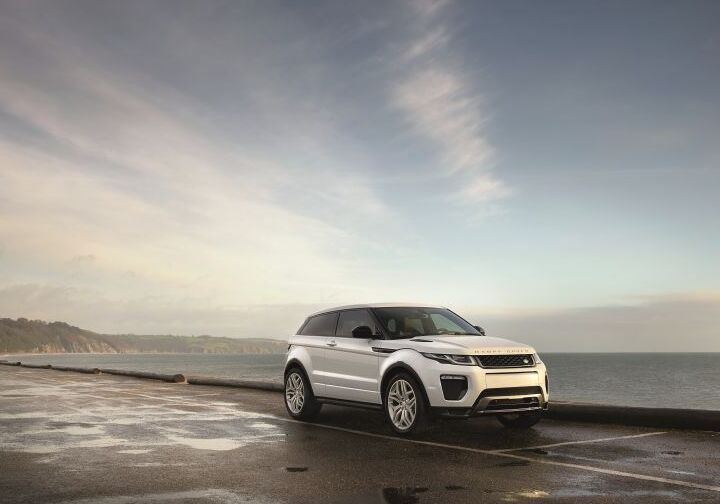
The Land Rover Range Rover Evoque I coupe (facelift 2015) 2.0 TD4, producing 150 horsepower, represents a key variant within the first generation of the Evoque line. Introduced as part of the mid-cycle refresh in 2015 and continuing through 2018, this model aimed to balance fuel efficiency with the premium aesthetic and capability expected of the Range Rover brand. Positioned as an entry-level option within the coupe body style, it offered a more accessible price point compared to higher-powered engine choices while still delivering a distinctive Range Rover experience. This variant primarily served the European market, where demand for diesel-powered, fuel-efficient luxury SUVs was particularly strong.
Technical Specifications
| Brand | Land Rover |
| Model | Range Rover Evoque |
| Generation | Range Rover Evoque I coupe (facelift 2015) |
| Type (Engine) | 2.0 TD4 (150 Hp) |
| Start of production | 2015 |
| End of production | 2018 |
| Powertrain Architecture | Internal Combustion engine |
| Body type | Coupe, SUV |
| Seats | 5 |
| Doors | 3 |
| Fuel consumption (combined) | 4.2 l/100 km (56 US mpg, 67.3 UK mpg, 23.8 km/l) |
| CO2 emissions | 109 g/km |
| Fuel Type | Diesel |
| Acceleration 0 – 100 km/h | 11.2 sec |
| Acceleration 0 – 62 mph | 11.2 sec |
| Acceleration 0 – 60 mph | 10.6 sec |
| Maximum speed | 182 km/h (113.09 mph) |
| Emission standard | Euro 6 |
| Weight-to-power ratio | 10.3 kg/Hp, 96.7 Hp/tonne |
| Weight-to-torque ratio | 4.1 kg/Nm, 245 Nm/tonne |
| Power | 150 Hp @ 4000 rpm |
| Power per litre | 75 Hp/l |
| Torque | 380 Nm @ 1500 rpm (280.27 lb.-ft. @ 1500 rpm) |
| Engine layout | Front, Transverse |
| Engine Model/Code | Ingenium / 204DTD |
| Engine displacement | 1999 cm3 (121.99 cu. in.) |
| Number of cylinders | 4 |
| Engine configuration | Inline |
| Cylinder Bore | 83 mm (3.27 in.) |
| Piston Stroke | 92.35 mm (3.64 in.) |
| Compression ratio | 15.5:1 |
| Number of valves per cylinder | 4 |
| Fuel injection system | Diesel Commonrail |
| Engine aspiration | Turbocharger, Intercooler |
| Engine oil capacity | 6.5 l (6.87 US qt | 5.72 UK qt) |
| Coolant | 11 l (11.62 US qt | 9.68 UK qt) |
| Kerb Weight | 1551 kg (3419.37 lbs.) |
| Fuel tank capacity | 54 l (14.27 US gal | 11.88 UK gal) |
| Length | 4371 mm (172.09 in.) |
| Width | 1980 mm (77.95 in.) |
| Width including mirrors | 2085 mm (82.09 in.) |
| Height | 1625 mm (63.98 in.) |
| Wheelbase | 2660 mm (104.72 in.) |
| Front track | 1625 mm (63.98 in.) |
| Rear track | 1629 mm (64.13 in.) |
| Ride height (ground clearance) | 215 mm (8.46 in.) |
| Drag coefficient (Cd) | 0.37 |
| Minimum turning circle | 11.3 m (37.07 ft.) |
| Approach angle | 25° |
| Departure angle | 33° |
| Drivetrain Architecture | The Internal combustion engine (ICE) drives the front wheels of the vehicle. |
| Drive wheel | Front wheel drive |
| Number of gears | 6 |
| Type of gearbox | Manual transmission |
| Front suspension | Independent, type McPherson with coil spring and anti-roll bar |
| Rear suspension | Independent multi-link suspension |
| Front brakes | Ventilated discs |
| Rear brakes | Disc |
| Assisting systems | ABS (Anti-lock braking system) |
| Steering type | Steering rack and pinion |
| Power steering | Electric Steering |
INTRODUCTION
The 2015 facelift of the Range Rover Evoque brought with it refinements to the exterior styling, interior technology, and importantly, the engine lineup. The 2.0 TD4 150 hp variant, offered exclusively with a six-speed manual transmission, was positioned as the most economical option in the Evoque coupe range. Built on the Land Rover-Ford developed 1HX0/A3 platform, the Evoque aimed to bridge the gap between luxury and practicality, offering a more compact and affordable alternative to the larger Range Rover and Sport models. This particular engine configuration was designed to appeal to buyers prioritizing fuel economy and lower running costs without completely sacrificing the Range Rover brand experience.
Powertrain & Engine Architecture
At the heart of the 2.0 TD4 lies the Ingenium engine family, specifically the 204DTD code. This four-cylinder diesel engine utilizes a sophisticated common-rail direct injection system, delivering fuel at extremely high pressures for optimized combustion. The engine features a single turbocharger with an intercooler, boosting power and torque while managing exhaust gas temperatures. The 15.5:1 compression ratio is typical for modern diesel engines, contributing to efficiency. The six-speed manual transmission was the sole gearbox option for this variant, chosen to maximize fuel economy and provide a more engaging driving experience. The engine’s transverse mounting within the front-wheel-drive configuration contributes to a compact engine bay layout.
Driving Characteristics
The 150 hp 2.0 TD4, coupled with the manual transmission, delivers a respectable, though not exhilarating, driving experience. Acceleration from 0-60 mph takes around 10.6 seconds, and the top speed is 113 mph. The engine’s 380 Nm (280 lb-ft) of torque, available from just 1500 rpm, provides adequate pulling power for everyday driving and overtaking maneuvers. Compared to the higher-output 180 hp or 240 hp versions of the 2.0 Ingenium engine, the 150 hp model feels noticeably less responsive, particularly at higher engine speeds. The manual gearbox offers precise shifts, but the gear ratios are tuned for economy rather than outright performance. The front-wheel-drive configuration contributes to slightly reduced traction compared to the all-wheel-drive variants, especially in adverse weather conditions.
Equipment & Trim Levels
The 2.0 TD4 150 hp Evoque coupe typically came equipped with a reasonable level of standard features. These included climate control, a touchscreen infotainment system, alloy wheels, and basic safety equipment like ABS and airbags. Interior upholstery was generally cloth, though leather options were available as upgrades. Higher trim levels, such as SE Tech or HSE, added features like parking sensors, heated seats, and upgraded audio systems. Optional extras included a panoramic sunroof, navigation system, and various cosmetic enhancements. The overall interior design maintained the Range Rover’s focus on premium materials and a sophisticated aesthetic, even in the entry-level trims.
Chassis & Braking
The Evoque coupe’s chassis features independent suspension all around – McPherson struts at the front and a multi-link setup at the rear – providing a comfortable ride quality. The front brakes are ventilated discs, while the rear brakes are solid discs. The suspension tuning is geared towards comfort rather than sporty handling, prioritizing a smooth ride over sharp cornering. Anti-roll bars are fitted front and rear to minimize body roll. The front-wheel-drive configuration contributes to a slightly lighter overall weight compared to the all-wheel-drive models, which can marginally improve fuel economy and handling.
Market Reception & Comparison
The 2.0 TD4 150 hp Evoque coupe received mixed reviews. Critics praised its fuel efficiency and relatively low running costs, but some found the performance underwhelming, particularly when compared to the more powerful engine options. The manual transmission was appreciated by driving enthusiasts, but it wasn’t to everyone’s taste. In terms of fuel economy, the 2.0 TD4 consistently outperformed the higher-output variants, achieving around 56 mpg on the combined cycle. Reliability was generally good, although some owners reported minor issues with the infotainment system and electrical components. Compared to competitors like the BMW X1 and Audi Q3, the Evoque offered a more distinctive design and a more luxurious interior, but it was often more expensive.
Legacy
The 2.0 TD4 150 hp Evoque coupe has proven to be a relatively reliable and durable vehicle in the used car market. The Ingenium engine has a good reputation for longevity, and the manual transmission is generally robust. However, potential buyers should be aware of the possibility of issues with the infotainment system and electrical components. Today, these models represent an affordable entry point into Range Rover ownership, offering a blend of style, practicality, and fuel efficiency. While not the fastest or most dynamic SUV in its class, the 2.0 TD4 150 hp Evoque coupe remains a popular choice for buyers seeking a premium compact SUV with a distinctive design and a relatively low cost of ownership.