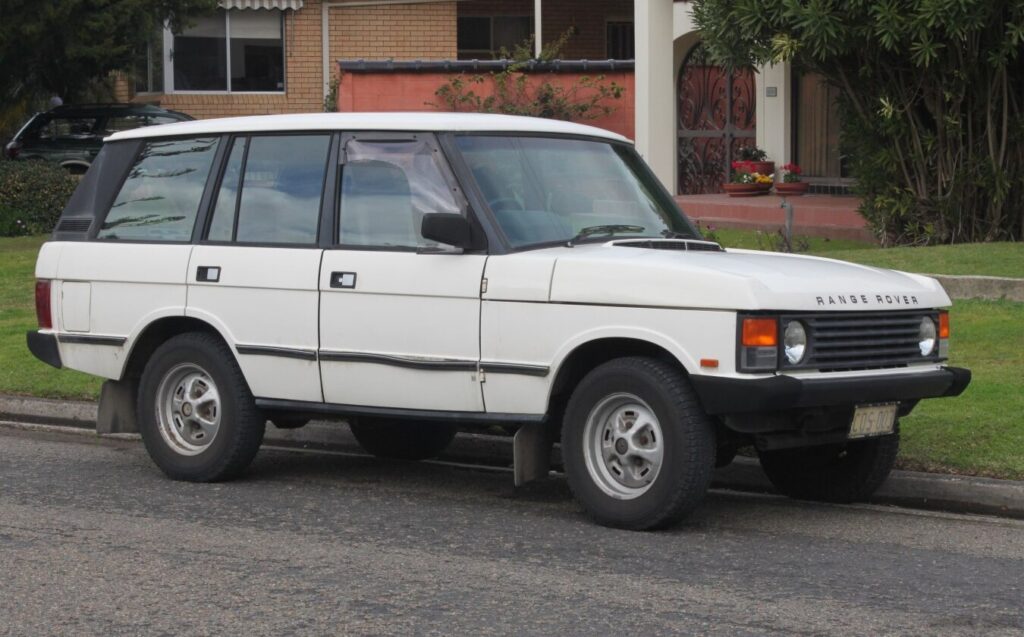
The Land Rover Range Rover I 3.5 Vogue, produced between 1985 and 1990, represents a significant iteration of the original Range Rover (launched in 1970). This variant, positioned as a luxurious and capable SUV, occupied a key space in the Range Rover lineup during its production run. It bridged the gap between the base models and the more powerful, often carbureted, V8 options. The 3.5 Vogue utilized a fuel-injected Rover V8 engine, offering a blend of refinement and performance that appealed to buyers seeking a premium off-road experience. It was part of the first generation (often referred to as the Classic Range Rover) which established the brand’s reputation for combining luxury with genuine all-terrain capability.
Technical Specifications
| Brand | Land Rover |
| Model | Range Rover |
| Generation | Range Rover I |
| Type (Engine) | 3.5 Vogue (163 Hp) |
| Start of Production | 1985 |
| End of Production | 1990 |
| Powertrain Architecture | Internal Combustion Engine |
| Body Type | SUV |
| Fuel Type | Petrol (Gasoline) |
| Power | 163 Hp |
| Engine Aspiration | Naturally Aspirated |
Powertrain & Engine Architecture
The heart of the Range Rover I 3.5 Vogue is the Rover V8 engine, specifically the 3.5-liter (3,528 cc) version. This engine, designated as the 14P engine code, was a significant upgrade over earlier carbureted versions. The key feature of this engine was its Bosch L-Jetronic fuel injection system. This system replaced the SU carburetors found on earlier models, resulting in improved fuel efficiency, smoother operation, and increased power output. The engine featured a cast iron block and aluminum cylinder heads, a common configuration for Rover V8s. It employed a single overhead camshaft (SOHC) valvetrain with two valves per cylinder. The 163 horsepower was achieved at 5,200 rpm, while peak torque of 230 lb-ft was delivered at 3,000 rpm. The engine was mated to a Chrysler TorqueFlite A727 three-speed automatic transmission, known for its durability and suitability for off-road driving. This transmission was a key component in delivering the engine’s power to all four wheels via a full-time four-wheel-drive system with a high/low range transfer case.
Driving Characteristics
The Range Rover I 3.5 Vogue, with its 163 hp and automatic transmission, offered a comfortable and capable driving experience. While not the fastest variant of the first-generation Range Rover, it provided ample power for both on-road cruising and off-road adventures. The automatic transmission, while not offering the driver engagement of a manual, provided smooth and effortless gear changes. Acceleration from 0 to 60 mph was typically around 11-12 seconds, which was respectable for an SUV of its size and weight in the 1980s. The automatic transmission’s gear ratios were optimized for torque delivery, making it well-suited for tackling challenging terrain. Compared to the earlier carbureted Range Rovers, the fuel-injected 3.5 Vogue offered noticeably improved throttle response and overall drivability. Compared to the later 3.9-liter fuel-injected V8, the 3.5 Vogue felt slightly less powerful, particularly at higher speeds, but offered a better balance between performance and fuel economy.
Equipment & Trim Levels
The “Vogue” designation indicated a higher level of trim and equipment. Standard features included leather upholstery, power windows, central locking, and a wood veneer dashboard. Air conditioning was a common option, as were heated seats. The interior was designed with luxury in mind, offering a comfortable and refined environment for both driver and passengers. The exterior typically featured chrome trim, alloy wheels, and a distinctive body-colored roof. Optional extras included a sunroof, upgraded sound system, and auxiliary lighting. The Range Rover I 3.5 Vogue aimed to provide a premium experience, competing with other luxury SUVs of the time, such as the Jeep Grand Wagoneer.
Chassis & Braking
The Range Rover I featured a robust ladder-frame chassis, providing excellent strength and durability. The suspension system consisted of coil springs and long-travel shock absorbers, offering a comfortable ride both on and off-road. Front suspension utilized double wishbones, while the rear employed a live axle with trailing arms. Braking was initially equipped with front disc brakes and rear drum brakes. Later models often featured disc brakes all around, improving stopping power. Power steering was standard, making the Range Rover relatively easy to maneuver despite its size. Stabilizer bars were fitted to both the front and rear axles to reduce body roll during cornering. The tires were typically all-terrain radial tires, designed to provide good grip on a variety of surfaces.
Market Reception & Comparison
The Range Rover I 3.5 Vogue was generally well-received by critics and buyers alike. It was praised for its luxurious interior, comfortable ride, and exceptional off-road capability. The fuel injection system was seen as a significant improvement over earlier carbureted models, enhancing both performance and reliability. Fuel economy, however, remained relatively poor by modern standards, averaging around 14-16 mpg. Compared to the 3.9-liter fuel-injected V8, the 3.5 Vogue offered a more affordable entry point into the Range Rover lineup, while still providing a high level of luxury and capability. The 3.5 Vogue was also considered more reliable than some of the earlier, more complex Range Rover variants. It appealed to buyers who wanted a luxurious and capable SUV without the higher price tag of the top-of-the-line models.
Legacy
The Range Rover I 3.5 Vogue holds a significant place in automotive history as a pioneering luxury SUV. The Rover V8 engine, coupled with the fuel injection system and automatic transmission, proved to be a reliable and durable powertrain. Today, well-maintained examples of the 3.5 Vogue are highly sought after by collectors and enthusiasts. While maintenance can be costly due to the vehicle’s age and complexity, the Range Rover I 3.5 Vogue remains a testament to Land Rover’s commitment to combining luxury, performance, and off-road capability. The 14P engine, while requiring regular maintenance, is generally considered robust if properly cared for. Parts availability can be a challenge, but a dedicated network of suppliers and enthusiasts helps to keep these classic vehicles on the road. The 3.5 Vogue’s enduring appeal lies in its timeless design, luxurious interior, and legendary off-road prowess.