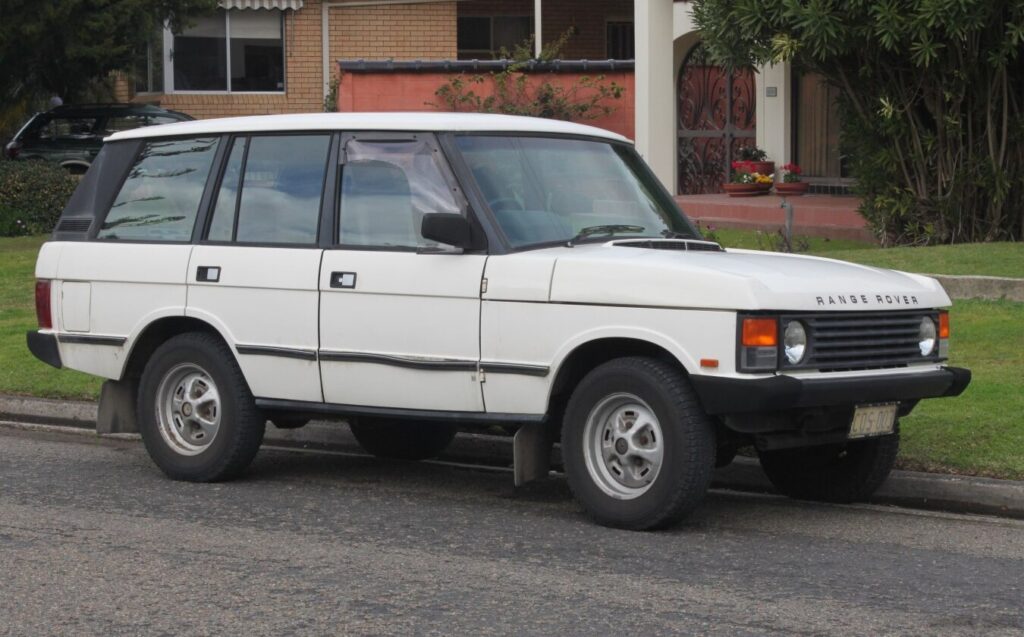
The Land Rover Range Rover I 3.9 V8 Automatic, produced between 1991 and 1994, represented a significant evolution of the original Range Rover launched in 1970. This variant occupied a mid-to-upper position within the first-generation Range Rover (Classic) lineup, offering a blend of luxury, off-road capability, and a more powerful engine option than the earlier inline-six models. It was a key component of the 1HX0/A3 platform, solidifying the Range Rover’s reputation as a sophisticated and capable all-terrain vehicle, particularly appealing to buyers seeking a refined driving experience alongside its legendary go-anywhere ability. This model was primarily marketed in Europe and North America, catering to a clientele desiring a premium SUV with robust performance.
Technical Specifications
| Brand | Land Rover |
| Model | Range Rover |
| Generation | Range Rover I |
| Type (Engine) | 3.9 V8 (188 Hp) Automatic |
| Start of production | 1991 |
| End of production | 1994 |
| Powertrain Architecture | Internal Combustion engine |
| Body type | SUV |
| Seats | 5 |
| Doors | 4 |
| Fuel consumption (urban) | 19.6 l/100 km (12 US mpg, 14.4 UK mpg, 5.1 km/l) |
| Fuel consumption (extra urban) | 10.5 l/100 km (22.4 US mpg, 26.9 UK mpg, 9.5 km/l) |
| Fuel consumption (combined) | 13.4 l/100 km (17.6 US mpg, 21.1 UK mpg, 7.5 km/l) |
| Fuel Type | Petrol (Gasoline) |
| Acceleration 0 – 100 km/h | 11.1 sec |
| Acceleration 0 – 62 mph | 11.1 sec |
| Acceleration 0 – 60 mph | 10.5 sec |
| Maximum speed | 176 km/h (109.36 mph) |
| Weight-to-power ratio | 10.5 kg/Hp, 94.9 Hp/tonne |
| Weight-to-torque ratio | 6.2 kg/Nm, 161.1 Nm/tonne |
| Power | 188 Hp @ 4750 rpm |
| Power per litre | 47.6 Hp/l |
| Torque | 319 Nm @ 3100 rpm (235.28 lb.-ft. @ 3100 rpm) |
| Engine layout | Front, Longitudinal |
| Engine displacement | 3947 cm3 (240.86 cu. in.) |
| Number of cylinders | 8 |
| Engine configuration | V-engine |
| Cylinder Bore | 93.98 mm (3.7 in.) |
| Piston Stroke | 71.12 mm (2.8 in.) |
| Compression ratio | 9.35:1 |
| Number of valves per cylinder | 2 |
| Fuel injection system | Multi-port manifold injection |
| Engine aspiration | Naturally aspirated engine |
| Kerb Weight | 1980 kg (4365.15 lbs.) |
| Max. weight | 2550 kg (5621.79 lbs.) |
| Max load | 570 kg (1256.63 lbs.) |
| Trunk (boot) space – minimum | 1020 l (36.02 cu. ft.) |
| Trunk (boot) space – maximum | 2000 l (70.63 cu. ft.) |
| Fuel tank capacity | 82 l (21.66 US gal, 18.04 UK gal) |
| Length | 4449 mm (175.16 in.) |
| Width | 1818 mm (71.57 in.) |
| Height | 1790 mm (70.47 in.) |
| Wheelbase | 2540 mm (100 in.) |
| Front track | 1486 mm (58.5 in.) |
| Rear (Back) track | 1486 mm (58.5 in.) |
| Drive wheel | All wheel drive (4×4) |
| Number of gears and type of gearbox | 4 gears, automatic transmission |
| Front suspension | Coil spring |
| Rear suspension | Coil spring |
| Front brakes | Ventilated discs |
| Rear brakes | Disc |
| Assisting systems | ABS (Anti-lock braking system) |
| Power steering | Hydraulic Steering |
| Tires size | 205/80 R16 |
Powertrain & Engine Architecture
The heart of the Range Rover I 3.9 V8 Automatic is the Rover V8 engine, specifically the 3.9-liter variant. This engine, internally designated with codes like 14PBT, was a significant upgrade over the earlier 3.5-liter versions. It featured a 90-degree V8 configuration with a cast iron block and aluminum cylinder heads. The 3.9-liter displacement was achieved through an increase in bore size. Fuel delivery was managed by a Bosch multi-port fuel injection system, contributing to improved efficiency and smoother power delivery compared to earlier carbureted models. The engine produced 188 horsepower at 4750 rpm and 319 Nm (235 lb-ft) of torque at 3100 rpm. The automatic transmission was a four-speed unit, typically a ZF 4HP22, known for its robustness and relatively smooth shifting. This transmission was chosen to provide a more comfortable and accessible driving experience, particularly for those less familiar with manual transmissions or who prioritized ease of use.
Driving Characteristics
The 3.9 V8 Automatic offered a noticeable performance improvement over the earlier Range Rovers. While not a sports car, the engine provided ample power for comfortable cruising and confident overtaking. The automatic transmission, while smooth, did slightly diminish acceleration compared to the five-speed manual option. The 0-60 mph time was around 10.5 seconds, and the top speed was approximately 109 mph. The torque curve was relatively flat, providing good responsiveness across a wide range of engine speeds. However, the weight of the vehicle (around 4365 lbs) meant that the engine was constantly working, impacting fuel economy. The automatic transmission’s gear ratios were optimized for comfort and towing capacity rather than outright performance.
Equipment & Trim Levels
The 3.9 V8 Automatic typically came with a generous level of standard equipment, reflecting the Range Rover’s luxury positioning. This included leather upholstery, power windows, central locking, and air conditioning. Optional extras included a sunroof, upgraded sound systems, and various trim enhancements. The interior design was characterized by its wood veneer trim and comfortable seating. The specific trim level could vary depending on the market, but generally, this variant was positioned as a well-equipped, mid-range offering within the first-generation Range Rover lineup.
Chassis & Braking
The Range Rover I featured a robust ladder-frame chassis, providing excellent strength and durability, essential for its off-road capabilities. Suspension consisted of coil springs all around, offering a comfortable ride both on and off-road. The 3.9 V8 Automatic models typically came equipped with ventilated disc brakes on the front wheels and disc brakes on the rear, providing adequate stopping power for the vehicle’s weight. An anti-lock braking system (ABS) was also standard, enhancing safety. The steering was hydraulic power-assisted, making it relatively easy to maneuver despite the vehicle’s size.
Market Reception & Comparison
The Range Rover I 3.9 V8 Automatic was generally well-received by critics and buyers alike. It was praised for its blend of luxury, performance, and off-road capability. Compared to the 3.5-liter versions, the 3.9 offered a noticeable power increase. Compared to the manual transmission models, the automatic provided a more relaxed driving experience, but at the expense of some performance and fuel economy. Fuel economy, however, remained a significant drawback, averaging around 17.6 US mpg in combined driving. The 3.9 V8 was often seen as a sweet spot in the range, offering a good balance between performance and refinement.
Legacy
The Range Rover I 3.9 V8 Automatic holds a significant place in automotive history. The Rover V8 engine proved to be remarkably durable, and many examples are still on the road today. While maintenance can be costly due to the vehicle’s age and complexity, the 3.9 V8 is generally considered a reliable engine when properly maintained. In the used car market, these Range Rovers are sought after by enthusiasts and collectors, particularly those who appreciate their classic styling and off-road heritage. The combination of the V8 engine and automatic transmission remains a popular choice for those seeking a comfortable and capable classic SUV.