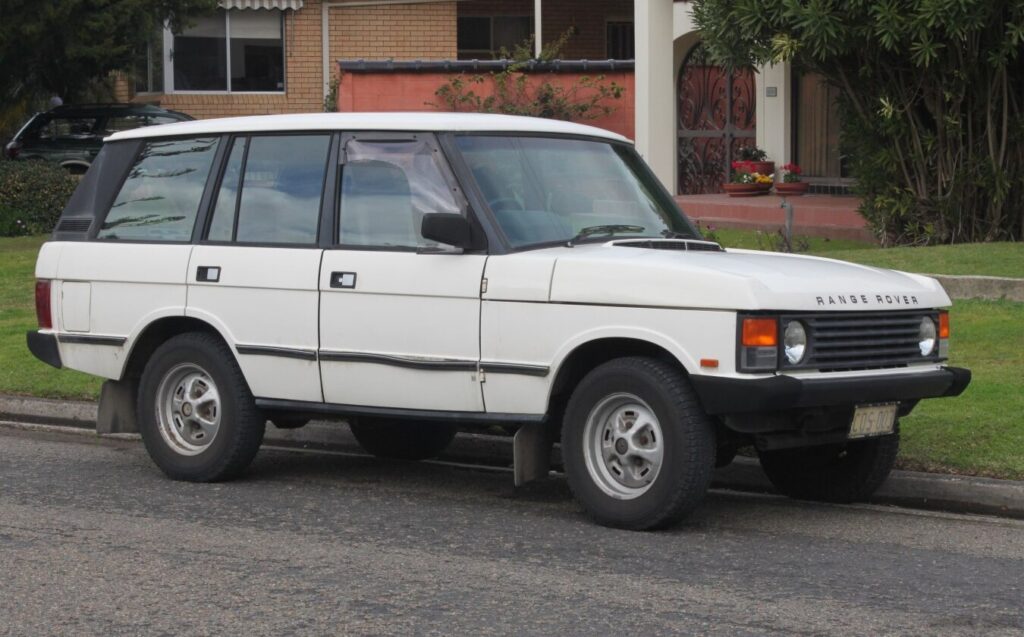
The Land Rover Range Rover I 4.3 Vogue LSE, produced between 1992 and 1994, represented the pinnacle of luxury and off-road capability within the first generation (1970-1994) of the iconic Range Rover. Positioned as the top-of-the-line trim, the “LSE” (Luxury Special Edition) featured a more powerful 4.3-liter V8 engine and enhanced interior appointments compared to the standard 3.5-liter models. This variant was primarily aimed at the North American and European markets, where buyers demanded a blend of refinement, performance, and all-terrain prowess. It built upon the already successful foundation of the original Range Rover, solidifying its reputation as a status symbol and a highly capable vehicle.
Technical Specifications
| Brand | Land Rover |
| Model | Range Rover |
| Generation | Range Rover I |
| Type | 4.3 Vogue LSE (202 Hp) Automatic |
| Start of production | 1992 |
| End of production | 1994 |
| Powertrain Architecture | Internal Combustion engine |
| Body type | SUV |
| Seats | 5 |
| Doors | 4 |
| Fuel consumption (urban) | 21.6 l/100 km (10.9 US mpg, 13.1 UK mpg, 4.6 km/l) |
| Fuel consumption (extra urban) | 11.7 l/100 km (20.1 US mpg, 24.1 UK mpg, 8.5 km/l) |
| Fuel consumption (combined) | 15.1 l/100 km (15.6 US mpg, 18.7 UK mpg, 6.6 km/l) |
| Fuel Type | Petrol (Gasoline) |
| Acceleration 0 – 100 km/h | 10.5 sec |
| Acceleration 0 – 62 mph | 10.5 sec |
| Acceleration 0 – 60 mph | 10 sec |
| Maximum speed | 180 km/h (111.85 mph) |
| Weight-to-power ratio | 10.3 kg/Hp, 97.3 Hp/tonne |
| Weight-to-torque ratio | 13.9 kg/Nm, 71.8 Nm/tonne |
| Power | 202 Hp @ 4850 rpm |
| Power per litre | 47.3 Hp/l |
| Torque | 149 Nm @ 3250 rpm (109.9 lb.-ft. @ 3250 rpm) |
| Engine layout | Front, Longitudinal |
| Engine displacement | 4273 cm3 (260.75 cu. in.) |
| Number of cylinders | 8 |
| Engine configuration | V-engine |
| Cylinder Bore | 93.98 mm (3.7 in.) |
| Piston Stroke | 77 mm (3.03 in.) |
| Compression ratio | 8.95:1 |
| Number of valves per cylinder | 2 |
| Fuel injection system | Multi-port manifold injection |
| Engine aspiration | Naturally aspirated engine |
| Kerb Weight | 2075 kg (4574.59 lbs.) |
| Max. weight | 2620 kg (5776.11 lbs.) |
| Max load | 545 kg (1201.52 lbs.) |
| Trunk (boot) space – minimum | 1020 l (36.02 cu. ft.) |
| Trunk (boot) space – maximum | 2000 l (70.63 cu. ft.) |
| Fuel tank capacity | 82 l (21.66 US gal, 18.04 UK gal) |
| Length | 4449 mm (175.16 in.) |
| Width | 1818 mm (71.57 in.) |
| Height | 1790 mm (70.47 in.) |
| Wheelbase | 2540 mm (100 in.) |
| Front track | 1486 mm (58.5 in.) |
| Rear (Back) track | 1486 mm (58.5 in.) |
| Drive wheel | All wheel drive (4×4) |
| Number of gears and type of gearbox | 4 gears, automatic transmission |
| Front suspension | Coil spring |
| Rear suspension | Coil spring |
| Front brakes | Ventilated discs |
| Rear brakes | Disc |
| Assisting systems | ABS (Anti-lock braking system) |
| Power steering | Hydraulic Steering |
| Tires size | 205/80 R16 |
Powertrain & Engine Architecture
The heart of the 4.3 Vogue LSE was the Rover V8 engine, specifically the 4.3-liter (4273 cc) version. This engine, derived from the original Buick-designed V8, had undergone significant development by Rover over the years. The LSE variant featured a Lucas multi-port fuel injection system, replacing the earlier carburetor setups, and a revised cylinder head design for improved breathing. The engine produced 202 horsepower at 4850 rpm and 149 lb-ft of torque at 3250 rpm. It was paired exclusively with a four-speed automatic transmission (Chrysler TorqueFlite A727), known for its robustness but relatively simple design. The transmission was chosen for its ability to handle the engine’s torque and provide a smooth driving experience, aligning with the LSE’s luxury focus.
Driving Characteristics
The 4.3-liter engine and automatic transmission combination delivered a comfortable, yet capable, driving experience. While not overtly sporty, the LSE offered respectable acceleration – 0-60 mph in around 10 seconds – and a relaxed cruising demeanor. The automatic transmission, while lacking the responsiveness of a manual, provided smooth gear changes. The gear ratios were optimized for torque delivery, making it well-suited for towing and off-road driving. Compared to the 3.5-liter Range Rover, the 4.3 LSE offered noticeably more power, particularly at higher speeds and when carrying a load. However, it wasn’t as nimble or fuel-efficient as the later 2.5-liter diesel models.
Equipment & Trim Levels
The “Vogue LSE” designation signified a high level of standard equipment. Interiors were typically trimmed with Connolly leather upholstery, often in luxurious colors. Features included power-adjustable front seats, air conditioning, electric windows, central locking, and a premium sound system. Wood veneer trim adorned the dashboard and door panels, enhancing the sense of luxury. Optional extras included a sunroof, upgraded audio systems, and rear seat entertainment. The LSE also featured exterior enhancements such as unique alloy wheels and body-colored bumpers.
Chassis & Braking
The Range Rover I utilized a robust body-on-frame construction, providing excellent strength and durability. Suspension consisted of coil springs all around, with anti-roll bars to reduce body lean. The 4.3 LSE models typically featured heavier-duty suspension components to cope with the increased weight and power. Braking was handled by ventilated discs at the front and solid discs at the rear. An anti-lock braking system (ABS) was standard, improving braking performance and stability, especially on slippery surfaces. The tires were typically 205/80 R16, providing a good balance of on-road comfort and off-road traction.
Market Reception & Comparison
The Range Rover I 4.3 Vogue LSE was generally well-received by critics and buyers alike. It was praised for its luxurious interior, comfortable ride, and impressive off-road capabilities. However, its fuel economy was a common criticism, averaging around 15.6 US mpg in combined driving. Compared to the 3.5-liter Range Rover, the 4.3 LSE offered a significant performance upgrade, but at a higher price point. The later diesel models provided better fuel economy and torque, appealing to a different segment of buyers. Reliability was generally good, although the complexity of the V8 engine and Lucas fuel injection system could lead to occasional issues.
Legacy
The Range Rover I 4.3 Vogue LSE remains a highly sought-after classic today. Well-maintained examples command premium prices. The Rover V8 engine, while known for its potential maintenance needs, is still regarded as a robust and charismatic powerplant. The 4.3 LSE’s combination of luxury, performance, and off-road capability cemented its place as a landmark vehicle in the history of the Range Rover, and a testament to British engineering. Finding parts can be challenging, but a dedicated community of enthusiasts ensures that these vehicles continue to be enjoyed for years to come.