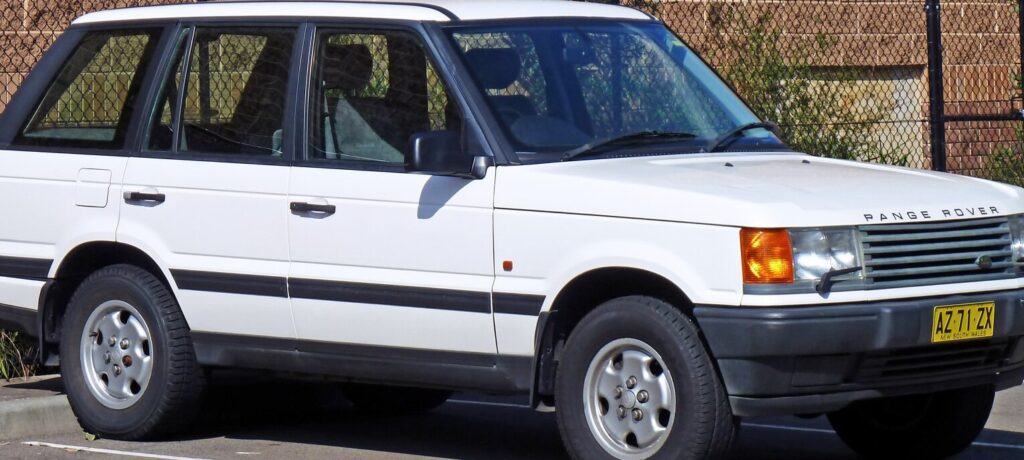
The Land Rover Range Rover II 2.5 D, produced from 1994 to 2001, represented a significant evolution of the iconic Range Rover lineage. This diesel-powered variant occupied a specific niche within the second-generation Range Rover (P38A) lineup, offering a blend of luxury, off-road capability, and improved fuel economy compared to its petrol counterparts. While the Range Rover II is well-known for its 4.0 and 4.6 liter V8 engines, the 2.5 D provided a more economical option for European and export markets, particularly where diesel fuel was more readily available and cost-effective. It was positioned as a practical, long-distance touring vehicle, appealing to buyers who prioritized durability and lower running costs over outright performance.
Technical Specifications
| Brand | Land Rover |
| Model | Range Rover |
| Generation | Range Rover II |
| Type (Engine) | 2.5 D (136 Hp) |
| Start of production | 1994 |
| End of production | 2001 |
| Powertrain Architecture | Internal Combustion engine |
| Body type | SUV |
| Seats | 5 |
| Doors | 5 |
| Fuel consumption (urban) | 12.8 l/100 km (18.4 US mpg, 22.1 UK mpg, 7.8 km/l) |
| Fuel consumption (extra urban) | 8.9 l/100 km (26.4 US mpg, 31.7 UK mpg, 11.2 km/l) |
| Fuel consumption (combined) | 10.6 l/100 km (22.2 US mpg, 26.6 UK mpg, 9.4 km/l) |
| Fuel Type | Diesel |
| Acceleration 0 – 100 km/h | 14.3 sec |
| Acceleration 0 – 62 mph | 14.3 sec |
| Acceleration 0 – 60 mph | 13.6 sec |
| Maximum speed | 185 km/h (114.95 mph) |
| Weight-to-power ratio | 15.6 kg/Hp, 64.3 Hp/tonne |
| Weight-to-torque ratio | 7.8 kg/Nm, 127.7 Nm/tonne |
| Power | 136 Hp @ 4400 rpm |
| Power per litre | 54.5 Hp/l |
| Torque | 270 Nm @ 2300 rpm (199.14 lb.-ft. @ 2300 rpm) |
| Engine layout | Front, Longitudinal |
| Engine Model/Code | 25 6T |
| Engine displacement | 2497 cm3 (152.38 cu. in.) |
| Number of cylinders | 6 |
| Engine configuration | Inline |
| Cylinder Bore | 80 mm (3.15 in.) |
| Piston Stroke | 82.8 mm (3.26 in.) |
| Compression ratio | 22:1 |
| Number of valves per cylinder | 2 |
| Fuel injection system | Precombustion chamber injection |
| Engine aspiration | Turbocharger |
| Valvetrain | OHC |
| Engine oil capacity | 8.7 l (9.19 US qt | 7.65 UK qt) |
| Coolant capacity | 11.3 l (11.94 US qt | 9.94 UK qt) |
| Kerb Weight | 2115 kg (4662.78 lbs.) |
| Max. weight | 2780 kg (6128.85 lbs.) |
| Max load | 665 kg (1466.07 lbs.) |
| Trunk (boot) space – minimum | 520 l (18.36 cu. ft.) |
| Trunk (boot) space – maximum | 1640 l (57.92 cu. ft.) |
| Fuel tank capacity | 100 l (26.42 US gal | 22 UK gal) |
| Length | 4713 mm (185.55 in.) |
| Width | 1853 mm (72.95 in.) |
| Height | 1817 mm (71.54 in.) |
| Wheelbase | 2745 mm (108.07 in.) |
| Front track | 1540 mm (60.63 in.) |
| Rear track | 1530 mm (60.24 in.) |
| Drive wheel | All wheel drive (4×4) |
| Number of gears | 5 |
| Gearbox type | Manual transmission |
| Front suspension | Air suspension |
| Rear suspension | Air suspension |
| Front brakes | Ventilated discs |
| Rear brakes | Disc |
| Assisting systems | ABS (Anti-lock braking system) |
| Power steering | Hydraulic Steering |
| Tires size | 235/70 R16 |
| Wheel rims size | 16 |
Powertrain & Engine Architecture
The heart of the Range Rover II 2.5 D is the 25 6T engine, a 2.5-liter inline-six cylinder diesel. This engine, derived from designs originally developed by Rover Group, utilized a precombustion chamber injection system. This system, common in European diesels of the era, involved injecting fuel into a small precombustion chamber connected to the main cylinder, promoting more complete combustion and reducing engine noise. The engine was turbocharged, boosting power output to 136 horsepower and 270 Nm (199 lb-ft) of torque. The five-speed manual transmission was the standard offering, providing a balance between fuel efficiency and usability. While an automatic transmission was available on other Range Rover II models, it was less commonly paired with the 2.5 D due to concerns about the transmission’s ability to handle the diesel engine’s torque characteristics.
Driving Characteristics
The 2.5 D Range Rover II offered a distinctly different driving experience compared to its V8 siblings. Acceleration was noticeably slower, with a 0-60 mph time of around 13.6 seconds. However, the engine’s strong low-end torque made it well-suited for towing and off-road driving. The manual transmission allowed for greater driver control, and the gear ratios were optimized for fuel efficiency and relaxed cruising. While not a performance-oriented vehicle, the 2.5 D provided a comfortable and capable driving experience, particularly on long journeys. The air suspension, standard on all Range Rover II models, contributed to a smooth and refined ride, even on rough terrain.
Equipment & Trim Levels
The 2.5 D typically came with a relatively basic level of equipment compared to the higher-spec V8 models. Standard features generally included power windows, central locking, and air conditioning. Interior upholstery was typically cloth, although leather was available as an option. Dashboard configuration was similar across the Range Rover II range, featuring a functional and straightforward layout. Optional extras included a sunroof, upgraded audio system, and heated seats. The trim level was generally considered entry-level, appealing to buyers who prioritized practicality and affordability over luxury features.
Chassis & Braking
The Range Rover II chassis was a robust body-on-frame construction, providing excellent strength and durability. The 2.5 D model utilized a similar suspension setup to other Range Rover II variants, featuring air suspension on both the front and rear axles. This system allowed for adjustable ride height and self-leveling, enhancing both on-road comfort and off-road capability. Braking was handled by ventilated discs on the front wheels and solid discs on the rear. Anti-lock braking system (ABS) was standard, providing improved stopping power and control in emergency situations.
Market Reception & Comparison
The Range Rover II 2.5 D was generally well-received in markets where diesel engines were popular. Critics praised its fuel efficiency and durability, but noted its slower acceleration compared to the V8 models. Compared to the 4.0 and 4.6 liter V8 Range Rovers, the 2.5 D offered significantly better fuel economy, making it a more economical choice for high-mileage drivers. However, the V8 models provided a more refined and powerful driving experience. The 2.5 D also offered a more affordable entry point into Range Rover ownership, appealing to a wider range of buyers.
Legacy
The Range Rover II 2.5 D has developed a reputation for reliability and longevity. The 25 6T engine, while not particularly powerful, is known for its robustness and ability to withstand high mileage. Today, these vehicles are increasingly sought after by enthusiasts and collectors, particularly those who appreciate their simplicity and practicality. While maintenance can be challenging due to the vehicle’s age and complexity, parts availability is generally good. The 2.5 D Range Rover II remains a capable and comfortable vehicle, offering a unique blend of luxury, off-road capability, and fuel efficiency.