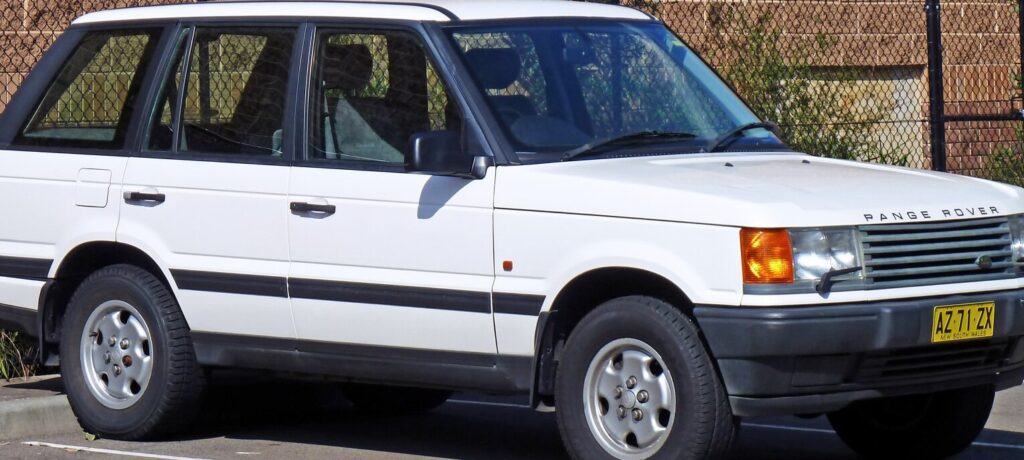
The Land Rover Range Rover II 4.0, produced between 1998 and 2001, represented a significant evolution of the iconic luxury SUV. This iteration, falling within the second generation (P38A) of the Range Rover lineage, aimed to blend traditional off-road capability with increased refinement and modern technology. The 4.0-liter variant, equipped with a four-speed automatic transmission and full-time four-wheel drive, occupied a middle ground in the Range Rover II lineup, offering a balance between performance and accessibility. It served as a popular choice for buyers seeking a capable and comfortable SUV without the higher price tag of the flagship models.
Technical Specifications
| Brand | Land Rover |
| Model | Range Rover |
| Generation | Range Rover II |
| Type (Engine) | 4.0 (185 Hp) 4×4 Automatic |
| Start of production | 1998 |
| End of production | 2001 |
| Powertrain Architecture | Internal Combustion engine |
| Body type | SUV |
| Seats | 5 |
| Doors | 5 |
| Fuel consumption (urban) | 21.7 l/100 km (10.8 US mpg) |
| Fuel consumption (extra urban) | 11.5 l/100 km (20.5 US mpg) |
| Fuel Type | Petrol (Gasoline) |
| Acceleration 0 – 100 km/h | 10.9 sec |
| Acceleration 0 – 62 mph | 10.9 sec |
| Acceleration 0 – 60 mph | 10.4 sec |
| Maximum speed | 187 km/h (116.2 mph) |
| Weight-to-power ratio | 11.5 kg/Hp |
| Weight-to-torque ratio | 6.2 kg/Nm |
| Power | 185 Hp @ 4750 rpm |
| Torque | 340 Nm @ 2600 rpm (250.77 lb.-ft. @ 2600 rpm) |
| Engine layout | Front, Longitudinal |
| Engine displacement | 3947 cm3 (240.86 cu. in.) |
| Number of cylinders | 8 |
| Engine configuration | V-engine |
| Cylinder Bore | 94 mm (3.7 in.) |
| Piston Stroke | 71.1 mm (2.8 in.) |
| Compression ratio | 9.35:1 |
| Number of valves per cylinder | 2 |
| Fuel injection system | Multi-port manifold injection |
| Engine aspiration | Naturally aspirated engine |
| Engine oil capacity | 6.6 l (6.97 US qt | 5.81 UK qt) |
| Coolant capacity | 11.3 l (11.94 US qt | 9.94 UK qt) |
| Kerb Weight | 2120 kg (4673.8 lbs.) |
| Max. weight | 2780 kg (6128.85 lbs.) |
| Max load | 660 kg (1455.05 lbs.) |
| Trunk (boot) space – maximum | 520 l (18.36 cu. ft.) |
| Fuel tank capacity | 100 l (26.42 US gal | 22 UK gal) |
| Length | 4713 mm (185.55 in.) |
| Width | 1853 mm (72.95 in.) |
| Height | 1853 mm (72.95 in.) |
| Wheelbase | 2745 mm (108.07 in.) |
| Front track | 1540 mm (60.63 in.) |
| Rear (Back) track | 1530 mm (60.24 in.) |
| Drive wheel | All wheel drive (4×4) |
| Number of gears and type of gearbox | 4 gears, automatic transmission |
| Front suspension | Air suspension |
| Rear suspension | Air suspension |
| Front brakes | Ventilated discs |
| Rear brakes | Disc |
| Assisting systems | ABS (Anti-lock braking system) |
| Power steering | Hydraulic Steering |
| Tires size | 235/70 R16 |
| Wheel rims size | 16 |
Powertrain & Engine Architecture
The heart of the Range Rover II 4.0 was the 4.0-liter V8 engine, designated as the 4.0SE. This engine, a descendant of the Rover V8 originally designed by Buick in the 1960s, had undergone numerous revisions over the years. The 185 horsepower output was achieved through a multi-port fuel injection system and a compression ratio of 9.35:1. The engine’s longitudinal mounting and naturally aspirated design contributed to its smooth power delivery, though it lacked the outright punch of some contemporary turbocharged engines. The four-speed automatic transmission, a ZF 4HP22 unit, was chosen for its reliability and suitability for both on-road cruising and moderate off-road work. While not offering the efficiency of more modern transmissions, it provided smooth shifts and adequate gear spacing for the engine’s characteristics.
Driving Characteristics
The 4.0-liter engine and automatic transmission combination delivered a comfortable and capable driving experience. Acceleration from 0-60 mph took around 10.4 seconds, which was respectable for a large SUV of its era, but noticeably slower than the performance offered by the supercharged 4.6-liter V8 or even the diesel variants. The automatic transmission’s gear ratios were geared towards relaxed cruising, making it well-suited for highway driving. However, it could feel somewhat sluggish when attempting quick overtaking maneuvers. The full-time four-wheel drive system provided excellent traction in various conditions, and the air suspension offered a remarkably smooth ride, even on uneven surfaces. The vehicle’s substantial weight (over 4,600 lbs) was always apparent, influencing handling and braking performance.
Equipment & Trim Levels
The Range Rover II 4.0 typically came equipped with a generous level of standard features, reflecting its luxury positioning. These included leather upholstery, power-adjustable front seats, climate control, and an integrated audio system. Optional extras, such as a sunroof, upgraded audio systems, and rear seat entertainment, were available to further enhance the vehicle’s comfort and convenience. The trim level for the 4.0 variant generally fell in the mid-range of the lineup, offering a good balance of features and price. It lacked some of the more exclusive appointments found in the higher-spec models, but provided a comfortable and well-equipped interior.
Chassis & Braking
The Range Rover II utilized a robust body-on-frame construction, providing a solid foundation for both on-road and off-road performance. The air suspension system, a defining feature of the Range Rover, allowed for adjustable ride height and provided exceptional comfort. The braking system consisted of ventilated discs at the front and solid discs at the rear, coupled with an Anti-lock Braking System (ABS). While adequate for everyday driving, the braking performance could feel somewhat limited given the vehicle’s weight. Stabilizer bars were fitted to both the front and rear axles to reduce body roll during cornering.
Market Reception & Comparison
The Range Rover II 4.0 received generally positive reviews from automotive critics. It was praised for its luxurious interior, comfortable ride, and capable off-road performance. However, some critics noted its relatively slow acceleration and somewhat dated technology compared to newer SUVs. Compared to the supercharged 4.6-liter variant, the 4.0 offered a more affordable entry point into the Range Rover lineup, but at the expense of performance. The diesel models, particularly the 2.5 TDI, offered superior fuel economy but lacked the refinement of the V8 engine. Reliability was a mixed bag, with some owners reporting issues with the air suspension and electrical systems.
Legacy
The Range Rover II 4.0 remains a popular choice among enthusiasts and collectors today. While not the fastest or most fuel-efficient SUV of its era, it offers a unique blend of luxury, capability, and classic British styling. The 4.0-liter V8 engine, while prone to occasional oil leaks, is generally considered to be a robust and reliable powerplant. The availability of parts and specialist knowledge has helped to keep many examples on the road. However, potential buyers should be aware of the potential for costly repairs related to the air suspension and electrical systems. The Range Rover II 4.0 represents a significant chapter in the history of the iconic Range Rover, and continues to be appreciated for its timeless appeal and enduring quality.