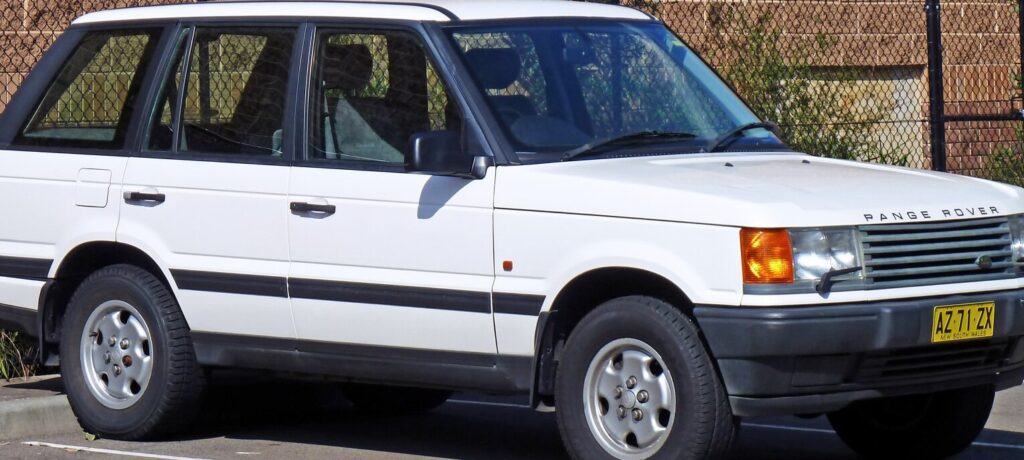
The Land Rover Range Rover II 4.6, produced between 1998 and 2001, represented a significant evolution of the iconic Range Rover lineage. Falling within the second generation (P38A) of the Range Rover, this variant was positioned as a high-performance offering, boasting a naturally aspirated 4.6-liter V8 engine. It aimed to deliver a blend of luxury, off-road capability, and respectable on-road performance, appealing to buyers seeking a premium SUV experience. The 4.6 model occupied the upper echelon of the Range Rover II lineup, sitting above the 2.5-liter diesel and 4.0-liter petrol versions in terms of power and price.
Technical Specifications
| Brand | Land Rover |
| Model | Range Rover |
| Generation | Range Rover II |
| Type (Engine) | 4.6 (218 Hp) |
| Start of production | 1998 |
| End of production | 2001 |
| Powertrain Architecture | Internal Combustion engine |
| Body type | SUV |
| Seats | 5 |
| Doors | 5 |
| Fuel consumption (urban) | 23.9 l/100 km (9.8 US mpg, 11.8 UK mpg, 4.2 km/l) |
| Fuel consumption (extra urban) | 12.2 l/100 km (19.3 US mpg, 23.2 UK mpg, 8.2 km/l) |
| Fuel Type | Petrol (Gasoline) |
| Acceleration 0 – 100 km/h | 9.9 sec |
| Acceleration 0 – 62 mph | 9.9 sec |
| Acceleration 0 – 60 mph | 9.4 sec |
| Maximum speed | 200 km/h (124.27 mph) |
| Weight-to-power ratio | 9.7 kg/Hp, 102.8 Hp/tonne |
| Weight-to-torque ratio | 5.3 kg/Nm, 188.7 Nm/tonne |
| Power | 218 Hp @ 4750 rpm |
| Power per litre | 47.9 Hp/l |
| Torque | 400 Nm @ 2600 rpm (295.02 lb.-ft. @ 2600 rpm) |
| Engine layout | Front, Longitudinal |
| Engine displacement | 4552 cm3 (277.78 cu. in.) |
| Number of cylinders | 8 |
| Engine configuration | V-engine |
| Cylinder Bore | 94 mm (3.7 in.) |
| Piston Stroke | 82.1 mm (3.23 in.) |
| Compression ratio | 9.35:1 |
| Number of valves per cylinder | 2 |
| Fuel injection system | Multi-port manifold injection |
| Engine aspiration | Naturally aspirated engine |
| Valvetrain | OHC |
| Engine oil capacity | 6.6 l (6.97 US qt | 5.81 UK qt) |
| Kerb Weight | 2120 kg (4673.8 lbs.) |
| Max. weight | 2780 kg (6128.85 lbs.) |
| Max load | 660 kg (1455.05 lbs.) |
| Trunk (boot) space – minimum | 520 l (18.36 cu. ft.) |
| Trunk (boot) space – maximum | 1640 l (57.92 cu. ft.) |
| Fuel tank capacity | 100 l (26.42 US gal | 22 UK gal) |
| Length | 4713 mm (185.55 in.) |
| Width | 1853 mm (72.95 in.) |
| Height | 1817 mm (71.54 in.) |
| Wheelbase | 2745 mm (108.07 in.) |
| Front track | 1540 mm (60.63 in.) |
| Rear (Back) track | 1530 mm (60.24 in.) |
| Drive wheel | All wheel drive (4×4) |
| Number of gears and type of gearbox | 4 gears, automatic transmission |
| Front suspension | Air suspension |
| Rear suspension | Air suspension |
| Front brakes | Ventilated discs |
| Rear brakes | Disc |
| Assisting systems | ABS (Anti-lock braking system) |
| Power steering | Hydraulic Steering |
| Tires size | 255/65R16 |
Powertrain & Engine Architecture
The heart of the Range Rover II 4.6 was the 4.6-liter V8 engine, internally designated as the 14PBT. This engine was a descendant of the Rover V8, a design with roots stretching back to the 1960s, but significantly updated over the years. The 14PBT featured a 90-degree V-angle, a cast iron block, and aluminum cylinder heads. It employed a multi-port fuel injection system, delivering fuel directly into the intake ports, and a single overhead camshaft (OHC) design operated the two valves per cylinder. The engine’s 4.6-liter displacement, combined with the naturally aspirated configuration, produced 218 horsepower at 4750 rpm and 400 Nm (295 lb-ft) of torque at 2600 rpm. This power was channeled through a four-speed automatic transmission, a ZF 4HP24 unit known for its smoothness and reliability. The transmission was a crucial component in delivering the engine’s power to all four wheels via Land Rover’s permanent four-wheel-drive system.
Driving Characteristics
The 4.6-liter engine provided a noticeable performance upgrade over the lower-powered Range Rover II variants. Acceleration from 0 to 60 mph was achieved in approximately 9.4 seconds, and the vehicle could reach a top speed of 124 mph. While not overtly sporty, the 4.6 offered ample power for comfortable highway cruising and confident overtaking. The automatic transmission, while smooth, wasn’t particularly quick to downshift, and the gear ratios were geared more towards relaxed cruising than outright acceleration. Compared to the 4.0-liter version, the 4.6 offered a more robust power delivery, particularly at lower engine speeds, thanks to the increased displacement and torque. The 4.6 was also significantly quicker than the diesel models, which prioritized fuel economy over outright performance.
Equipment & Trim Levels
The Range Rover II 4.6 typically came well-equipped, reflecting its position as a premium vehicle. Standard features included leather upholstery, automatic climate control, power-adjustable front seats, and a premium sound system. Wood and leather trim adorned the interior, creating a luxurious ambiance. Optional extras included heated front and rear seats, a sunroof, upgraded audio systems, and parking sensors. The exterior typically featured alloy wheels, body-colored bumpers, and a rear-mounted spare tire. The trim level largely dictated the specific leather color and wood veneer options available.
Chassis & Braking
The Range Rover II utilized a robust body-on-frame construction, providing excellent strength and off-road capability. The suspension system was a key feature, employing air suspension on both the front and rear axles. This allowed for adjustable ride height and provided a comfortable ride on and off-road. The braking system consisted of ventilated discs on the front wheels and solid discs on the rear. Anti-lock braking system (ABS) was standard, enhancing safety and control. The steering was hydraulically assisted, providing a light and responsive feel.
Market Reception & Comparison
The Range Rover II 4.6 was generally well-received by automotive critics. It was praised for its luxurious interior, comfortable ride, and capable off-road performance. However, some critics noted the vehicle’s relatively high fuel consumption and its somewhat dated technology compared to newer SUVs. Compared to the 4.0-liter version, the 4.6 offered a noticeable performance improvement, but at a higher price point. The diesel models were favored by those prioritizing fuel economy, while the 4.6 appealed to buyers seeking a more powerful and refined driving experience. Reliability was generally good, although the complex air suspension system could be prone to issues if not properly maintained.
Legacy
The Range Rover II 4.6 remains a desirable classic SUV today. While maintenance costs can be higher than more modern vehicles, the 4.6-liter V8 engine is generally considered to be robust and reliable when properly cared for. The air suspension system requires regular attention, but is often considered worth the effort for the superior ride quality it provides. The Range Rover II 4.6 represents a sweet spot in the Range Rover lineage, offering a blend of classic styling, luxurious comfort, and capable performance. In the used car market, well-maintained examples command a premium, appealing to enthusiasts and collectors alike.